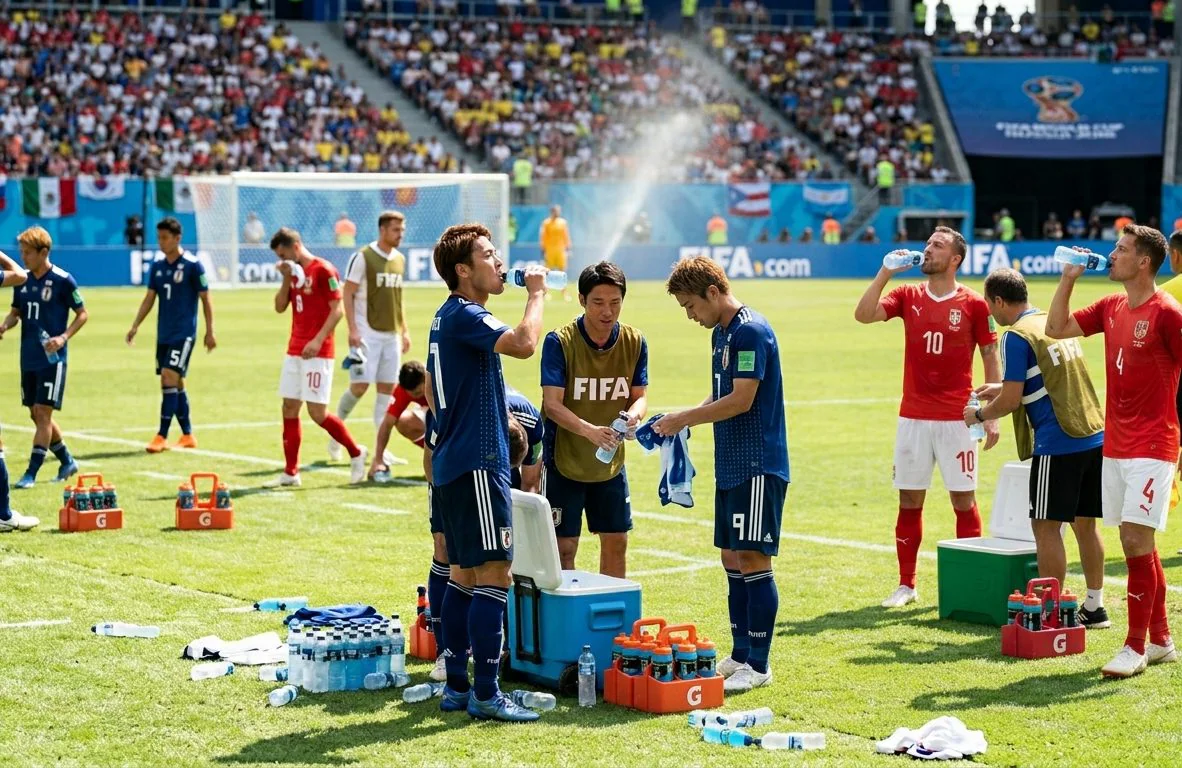
The 2026 World Cup will start on June 11 with the opening match at the Azteca Stadium in Mexico City at 1.00 pm local time, at over 2,000 meters above sea level, where the heat fortunately should not represent a major problem for the players involved. But many of the 104 scheduled games will be played in US cities where temperatures can become stifling in the summer, such as Houston, Dallas, Atlanta, Miami, or New York.
This is not the first time the World Cup has been held in the United States in the summer. It had already happened in 1994, and that edition remained in the collective memory also due to the ferocious heat, with matches played in the hottest hours of the day, temperatures close to 40° and humidity over 90%. The same final between Italy and Brazil was played at 12.30pm local time, in Pasadena, an inconvenient time for the players but ideal for the European fans who were able to follow the match in prime time. 32 years later the situation has not changed, on the contrary: climate change has made North American summers even hotter and more humid.
An analysis published by the research group World Weather Attribution (WWA) estimated that the probability of reaching dangerously hot conditions during the tournament has almost doubled compared to 1994, due to global warming.
WBGT, humidity and 40 degrees: the index to keep monitored
To understand the scientists’ alarm, we must first understand how heat risk is measured when it comes to outdoor sports. It’s not enough to look at the thermometer: a day at 35°C with dry air is very different from one at 35°C with high humidity.
The tool used by experts is called WBGT, an English acronym for Wet Bulb Globe Temperaturesan index developed in the 1950s by the American army to reduce heat illness during military exercises, and which today represents the international standard adopted by FIFA and many sports federations to evaluate the thermal stress on the human body for athletes involved in sporting events subject to extreme heat.
WBGT combines four environmental factors that together determine how much the human body can (or cannot) cool itself:
- The air temperature
- Relative humidity: how much water vapor is in the air
- Solar radiation: the heat radiated by the sun directly onto the body
- The wind, which helps or not the evaporation of sweat
In the WBGT calculation, the humidity component weighs 70% of the total value: it is the most dangerous factor in heat wave conditions. This is because the main mechanism by which the body disperses heat during physical effort is sweating: sweat, evaporating from the skin, absorbs heat and contributes to lowering body temperature. But this mechanism only works if the surrounding air can absorb water vapour, but if the air is very humid, sweat no longer evaporates, or it does so very slowly, making it difficult to cool our body. In extreme cases it can develop heat strokean emergency condition in which the body temperature exceeds 40°C and the thermoregulation mechanisms fail completely.
These are not hypothetical risks: already during the 2025 Club World Cup, played in the same months and in the same cities where the 2026 World Cup will be held, the players had reported unbearable playing conditions, forcing FIFA to intervene with emergency measures.
25% of the 104 matches are at risk: the numbers
According to the WWA’s analysis, of the 104 total matches scheduled, 26 will be played with a WBGT index equal to or higher than 26°C, the threshold considered at risk by the global footballers’ union FIFPRO. 5 matches could reach or exceed 28°C WBGT, the threshold above which FIFPRO directly recommends the postponement or suspension of the match. The most exposed cities are Houston, Dallas, Atlanta, Kansas City and New York, where summer afternoons combine high heat and persistent humidity.
Fortunately, 17 of the 26 at-risk games will take place in indoor stadiums or with indoor air conditioning systems, which significantly reduces the danger for those inside the facility. However, the main problem remains for those outside: fans, workers, volunteers and people who will follow the matches in public spaces.
How FIFA will act and how to defend itself according to scientists
FIFA said it had prepared for the problem with a structured plan:
- Mandatory hydration breaks of 3 minutes for each half, set approximately around the 22nd minute of the game, in all matches without exceptions related to weather conditions.
- Air-conditioned benches for technical staff and reserves in all outdoor competitions.
- Constant monitoring of the WBGT index during each match.
- For fans: shaded areas, misting systems, water distribution points and the possibility of entering stadiums with sealed bottles.
- A calendar that tries to limit matches to the hottest time slots, favoring covered stadiums for matches in the most at-risk cities.
The experts, however, ask for more decisive interventions: cooling breaks of at least 6 minutes (double those foreseen), the concrete possibility of postponing or suspending the races in case of extreme climatic conditions, and above all a broader reflection on the calendar of future World Championships, already moved to a less hot period of the year in the last edition in Qatar, held between November and December 2022. The WWA analysis underlines the role of climate change in making this World Championship more dangerous than the previous one on US soil: the probability of exceeding critical thresholds for health has almost doubled since 1994.