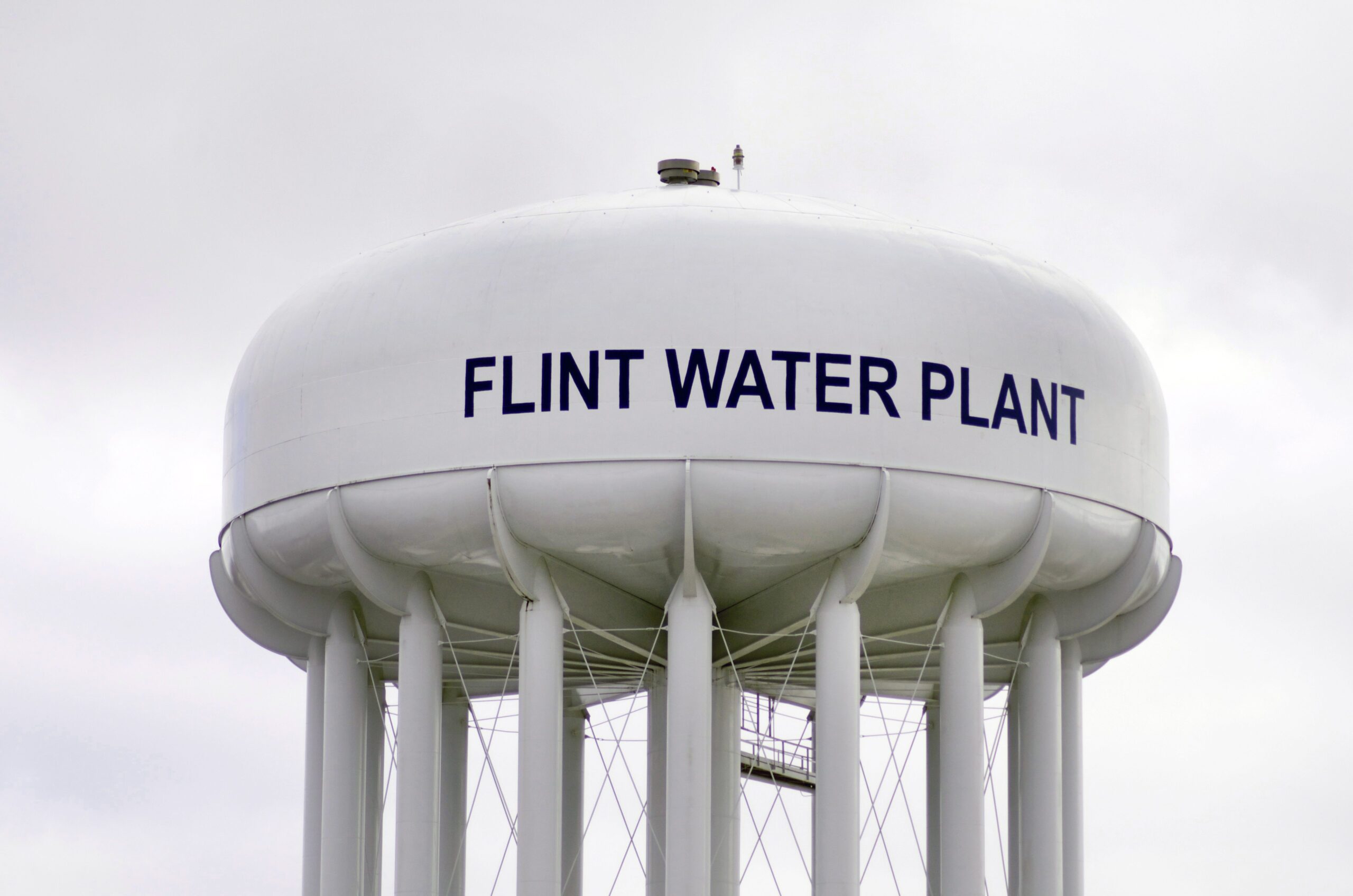
The USA are perhaps the home of western “modern environmentalism”: high pollution and symbolic events such as the fire of the Cuyahoga river have already favored the foundation of state control bodies such as the EPA (Environmental Protection Agency) and the formation of a public environmental consciousness between the 60s and 70s. Despite this, citizens still face dangers for their health, as in the case of the “Flint water crisis”, in Michigan, which occurred between 2014 and 2016 and caused by the change of sources of drinking water supply. To reduce costs, the city administration closed the contract with the Water and Sewage Department Water and Sewage Department Department, DWSD), and began to use the Flint River as a source of water. The features not adequately evaluated of the river water, combined with the cynical hydraulic system in the most part still served by lead pipes, caused the release of the metal in drinking water in the following two years, as well as the proliferation of the bacterium Legionella. This led to 91 cases of legionellosis, 12 of which are lethal, and lead intoxications, with serious consequences on the nervous system of fetuses and children. The management of the crisis was affected by political decisions: it was decided to interrupt, for economic and consent reasons, the pioneering use of an artificial intelligence model to plan the excavation and search for lead pipes, causing delays in the remediation of city systems. The reintroduction of AI program, however, briefly led to the reclamation of 95% of the lead network.
Political responsibility and economic crisis: how to arrive at the Flint water crisis
Like many other social and environmental crises, in the US and in the western world, that of Flint has its roots in the collapse of the economy. Since the 1960s, the town of Flint was supplied with drinking water from the detroit (DWSD) aqueduct, which was supplied by Lake Huron, maintaining the old local plant that exploited the waters of the nearby Flint River (Flint Water Service Center, FWSC), built in 1883, only for emergencies, without investments for adjustments.
The rapid growth of the city during the years of industrialization (thanks, for example to the factories of the automotive producer General Motors, GM), however, had undergone a brake over the years and led to the disappearance of jobs: at the time of the water crisis, 43% of the inhabitants lived in poverty.
The slowdown of the local economy led to the depopulation of the city, with an exodus of the richest bands of the population towards suburban areas or in areas of the States with better work perspectives. Less inhabitants means less revenues from taxes, a condition that in the 2000s the administration’s coffers in crisis, struggling with obsolete and oversized infrastructures to be maintained.
In 2012, to reduce costs, the administration approved a plan to mix DWSD water with that obtained from the Flint river and in the end in 2013, in the absence of an agreement with Detroit, the local Flint plant became the main source of water. Despite some grievances, such as those of the supervisor of the local Mike Glasgow plant, since 2014 the passage to the waters of the Flint river became effective.
Dirty water and corrodic systems: the causes of drinking water poisoning
After a few weeks, several citizens reported that the unborn water appeared dirty, red/orange color, with an unusual smell and flavor. The complaints also came from the GM plants, which after a few months changed water supplier, because that of the Flint plant was too corrosive for industrial processes.
Due to the high organic material in the river waters, the potabilization system had to use massive doses of coagulants (products that allow you to clean up water, precipitating pollutants) iron chloride. These treatments and the consequent fluctuations of pH in the water supplied were not adequately monitored: the system did not use additives (such as phosphates), to control the corrosive power of post-treatment water.
The legionella epidemic and the lead in the water: the consequences of the environmental disaster
The presence of high organic carbon and iron values dissolved in the water were identified as conditions favorable to the development of the bacterium Legionella and coliform bacteria in the water: in the summer of 2014 the bacterial count passed the maximum threshold several times, but only in 2016 were official communications on the legionellosis epidemics, which in the meantime had caused 91 infections and 12 deaths.
The high corrosive power, combined with the high percentage of lead pipes (PB) of the old distribution system, also caused the increase in concentration of this metal in drinking water. In February 2015, the tap water analyzes of a resident, Lee Ann Walters, showed a value of 104 µg/l of PB, while 20% of the samples taken in the city exceeded 15 µg/l, a value considered alarm in the USA (and greater than the law value for potable waters in Italy and Europe, 10 µg/L).
Lead exposure is a serious problem especially for fetuses and children, susceptible to much lower concentrations than adults: in children, lead is in fact associated with damage to the nervous system, learning problems, lack of physical development (low stature) and malformations of blood cells. In adults, higher concentrations lead to cardiovascular problems and hypertension, reduced kidneys functionality and problems for the reproducer system of both sexes.
The response to the crisis and the help of artificial intelligence
In 2016, the Governor of Michigan requested the state of emergency, and the White House authorized the intervention of the Federal Emergency Management Agency (FEMA), the American “civil protection”, in the management of the crisis: the first interventions were the distribution of bottled drinking water and the installation of filters in the houses where the analyzes had shown high levels of lead.
The next step was “reclaimed” the plants, looking for and eliminating lead pipes: a colossal task, above all due to the age of the plants and the scarcity of never digitized documents, which often led to dig in areas where the pipes were already in copper.
A group of volunteers, economically supported by Google, developed a machine learning system capable of studying the data of the excavations performed and the information available (such as the year of construction of the houses, the period of development of the neighborhood and the type of building) to create a predictive search model for lead pipes. It was a success: during 2017, following the indications of the AI, 70% of the excavations performed identified pipes to be replaced.
In 2018, however, a change of contractor for excavations and political pressures for a more “distributed” research on the territory led to the abandonment of the model. The move placulated the complaints of the inhabitants of less controlled areas, but in November of the same year, only 15% of the excavations brought to light lead pipes.
In three areas included in the new excavation plan there were hundreds of interventions, which however led to the discovery of a few lead units to be replaced; In the meantime, neighborhoods indicated by the IA model as “high risk” saw a significant slowdown in the works. In 2019, on pressure from the state of Michigan, the predictive model was reintroduced and in 2022, the municipal administration declared that they had reached 95% of the planned works.