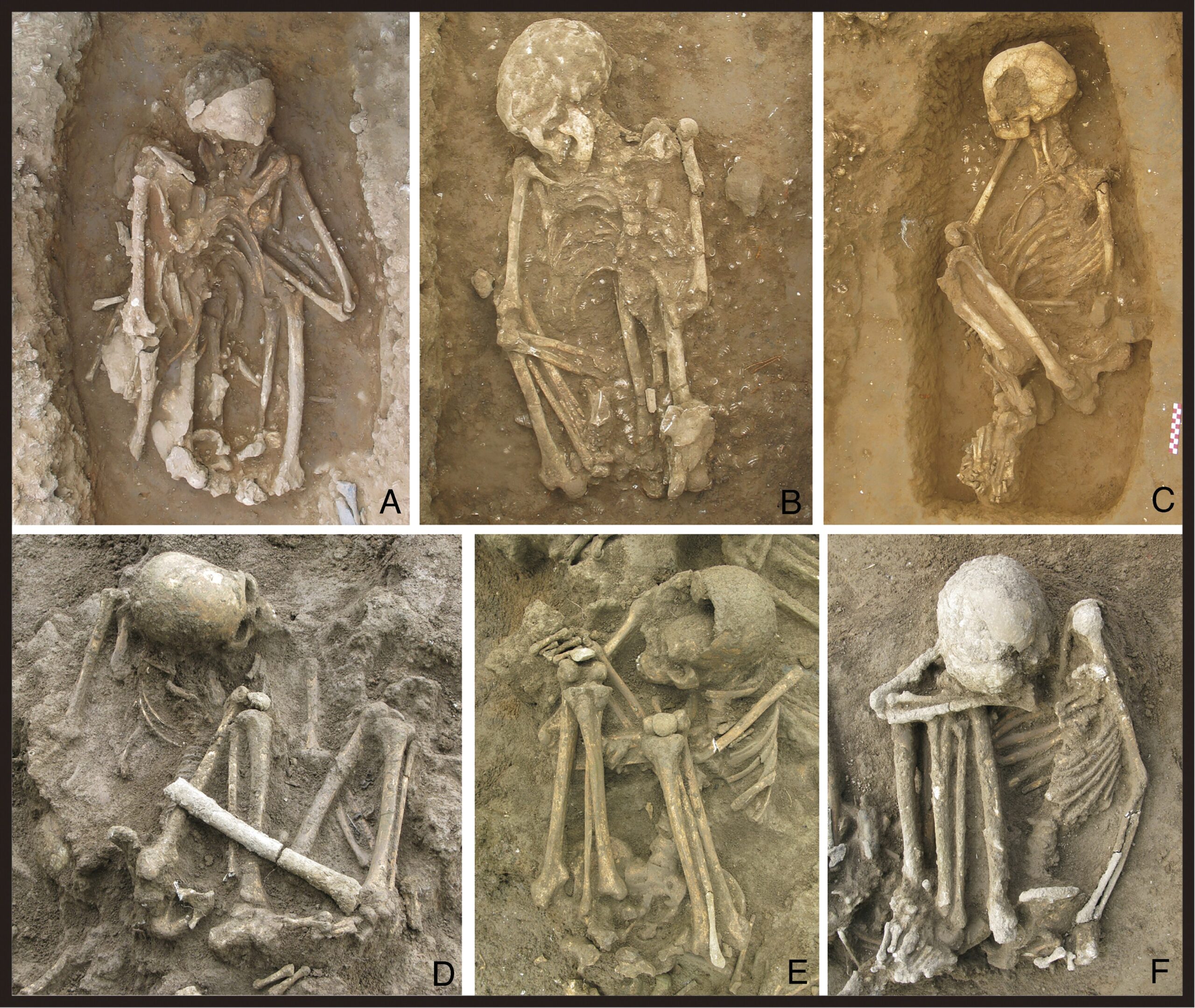
A large group of Asian researchers, gathered in an international consortium, has just published a revolutionary study that could rewrite the chronology of the most remote known mummification practices. Scholars have identified traces of a particular type of mummification, obtained with heat exposure, on a sample of 54 pre-neolithic burials from 11 archaeological sites of South-Edoriatal Asia in China, Vietnam and Indonesia dating back between 12,000 and 5,000 years ago. These practices, similar to the habit that still used in Papua, anticipate the most known ancient mummies by about 3,000 years, namely those of the Ande chinchorro.
The research group is led by Hsia-Chun Hung, of the University of Canberra in Australia, and composed of researchers from China (University of Beijing, Guanxi Archeology Institute of Dingsishan, Hunan Archeology Institute), Japan (University of Tokyo, Rykkio, Niigata and Sapporo), Indonesia (prehistoric study center, research center. Archaeometrics of Jernta, Department of Culture and Tourism of Papua) and Vietnam (Center of Archeology, Institute of Archeology). A feature that unites the burials taken into consideration is the position in which the individual was buried, or “hyperflex”. In archaeological language, this term indicates when the body of the deceased is folded in an extremely unnatural position, curled up, not possible to keep in life for a long time, with his knees extremely close behind him. It is therefore a manipulation of the body necessarily obtained post-moral. This funeral use is attested in many prehistoric burials of South-Eastern Asia, an expression of the funeral cultural of the groups of hunter-gathers who populated this territory.
When a body decomposes inside the ground, the disappearance of soft fabrics leaves empty spaces, inside which the smaller bones (especially the phalanges of the fingers of the feet or hands), due to the severity or the infiltration of water tend to move, moving away from their original position. In Thafonomy (the science that studies the modifications that involve a body after death) this phenomenon is called “decomposition in empty space”, and is very common when an individual is buried within a case, but also in a fairly compact soil, as in prehistoric cases taken into consideration in this study.
However, to hit the researchers, it was the fact that although there were the conditions for this to happen, in the sample of burials chosen the positions so strictly hyperflex of the bodies did not allow a great dispersion of the smallest bones inside the pit. To understand the reason for this anomaly, the human remains have undergone X -ray analysis, and to the Fourier transformation, techniques to detect exposure to heat. These have reported that some bones, in precise points, were exposed to a certain point at an intense source of heat. This peculiarity had already been noticed macroscopically on the bones, with some decidedly blackened points, which immediately took the attention of scholars. The temperatures to which these bodies have been exposed have not been high enough to carbonize the bodies, but enough to “dry” them.
The controlled exposure to a source of heat, which caused the burning of only some parts of the body of the deceased, may have been used to cause a drying of the soft tissues, allowing them to keep in anatomical connection for a certain period of time. It is effectively of the same principle as the habit, which allows the organic material to be preserved longer, used for the conservation of some foods. It is obviously a rather rudimentary bodies conservation technique, in fact, in the prehistoric sample taken into consideration, no soft fabrics have been kept, but which in a humid climate such as that of South -Edoriental Asia would have allowed a body to keep a little longer than normal. The use of this particular technique of artificial “mummification” would explain how these bodies have been deposited so hyperflex inside the tombs, keeping in the same exact position after millennia, without a dispersion of the small bones directly linked to the cadaveric phenomena.
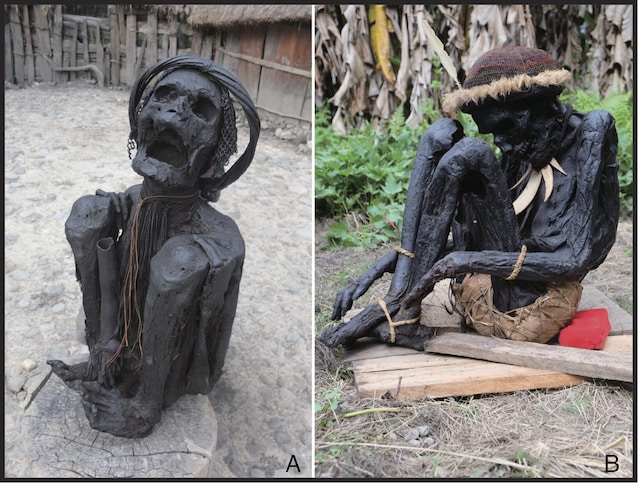
A modern ethnographic comparison also seems to support the theory of the Asian research group. Similar practices, aimed at creating “smoked mummies”, are attested to some Absortia cultures of Australia, but above all on the island of Papua (politically divided between Indonesia and the state of Papua New Guinea).
At Papua, at some tribes of the interior, it is still common to “smoke” its deceased loved ones, in such a way that the body, hyperflex, can be preserved and venerated inside the house. Some details detected on the bones of the archaeological champion studied, such as the precise points exposed to heat, seem to suggest that the smoking practices of the hunter-rackets of southern China and Vietnam of 12,000 years ago were not very different from those still used in Papua.
These traces of intentional mummification, or not connected to certain climatic situations such as the arid climate of the desert or the glacial one, would therefore be the oldest in the world, prior to the mummies of the Chinchorro of Peru and Chile, so far considered the first artificial mummies never found, 3,000 years.