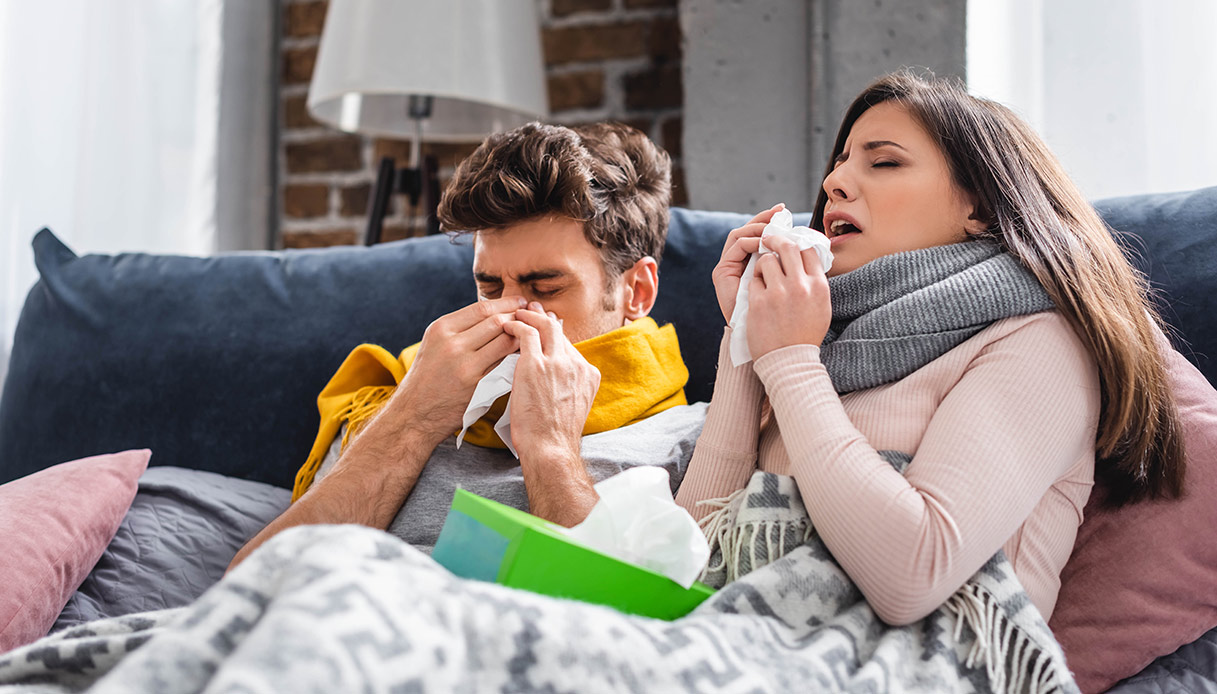
Even if you can never say how the flu season will be, under penalty of being denied by the facts, there are signs that indicate a potentially problematic season, being at least being verified in Australia. All this, while the attention to Covid is certainly not lowered. To complicate the situation there are other paintings such as those determined by the syncial respiratory virus or RSV and by bacteria that cause infections of this type.
How much do these conditions on the health of the individual and public health weigh? And above all, what can be the optimal models to make prevention of prevention widely on all citizens, with obvious attention to the bands most exposed to complications such as the elderly and those who suffer from chronic diseases? Here are some answers of the experts, Merse on the occasion of the meeting “Respiratory infections: impacts on healthy ageing and SSN costs“, Made by The European House – Ambrosetti.
How much respiratory infections weigh
Every year in Italy there are about 188,300 cases of respiratory infections per 100,000 inhabitants, a figure higher than the European average. Each citizen gets sick almost twice a year, with a particularly high incidence in children (323,000 cases per 100,000) and significant in the over-50s (140,000 cases per 100,000).
In the last year, the flu-like syndromes, attributable to a plurality of respiratory viruses and not only to traditional flu viruses, affected 27.7% of the population, growing compared to the previous season. Respiratory infections are also among the pathologies for which more antibiotics are prescribed, often in an un appicked way, contributing to the development of resistant strains and the phenomenon of anti-maid-stay, inserted by the WHO among the 10 main global threats to public health, together with the vaccination performance.
“In addition to a public health point of view, respiratory infections are also characterized by a high economic burden. On the basis of an analysis of the medical-scientific literature we have estimated an annual cost of direct and indirect respiratory infections for the national economy of approximately 7.5 billion euros. These costs are inclusive of the use of health resources (hospital hospitalizations, outpatient access, drugs and drugs and drugs and drugs and drugs. diagnostics), the loss of productivity (of individuals and caregiver) and the economic value of the years of life lost for the mortality caused by these pathologies “
Report Rossana Bubbico, Senior Consultant of The European House – Ambrosetti.
Who risks more and how to protect it
Immunossenescence – aging of the immune system – exposes the elderly to higher risks. 88% of flu deaths in Europe concern this range of population, as well as over 96% of the deaths for Covid-19 in Italy. The syncial respiratory virus (RSV), often underestimated, due to over 26,000 hospitalizations and 1,800 deaths every year, especially among the elderly.
“Every year, during the season of the circulation of flu syndromes-which include influence, Covid-19, syncial respiratory viruses, fluctuations and rhinovirus-in Italy there are between 5,000 and 15,000 excess deaths, with the elderly and fragile subjects that are among the most affected”
Massimo Andreoni, scientific director of the Simit and Full Professor of Infectious Diseases at the Tor Vergata University of Rome, says.
“These are numbers that would be enough to confirm how respiratory infections represent a real priority of public health, not limited to the winter period only, as the data on the Covid of these weeks also demonstrate. In this context, vaccines are confirmed a decisive tool: they not only reduce the risk of contracting and transmitting the infection, but allow to prevent thousands of hospitalizations and deaths, lightening at the same time. health “.
Vaccinal prevention is recognized as the most effective intervention to reduce the spread of respiratory infections, reduce hospitalizations and mortality and contain health expenditure. Despite this, vaccination coverage rates in Italy remain dramatically low.
Objective, bring vaccinations closer to people
In recent years, health companies have adopted new measures to strengthen vaccinations: the active call of citizens, now used by 70.7% of the structures, is the most widespread and effective tool. After the pandemic, almost half (47.6%) of the companies opened new vaccine hubs and over a quarter (27.4%) has expanded the territorial network.
However, delays remain: only 8.3% have invested in digital systems for reservations and monitoring, and just 37.6% have started recovery programs for defaulting subjects. A central garrison remain family doctors: 96.2% administer the flu vaccine and 94.9% the antipneumococcal, but the share drops to 75.9% for the anti-crovid vaccine.
“In recent years in the face of an aging of the population and the increase in chronic pathologies, we are witnessing a progressive removal of citizens from vaccinations; we must ensure that patients return to trust science, this is important for their health”
Lara Morelli, deputy secretary of Fimmg Roma specifies.
“To do this, it is essential that from us doctors, (both general practitioners, and specialists), a unique message arrives that proposes a specific vaccination program that is sewn as a tailored dress, on the needs of the individual assisted”.
The national secretary of Federfarma Michele Pellegrini Calace says:
“Pharmacies have proven to be valid support for public vaccination structures thanks to their peculiar characteristics: the capillarity of the network, the high professionalism of the pharmacists specially trained for the administration of vaccines, the amplitude of the opening hours and the IT connection to public platforms. The operating model adopted by the pharmacies during the pandemic has also been extended to the influence vaccination and other vaccinations Similar, such as Herpes Zoster and HPV in the Marche, anti-Pneumococcal in Lombardy.
Six goals to improve
The picture is clear: in the face of a rapid aging of the population – in 2050 over a third of Italians will be more than 65 years old – our country must strengthen prevention and relaunch vaccination campaigns, overcoming the organizational and cultural barriers that today brake adhesion.
Serves:
- guarantee a national vaccination registry and a constant update of the vaccination calendar, including new immunizations such as Anti-Covid and Anti-Crsv;
- promptly publish the ministerial circular on anti-influence and anti-covid vaccinations to allow the regions to organize the seasonal vaccination campaign in time;
- enhance communication with clear and reliable messages, capable of contrasting fake news and disinformation;
- facilitate access to vaccines, expanding the administration network (MMG, pharmacies, RSA, mobile units);
- Introduce active call and “opportunistic” vaccination systems, which uses opportunities for contact with the health system;
- Approach protocols between regions, hospitals and RSA to establish vaccination clinics to promote vaccination in the most fragile subjects.









