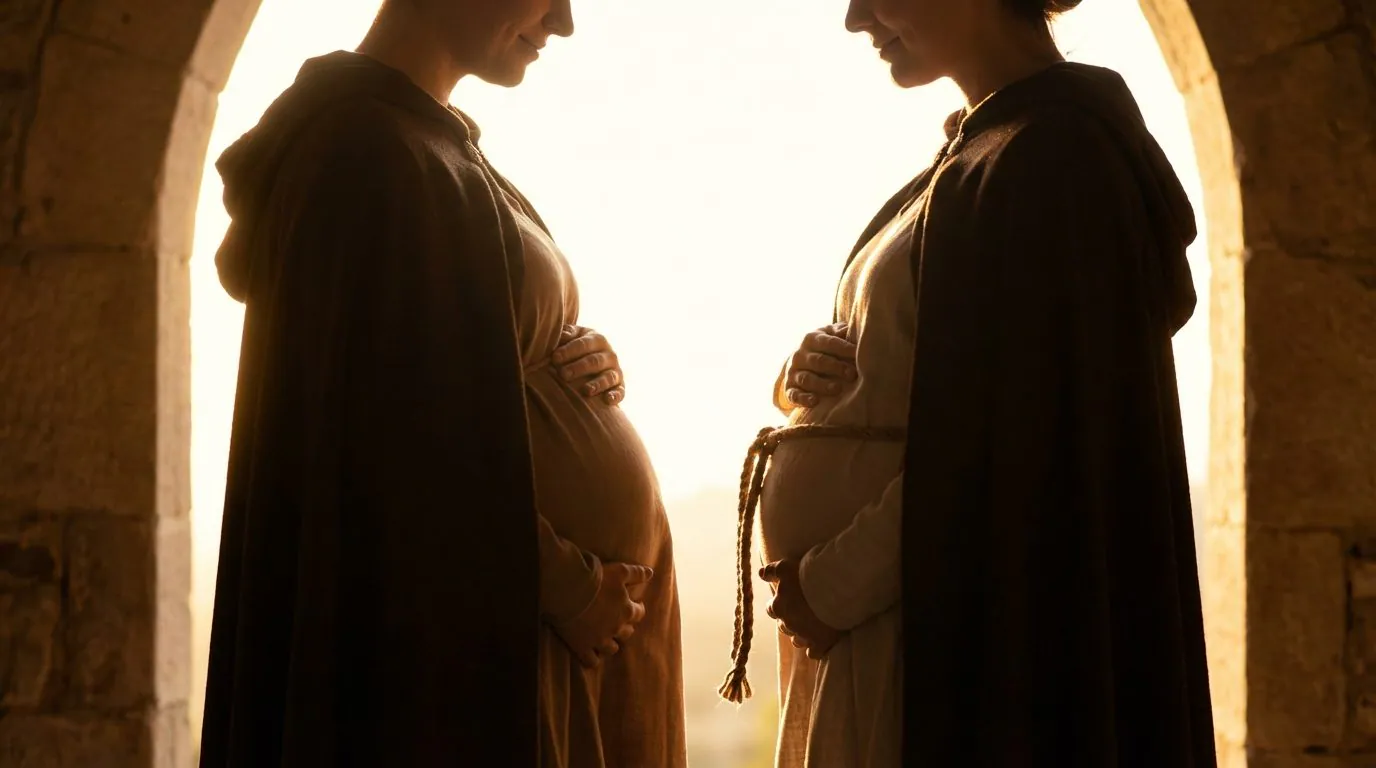
A recurring grammatical error in the Italian language is that of saying or writing “pregnant women” (or even “pregnant women”) instead of “pregnant women”. But the correct form in the plural is, in fact, “pregnant women” as confirmed by Treccani and the Accademia della Crusca: according to our language, in fact, if the noun is plural the adjective also agrees with it both in gender and in number.
The use of the singular term for the plural comes from an erroneous belief linked to the etymology of the word which however has not been corrected.
Etymology of the word “pregnant”
As the Treccani encyclopedia points out, although the etymology of words allows us to decipher their historical and semantic stratification, it is not so reliable for interpreting their grammatical behavior in contemporary linguistic use.
This statement fits perfectly: in fact, we tend to say “pregnant” women, using the adjective as if it were invariable, in the singular rather than the plural, precisely by virtue of the etymology of the term.
In fact, the word “pregnant” comes to Italian from medieval Latin “pregnant“, which in turn derives from the present participle inciens -entis (in Italian “pregnant”) of the classical Latin verb incingĕre (literally “to encircle, to surround”).
The belief therefore spread that pregnant women at the time used to wear a sort of belt around their belly to indicate their pregnancy. According to another theory, that of Isidore of Seville (in Etymologies) would have been exactly the opposite: the prefix “in-” would have a negative value e pregnant would mean “not cincta“. This would imply that pregnant women did not wear any belt. Roman women used to wear the “zona”, a belt that tightened the tunic at the waist (or under the breast), and which had to be removed when the belly began to become too large.
Whether the prefix “in-” was illative (in this case, the belt placed around the belly) or privative still remains a historical problem today, although modern linguistics considers the first of the two theories more probable. But there is a third hypothesis, much more accredited, which finds its roots in the Greek language.
But what word was used in Greek and Latin to indicate pregnant women?
Pregnancy words in Greek revolve around the verb κυέωwhich includes the concept of “carrying”. The nouns derive from this verb κύησις (“pregnancy”), κύημα (“embryo”) and the adjective κυόεις (“pregnant”). The meaning would be conveyed by a root that refers to “swell”, and therefore to the swelling of the belly and the fullness of the belly.
And this is where the third hypothesis arises: that incincta was a reworking of the older Latin term incienswhich meant “pregnant” and which is connected to κυόεις and therefore to the concept of “being bloated”. Those who spoke Latin would then transform the archaic inciens in pregnant for ease of pronunciation and because it was linked to the fact of wearing (or not, as we said we are not sure about this) the belt (belt).
According to a Greek doctor of the time, who worked for the Romans, the Greek term for pregnancy derives from κεύθησιςi.e. “concealment”, which in turn would come from κεύθω“HIDE”. According to this second presumed etymology, it alluded to something hidden in the woman’s body and which was to be hidden from prying ears and eyes, to prevent bad luck from coming to the pregnant woman and causing her to miscarry.
In Latin, in addition to the term pregnantthere were three words to define a pregnant woman: pregnant, praegnans and (although little used) ciens:
- Pregnant: from the adjective gravisi.e. “heavy”, brings with it a sense of tiredness, heaviness.
- Praegnans: perhaps derives from a prae- followed by natus/nascortherefore indicates the state of the woman “before birth”
- Ciens: it seems to derive from the Greek verb κυέω“swollen belly”, (kyéō“to be pregnant”). However, it should be taken into consideration that the combination with kyéō is an old-fashioned etymological suggestion and that modern linguistics considers its root different from that of κυέω.
In any case, among the three words, gravida was the most used, at least on a literary level.
In summary, therefore – beyond euphemistic phrases used for modesty that revolve around the state of pregnancy such as “having bread in the oven” or “being pregnant” – the words that indicate pregnancy revolve around the idea of fullness, roundness, heaviness and swelling.
However, it remains to be pointed out that the known terms were coined by men and we have no documentation regarding how pregnant women defined themselves among themselves. Here too, phrases were probably used to avoid talking openly about the pregnancy, such as “to be with child” (to be with child), “I want a polchinelle in the shooting room“(have a puffin in the drawer), “be in a state of good hope” (to be in a state of good hope). All expressions to avoid directly making an explicit reference to the pregnancy for good luck and to avoid being victims of the evil eye from envious people.