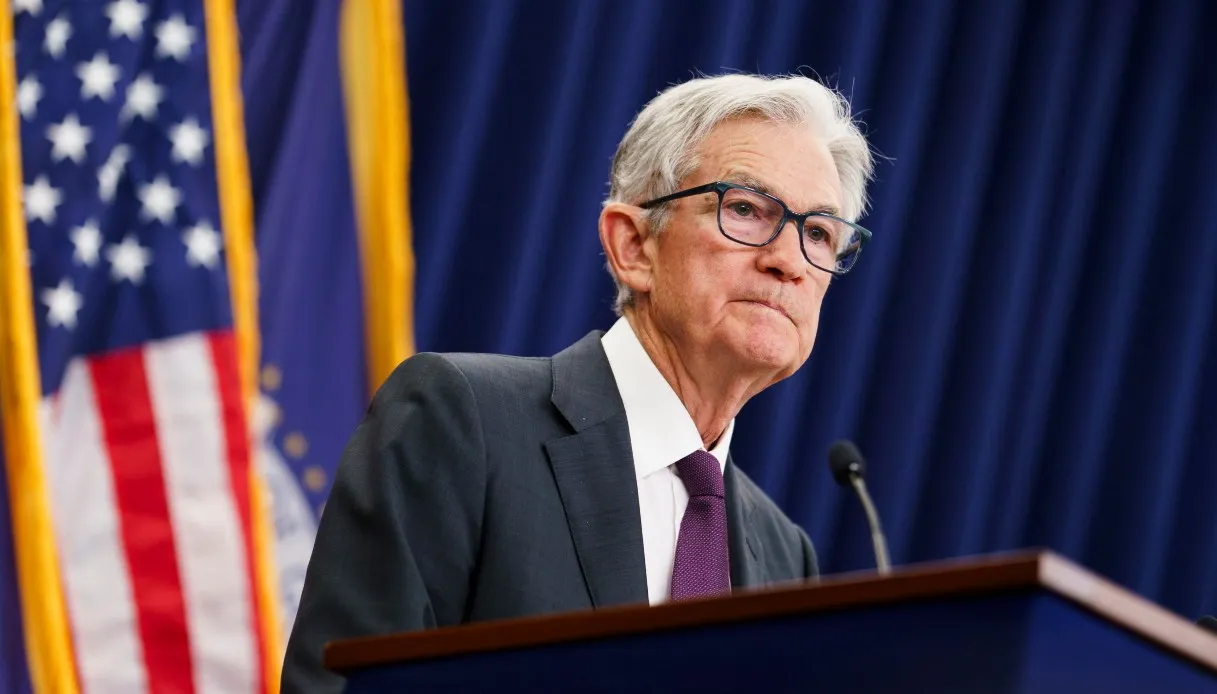
The rise in oil prices linked to the conflict with Iran does not mean that the Federal Reserve will automatically react with a monetary tightening: this is the indication given yesterday by President Jerome Powell, who spoke yesterday at Harvard, who underlined how American monetary policy is “in a good position” to wait and evaluate developments.
Rates, Powell tries to stem rising fears
Translated: the institute, obviously, is at the window and will monitor inflation expectations which “remain well anchored”, Powell said, reiterating the central bank’s commitment to reaching the 2% inflation objective. If the shocks continue and multiply, the Fed may be forced to intervene. At present, however, the line is one of caution.
In fact, the Fed believes that energy increases of this kind could end in a relatively short time, on the contrary the effects of a possible rate increase would continue to manifest themselves even when the shock on oil may have already been “absorbed”. Statements, those of the President of the Fed, which immediately pushed down expectations of a rate hike this year, thus alleviating fears of a tightening of monetary policy.
The reaction of the markets
The most interesting reaction came from the bond market which has recovered ground after the deepest collapse in the last 17 months with operators now betting on a reversal of course by the Fed and starting to price in a remote possibility of cuts this year. Yesterday, the yield – which, remember, moves inversely to the price – of the ten-year bond was down to 4.328%, from 4.44% on Friday. The three-month bond yield saw a slight decline to 3.684%.
Not just the Fed, what will the ECB and BoE do?
S&P expects the ECB and Bank of England to raise rates once again in 2026, compared to the baseline scenario of two rate hikes by the ECB and one hike by the Bank of England. “The conflict in the Middle East has slowed down the European recovery, causing an increase in inflation, weighing on growth prospects and complicating monetary policy. Consequently, we expect interest rate increases by central banks as early as the second quarter of 2026”, underlines the S&P forecast contained in the “Economic Outlook Europe Q2 2026: Global Shock Leaves Recovery Uncertain”, published in recent days.