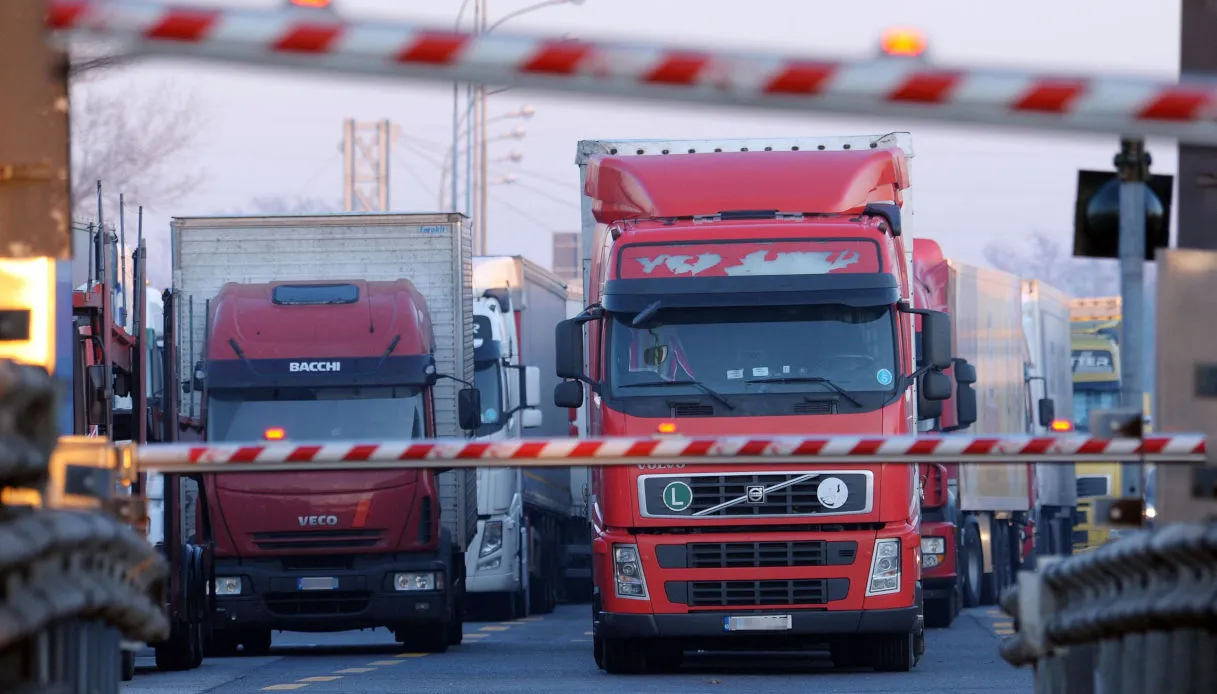
The truck strike announced in response to high fuel prices is the tip of the iceberg of a sector in trouble.
According to the analysis of the Mestre CGIA research office, one in five companies risks closing by the end of 2026 due to the liquidity crisis. If the price of diesel were to remain above 2 euros per liter there would be no alternative for many small owners.
Towards the truck strike
The truck strike is expected to start on May 15 and last for five days. The actual methods of blocking road transport will be communicated to the Guarantee Commission on Monday 20 April.
Road transport and expensive diesel
The sore point does not just concern the availability of fuel, but its economic sustainability for businesses. Today diesel costs on average 2.135 euros per litre, with an increase of 30.6% compared to the end of 2025 and 24% since the start of the conflict in the Gulf. A price level that is putting small operators especially out of business.
In practice, the trucks don’t stop because they can’t find diesel, they stop because they can no longer pay for it.
Fuel represents approximately 30% of a trucking company’s operating costs. When prices rise rapidly, the system breaks down. And the reason is financial: hauliers pay for diesel immediately, but collect the services even after 60, 90 or 120 days.
The numbers: a full tank today costs over 1,067 euros, that is
- +207 euros compared to a few weeks ago;
- +250 euros compared to the end of 2025.
On an annual basis, the cost of fuel can reach around 76,860 euros per truck, an increase of almost 17,500 euros compared to 2025.
Truck strike and risk of domino effect on the economy
The stoppage of trucks risks having immediate effects on the entire supply chain with a slowdown in deliveries, logistics problems and possible delays in the distribution of goods.
The problem comes from afar: in the last 10 years, the number of road haulage companies has fallen from 86,590 to 67,349, marking -22.2%. And the prospects are even more critical with over 13,000 companies, one in five, which, as mentioned, risk closing by the end of the year.
Cutting excise duties
Paradoxically, the Government’s support measures regarding the excise duty cut turned out to be a boomerang. Hauliers are entitled to a refund on excise duties for professional diesel, but when the State cuts excise duties for all consumers, that reduction is deducted from the reimbursement due to the category. Result: the discount at the pump neutralizes the specific tax advantage, leaving carriers without a real reduction in costs. In other words: while normal motorists derive a real benefit from the excise duty cut, hauliers save nothing more than before.
Fuel surcharge
The fuel surcharge is a contractual clause which on paper should guarantee the automatic adjustment of tariffs when the price of diesel fluctuates more than 2% compared to the reference values.
As written in the Mestre CGIA study, some clients do not apply the fuel surcharge clause while others apply it in a completely arbitrary manner, i.e. by separating the share corresponding to the cut in excise duties introduced by the Government. The result is that the risk remains with the hauliers, especially the smaller ones.