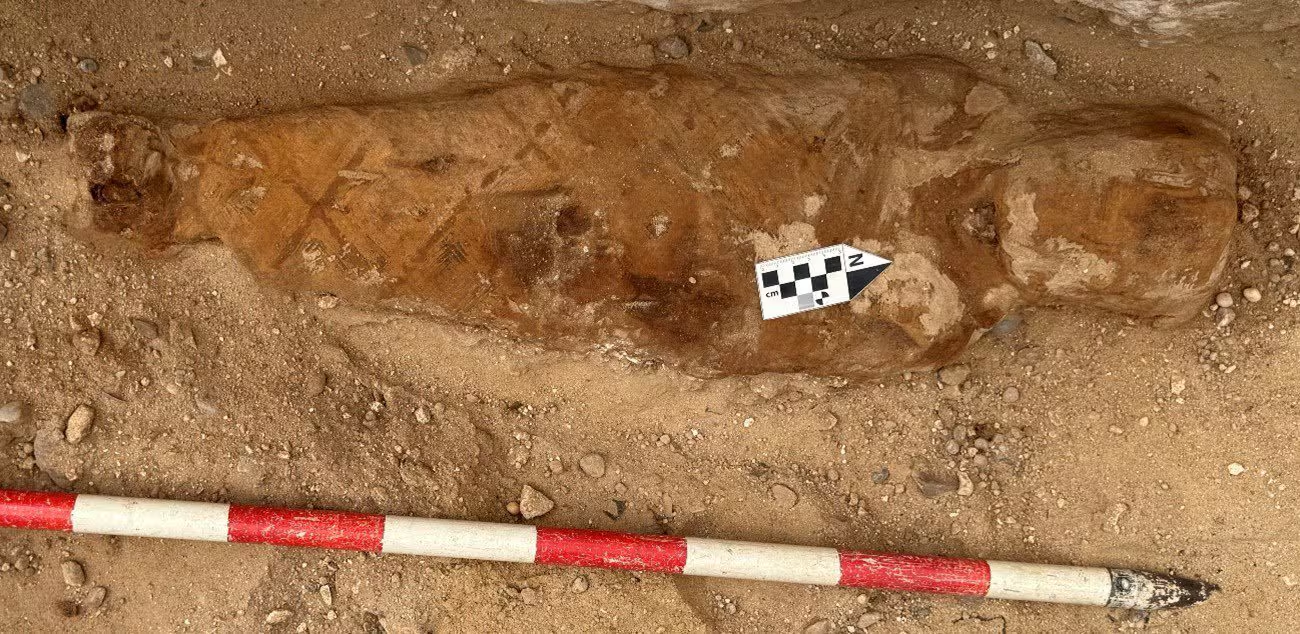
In Al Bahnasa, the ancient Oxyrhynchus, in Egypt, the Archaeological Mission of the University of Barcelona concluded the 2025-2026 campaign with a discovery defined as unprecedented in the history of archaeology: a fragment of papyrus with verses from Homer’s Iliad, deliberately inserted inside the bandaging of a late Roman mummy dating back to the 4th century AD
The mission, directed by Drs Maite Mascort and Esther Pons Mellado of the Ancient Near East Institute, has been active at the site since 1992 and is one of the longest-running Spanish missions in Egypt. The discovery occurred during the excavation campaign conducted between November and December 2025 by the team led by the archaeologist Núria Castellano, inside the so-called Tomb 65. The subsequent study of the find, between January and February 2026, was carried out by the restorer Margalida Munar, the papyrologist Leah Mascia and the philologist Ignasi-Xavier Adiego, professor of Classical Philology at the University of Barcelona.
The papyrus was placed on the mummy’s abdomen, packaged and sealed as part of the embalming ritual. The reading of the text, conducted by Mascia and identified by Adiego, made it possible to recognize the passage as belonging to the so-called “Catalogue of Ships”, the famous passage from the second canto of the Iliad in which the Greek forces lined up against Troy are listed.
The fact itself is not entirely new: in previous campaigns in Oxyrhynchus the mission had already documented Greek papyri inserted in the embalming process. The difference, however, is substantial. No literary text had ever been found in this context, with all previous papyri having magical or ritual content. The presence of the Iliad, the literary text par excellence of Greek culture, is an unprecedented case.
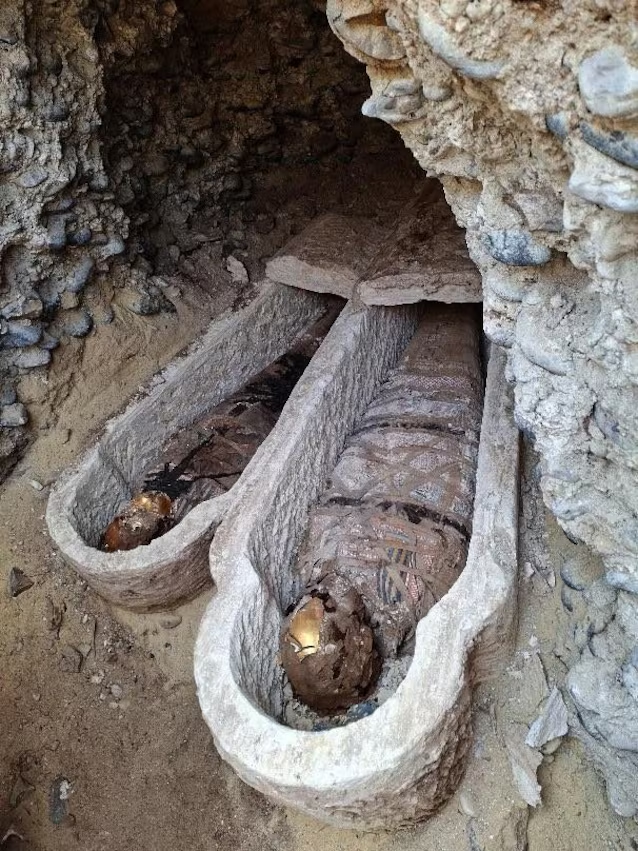
Tomb 65, despite having already been looted in antiquity, preserved a significant funerary ensemble. The mummies present were wrapped in linen bandages with geometric decorations in bright colors, accompanied by polychrome wooden sarcophagi. Three mummies had a gold foil in the shape of a tongue in their mouths, a fourth a copper foil: these are funerary amulets typical of Roman Egypt, considered necessary to guarantee the deceased the ability to speak in the afterlife during the judgment of Osiris. The presence of gold leaf applied to some mummies has led experts to believe that the deceased belonged to a wealthy class of the city.
Excavations in the eastern area of the necropolis also brought to light Tomb 67, a structure with three limestone chambers containing urns with the cremated remains of adults and a newborn, as well as feline bones. In the southern area of the site, terracotta and bronze statuettes depicting Harpocrates (Egyptian-Greek deity) on horseback and Cupid were recovered, demonstrating the syncretic environment in which Egyptian, Greek and Roman cults coexisted.
The question that scholars have not yet answered is why the papyrus with the Iliad was found in that position, i.e. on the abdomen of the deceased. There are various hypotheses in the field: it could be a sign of cultural status, an expression of identity linked to the Greek literary tradition, or a protective function attributed to the text. The find will be subjected to further epigraphic analyzes to reconstruct its circulation among the elite of Oxyrhynchus in the Roman imperial age.
The Al Bahnasa site is already known for the extraordinary quantity of papyrus recovered since the end of the nineteenth century, mainly from ancient urban landfills where the desert climate allowed the conservation of the materials. The real novelty of this discovery lies in the context: not a landfill, but a tomb, and not an administrative or magical text, but a literary work.