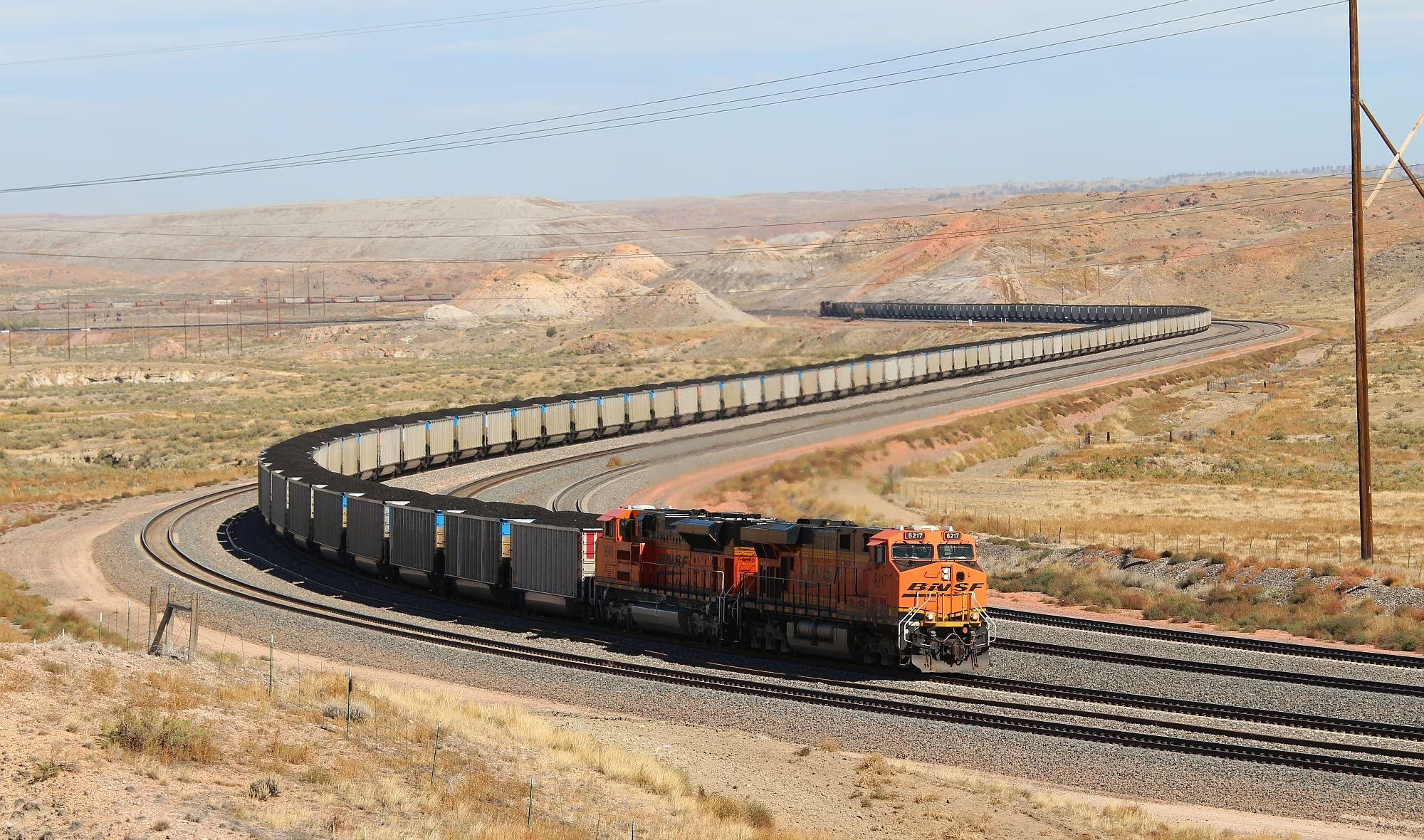
The longest train in the world was built in Australia in 2001: it was 7.4 kilometers long and was designed to transport enormous quantities of iron, from the country’s hinterland to the logistics hubs along the coast. The train in question named BHP Iron Ore train was designed by the current BHP Group Limited – an Australian multinational active in the mining sector – for the transport of iron ore from the Newman and Yandi mines – located in the arid outback – up to Port Hedland, a crucial hub in the international iron market in Western Australia.
We are therefore talking about a freight train, and not a passenger train, with truly record numbers: 682 wagons for a total length of 7,353 kilometers (like 70 football fields lined up!) and a weight of almost 100,000 tonnes, which made the train not only the longest but also the heaviest in history.
The creation of such an impressive means of transport was designed to test its response in relation to the principle of distributed power. A single locomotive at the head, in fact, would not have been able to correctly tow hundreds of wagons loaded with ore. For this reason, along the entire train at a distance of about one kilometer from each other, seven other locomotives were distributed (diesel-electric General Electric 6,000 HP – 4,500 kW), all controlled by a single engineer at the head and capable of solving the considerable problems of traction, coupling load and braking of the vehicle, preventing such a long train from “losing pieces” or becoming unstable on bends.
On 21 June 2001 the train carried 82,000 tonnes of iron ore, traveling 275km with a stop of almost 5 hours due to a faulty hook breaking at the Chichester Mountains. After the repair, two additional locomotives helped the convoy overcome the final differences in level, allowing the train to complete its journey which lasted a total of 10 hours.
This was the only run the train ever made, but it gave the company all the data they needed on the effectiveness of their new control systems.