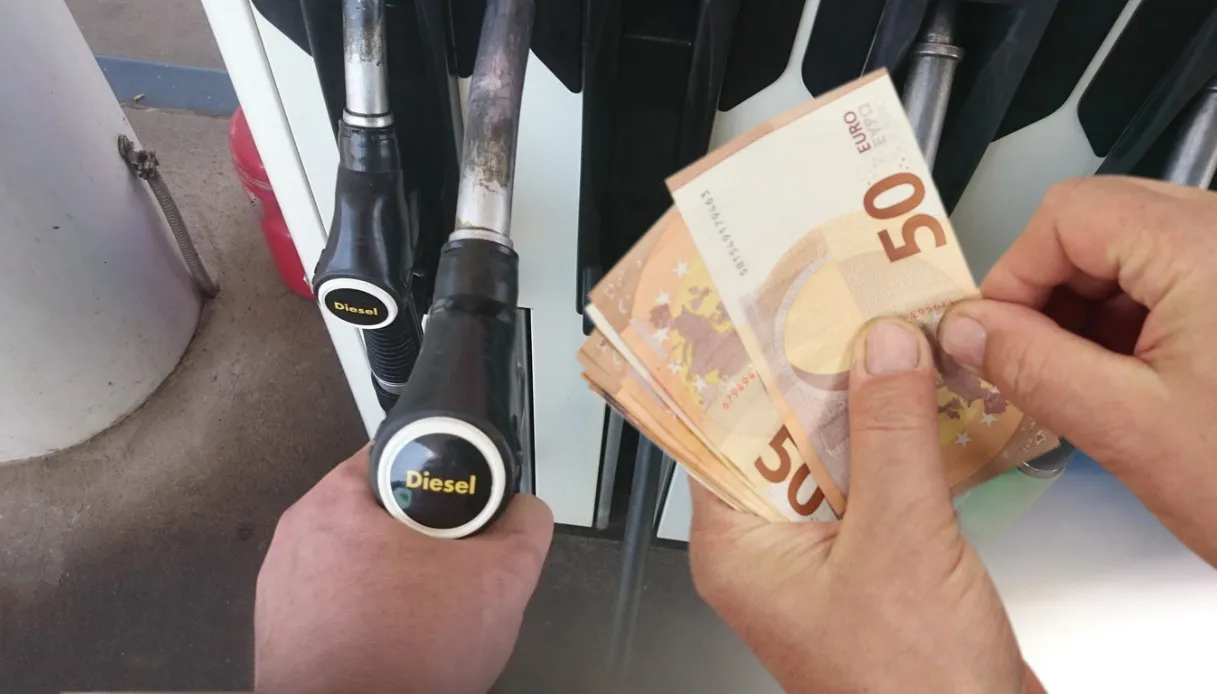
Fuel consumption is falling in Europe, in a context marked by the sharp increase in prices caused by geopolitical tensions in the Middle East. Buyers from the Old Continent are shaping their habits around a situation that shows no signs of changing, proving to be more prudent when traveling and therefore when purchasing supplies at the pump.
According to the latest Eurostat data, fuel sales in the Eurozone fell by 3.5% year-on-year in April. This is the first real decline after months of stability and the sharpest decline since 2023.
Italy in line with the European trend
Italian consumption is consistent with that of the euro area, settling at around 3% on an annual basis. There is no uniform decline between spending on private mobility and, for example, that on logistics, which remains stable. The decrease in the purchase of fuel, in fact, mainly concerns consumption linked to non-essential daily travel.
Motorists reduce the kilometers travelled, they increase their attempts to optimize supplies and there is a growing sensitivity to changes in prices at the pump, where even a cent per liter can make a difference. The result is a weaker fuel market compared to the same period last year. All the more reason for the Government to meet citizens with support measures.
Divided Europe, but with widespread declines
The phenomenon is even more evident in other European countries. In fact, double-digit reductions in fuel sales were recorded in six economies of the European Union. Prominent among these are Germany and Austria, along with other central and northern European economies, where the decline in demand has been faster than in Italy. In the United Kingdom the dynamic is similar but even more pronounced: fuel sales fell by 10% in April.
The causes: rising oil and geopolitical tensions
At the basis of this dynamic is above all the increase in oil prices, triggered by the upsurge between Iran, the USA and Israel which led to the closure of the Strait of Hormuz, through which approximately one fifth of the world’s oil transits.
Transit difficulties and the risk of further interruptions have reduced the perception of stability in global supply, pushing crude oil prices higher. This increase was quickly passed on to final fuel prices in European countries.
The impact on consumers was immediate. On average in the European Union, diesel prices increased by 33.7% year-on-year, while petrol prices rose by 13.6%. A significant increase that directly affected the spending decisions of families and businesses.
Accelerating inflation in the Eurozone
Changes in individual consumption also have other unpleasant and unwanted effects on the economy. Some macroeconomic consequences are already visible. Rising energy prices have helped push inflation in the Eurozone up from 3% to 3.2% in just one month. An increase that strengthens the pressure on the ECB, called to maintain a restrictive line or evaluate new interventions on interest rates.
The main risk is that of more persistent inflation than expected, fueled not only by energy prices, but also by possible indirect effects on transport, logistics and consumer goods.
The possible consequences in the coming months
The scenario of the coming months remains unpredictable. Geopolitical tensions are expected to keep oil prices high despite early signs of falling demand. On the other hand, however, the arrival of the summer season in the northern part of the world could contribute to temporarily changing consumption.
The International Energy Agency does not rule out a partial increase in petrol consumption, favored by a general distrust towards traveling by plane. However, this would be a compensatory effect and not sufficient to reverse the general trend. The overall picture remains fragile, because in addition to the contraction in consumption due to rising prices, we must also deal with the increase in inflation.