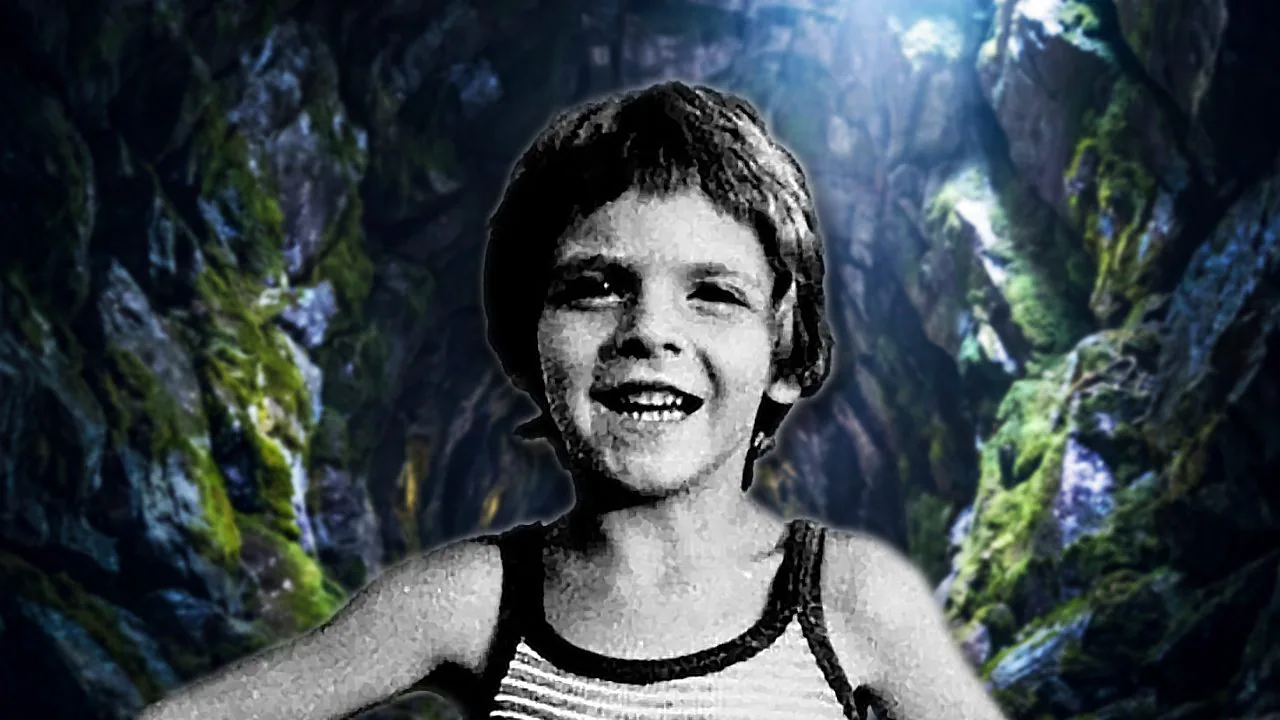
That afternoon Alfredino Rampi was no longer to be found. It was June 10, 1981 and a six-year-old boy accidentally fell into an artesian well tens of meters deep. The whole of Italy stopped, astonished, in front of the first truly non-stop live television broadcast in the history of our country, following the rescue operations with bated breath for days, for over 60 hours of agony. Alfredino’s body was recovered with the intervention of miners on 11 July, 28 days later.
But behind the human drama of Vermicino, which marked an entire generation, there was also an enormous technical, organizational and geological problem: the very limited knowledge of our subsoil and the absolute inadequacy of the rescue structures of the time.
Today we will reconstruct this tragic event by consulting historical archives, official documents and technical reconstructions. We will talk not only about what went wrong in those desperate days, but also about how this immense tragedy laid the foundations for the birth of modern Civil Protection and for a new approach to the geological study of the Italian territory.
The disappearance of Alfredino Rampi in Vermicino
It all began on the evening of Wednesday 10 June 1981, in the Vermicino countryside, in the Selvotta area, a few kilometers from Frascati and Rome. Little Alfredo Rampi, who everyone would soon learn to call “Alfredino”, was six years old and in September he was due to undergo an operation for a congenital heart disease.
Around 7pm, Alfredino is taking a walk with his father Ferdinando. At a certain point, he asks to be able to return home alone across the fields, given that the house was only a few meters away, but the little boy will never return from that walk.
Not seeing him arrive, his parents, alarmed, begin desperately looking for him in the surrounding area. The searches of the family begin around 8:00 pm and, around 9:30 pm, the alarm is given to the Police, who arrive on site with dog units and the Fire Brigade. It is around midnight that the dramatic discovery occurs. Police Brigadier Giorgio Serranti, inspecting the area, hears faint moans coming from the ground. He gets closer and realizes that they come from a well. However, the brigadier notices a disturbing detail: the entrance was covered by sheet metal. How could the child have fallen in there if the hole was covered? The mystery was clarified later: the owner of the land, that same evening between 8.00pm and 9.00pm, had found the uncovered well and had placed the sheet metal on it, totally unaware that shortly before, in the darkness, little Alfredino had fallen into it.
The situation immediately appears desperate. The rescuers realize that the child is stuck in a tunnel with a diameter between approximately 28 and 30 centimetres, at an initial depth of approximately 36 metres, in a well which descends for a total of 80 metres. A microphone is immediately lowered to be able to communicate with him: the child is scared, but responds, he is lucid, and the rescuers, in particular the firefighter Nando Broglio, try to reassure him by establishing a relationship of trust.
Let’s stop for a moment. Before continuing with the reconstruction we must clarify one aspect. I mean, why was there a hole 80 meters deep in the middle of the countryside? And what does this have to do with the geology of the area?
What is an artesian well and the causes of the accident
The hole into which Alfredino fell was an artesian well. An artesian well is a narrow and deep drilling (even 100 metres) that reaches an aquifer of water trapped between impervious layers. Thanks to the strong natural pressure, once the upper layer is pierced, the water rises and flows to the surface autonomously, without the use of mechanical pumps which are instead necessary in normal phreatic wells. To look for water, the owner of the land on which Alfredino was standing at the time had a local “pozzarolo” dig one between March and May of that year.
To make matters worse, there had been another human intervention: as also reported in the ruling of 4 July 1983 by the Court of Rome, between the end of May and the beginning of June, a soil excavation operation had lowered the area surrounding the mouth of the well. This had created a sort of vertical earth wall, a couple of meters high, at the base of which was the opening of the well. According to the technical reconstructions and the findings, it is very likely that Alfredino, perhaps for fun, slipped from that very embankment, sliding himself into the hole and dragging with him some fragments of poplar wood that formed the first precarious cover.
At the time of the tragedy, Italy had fragmented and insufficient knowledge of its subsoil. There were no detailed geological maps required for private work, there was no widespread awareness of safety regulations, and facing an emergency excavation in that type of terrain was like moving blindly.
But it is precisely in this context that that evening, shortly after midnight, the operations to save Alfredino began.
Alfredino’s rescue attempts: the drilling and the attempt to grab him
The first thing the rescuers try to do to extract him is to lower a wooden board tied to ropes (as a seat), hoping that the child will be able to hold on to it to be pulled to the surface. Unfortunately, this first attempt already turns out to be a very serious mistake: due to the irregular and narrow walls of the well, the tablet gets stuck at a depth of 24-25 meters. The ropes break and the tunnel is now partially blocked by that very board. In other words, access to the well from above is blocked.
Some mountain rescue speleologists, such as Tullio Bernabei, courageously attempt to lower themselves upside down to remove the obstacle. They almost manage to reach it… but the space is too narrow. You need to find another solution.
The then commander of the Rome Fire Brigade, Elveno Pastorelli, takes a drastic decision: he orders the arrival of an auger to dig a parallel well of about 90 cm in diameter. The idea is to go down and then dig a horizontal tunnel and recover the child from below. Work began on the morning of June 11 at around 8.30am, but the volcanic soil of the Castelli Romani was extremely hard and the equipment soon proved inadequate, drastically slowing down operations.
And on that very day, 11 June, a live TV broadcast began that would keep 21 million viewers glued to the screen, giving life to what, in fact, became our country’s first reality show of pain. But let’s get back to the rescue.
We are on June 12th. The then President of the Republic Sandro Pertini also arrived on site and attempted to comfort the child and his family in the midst of a crowd of almost 10,000 onlookers crowded around the area. At around 7pm, the drill finally finishes the parallel well and the rescuers break through the horizontal earth diaphragm. It seems done, they’ve reached Alfredino! But the discovery is chilling: in the dark tunnel, Alfredino is not there. How is this possible? Well, what they hadn’t considered was that the continuous and very violent vibrations caused by the percussive drilling in the adjacent well had moved the ground, causing the child’s little body to slide even further down and causing him to fall to about 60 meters deep. Every initial calculation was off.
At that point desperation takes over. The drilling cannot continue, volunteers with very thin physiques are needed to try a suicidal descent into that black gut that is not even 30 centimeters wide. Angelo Licheri, a small and very thin Sardinian printer, steps forward. He is lowered upside down and remains hanging in that position for 45 minutes, even managing to reach Alfredino!
He touches it, tries to strap it three times, but the laces keep slipping off. In a desperate attempt to pick him up, he even accidentally breaks his left wrist, but the child is too stuck. Licheri comes back to the surface exhausted, injured and without the child. At dawn on June 13, at 5:02 am, a young speleologist named Donato Caruso attempts the impossible, armed with handcuffs, to anchor himself to Alfredino’s wrists. But the handcuffs don’t hold, the little boy’s hands escape the grasp. Caruso is also forced to surrender.
Unfortunately, on the morning of June 13th, the heart of little Alfredino, who already had congenital pathologies, stopped beating. Alfredino Rampi was declared dead, suspended in the abyss, over 60 meters under the feet of helpless rescuers.
The recovery of Alfredino: the intervention of the miners of Gavorrano
At this point, to recover the body, the State must literally admit its inability and turn to those who know the underground professionally. The magistrate orders the body to be frozen by injecting liquid nitrogen into the well at -30°C to ensure its preservation, pending an extraction plan. A special team is called: 21 volunteer miners from the mines of Solmine di Gavorrano (in the province of Grosseto), workers accustomed to digging in search of ferrous pyrite. The miners were not rescue experts, but they possessed the essential technical knowledge of the underground. Knowing full well that further nearby drilling would cause collapses, they decided to dig a new “service shaft” of 80 cm in diameter at a distance of 15 metres, then joining it with a 16 meter long horizontal tunnel, digging day and night with jackhammer and pickaxe blows. Only a month later, on 11 July, the miner Spartaco Stacchini managed to reach the child, freeing him from the block of earth and ice formed with the nitrogen.
Let’s take a moment. We retraced the tragic story of Alfredino, going to see what solutions were implemented and why they proved unsuccessful in extracting Alfredino from that artesian well. But… why did I tell you all this?
Because the direct consequence of this tragic event was the foundation of the Civil Protection.
The birth of Civil Protection
The relief disaster exposed the state’s monstrous disorganization, technical improvisation and total lack of coordination. The child’s mother, Franca Rampi, transformed her enormous pain into a civil battle to ensure that similar tragedies never happen again, founding the “Alfredo Rampi Center”.
This strong emotional boost, combined with the shock of the Irpinia earthquake the previous year, led President Sandro Pertini and the government to institutionalize an emergency response machine. Thus the Department of Civil Protection was born in 1982, capable of mobilizing and coordinating all useful resources in the event of an emergency, which would then culminate in 1992 with the birth of the modern National Civil Protection Service, dedicated not only to coordination in the event of an emergency but also to the prediction and prevention of risks.
But it didn’t end here. The tragedy of Alfredino also had consequences from the point of view of the law. In fact, at the time there was a legislative loophole that allowed anyone to drill underground without criteria. Starting from 1984 it became mandatory to notify the State of every new drilling. In 1988 the CARG Project was also launched to map the national geological cartography in detail, and in 1990 decentralization began with the creation of the Regional Orders of Geologists, finally recognizing this figure as a bulwark for the security of the territory.