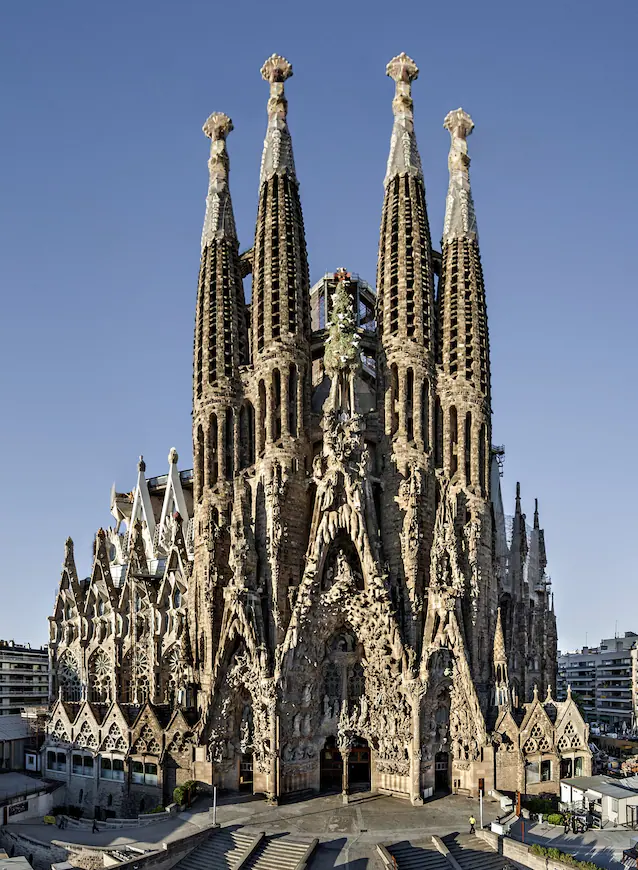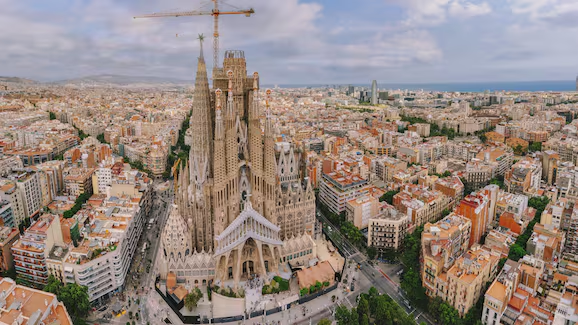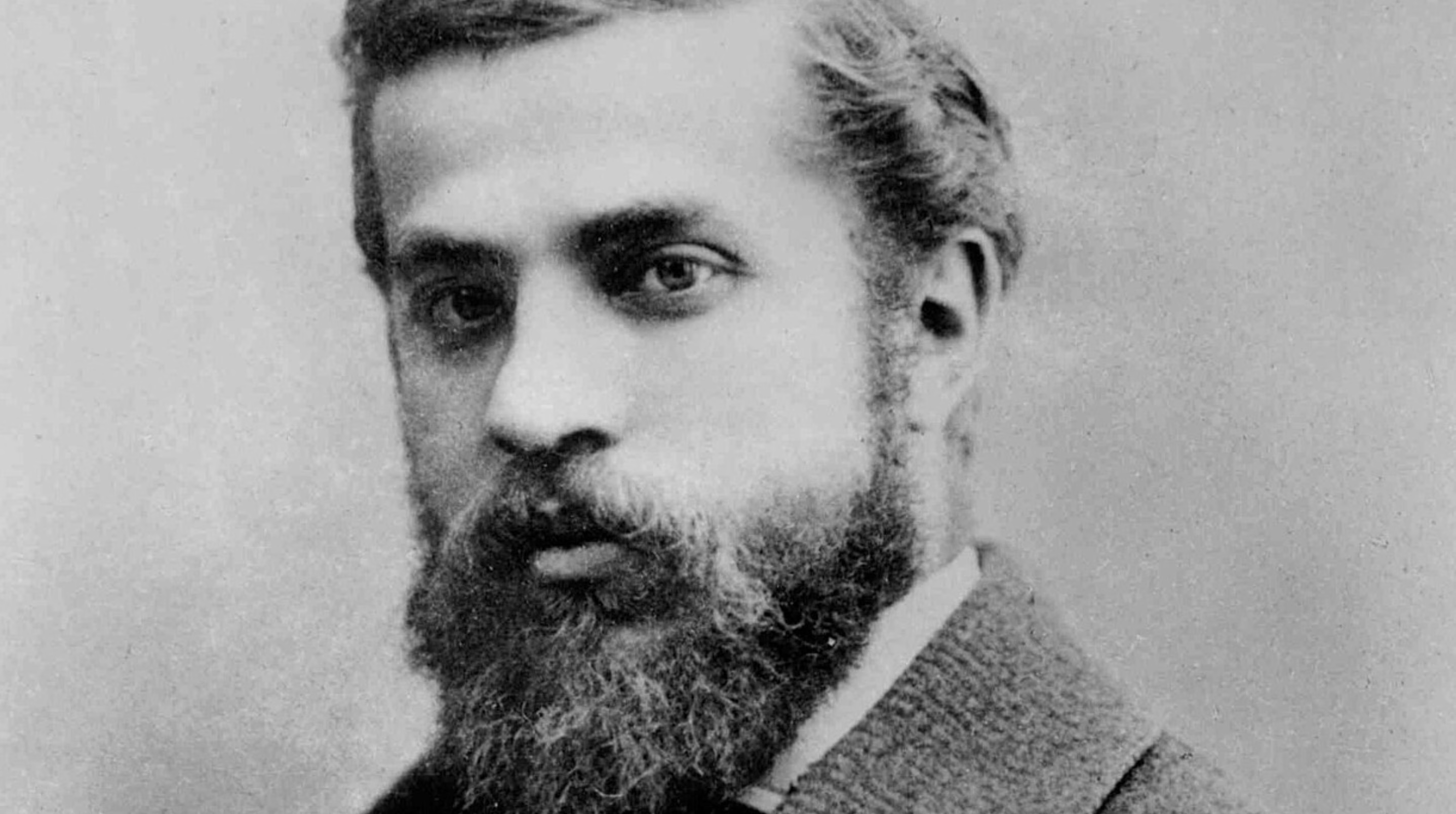
Walking in Barcelona, the capital of the Spanish region of Catalonia, you come across a series of extraordinary buildings and buildings with a unique, colorful and organic style (architectural approach based on man-nature harmony). These works all bear the name of Antoni Gaudí y Cornet, known simply as Antoni Gaudí. The architect, born on 25 June 1852 and died exactly 100 years ago on 10 June 1926 – after being tragically hit by a tram at the age of 73 – shaped the appearance of the Mediterranean city with his unmistakable style, which is home to most of his creations, such as the Sagrada Familia or Casa Batlló.
His ability to capture the Catalan spirit, also becoming a cultural model, makes him the most important exponent of Catalan Modernism and one of the most important names in European Art Nouveau architecture.
Who was Antoni Gaudí
Born on 25 June 1852 in Reus, southern Catalonia, Antoni Gaudí moved to Barcelona in 1869, where he met several exponents of the Renaixençaa political and cultural movement which, through the recovery of the Catalan language and culture, hoped for autonomy from the Castilian government. This perspective will greatly influence his artistic career, giving spirit to a very personal language that is practically impossible to pigeonhole.
Having obtained (not without difficulty and interruptions) his diploma in Architecture, Antoni Gaudí began to travel in Europe. In Paris – where he went to visit the Universal Exposition – he came into contact with the first exponents of Art Nouveau, an artistic movement born at the end of the nineteenth century in the context of the second industrial revolution with the aim of bringing beauty into everyday life by combining art and craftsmanship. The new architectural language was personalized by Gaudí, who mixed the great decorative richness inspired by the natural and animal world and the interest in the new industrial materials learned in France with Catalan culture, founding Catalan Modernism.
In Barcelona, Gaudí, although very young, began to have numerous assignments and commissions. He became a designer in the studio of his former professor Joan Martorell, former advisor to the philanthropist Josep Maria Bocabella, who would be the promoter of the construction of the Sagrada Familia church. Around this time he met the industrialist Eusebi Güell, who would become his patron.
The most famous and iconic works of the Catalan architect in Barcelona
After the first works, such as the lampposts of the Plaça Reial and Pla de Palau and the Casa Vicens, in the last decades of the nineteenth century Gaudí began to work closely with Güell, building him a palace which, for the first time included the parabolic arches, which would be typical of his style. Shortly afterwards he built, but did not finish, the colossal Parc Güell, an ambitious urban work built on the side of Mount Carmel and conceived as a garden city: in the center stood a large square surrounded by a colonnade, which was accessed via a large staircase populated by imaginary creatures (but similar to lizards) covered in colorful ceramic fragments. A unique work that contributes to his unstoppable fame.
This celebrity is further increased by two subsequent iconic works: the Casa Batlló and the Casa Milà (known as La Pedrera), among the most important buildings of the city and of its time. These are buildings with unpredictable and joyful shapes, enriched with decorative elements inspired by the natural world and colorful and virtuous details in ceramic, wood and iron.
His unfinished masterpiece: the Sagrada Familia
From his debut until his death, Gaudí worked incessantly on his most complex and still unfinished project: the Sagrada Familia (officially called “the Expiatory Temple of the Holy Family”), i.e. the new cathedral of Barcelona. By distorting the original project by Francisco de Paula del Villar y Lozano, Gaudí imagined a grandiose and revolutionary church, divided into independent blocks with underground elements and aerial volumes.
Construction will suffer constant interruptions: the project was complex and difficult to implement, also due to the very high spiers. Due to technical difficulties it became increasingly difficult to obtain financing. When the work restarted, Gaudí only managed to see the construction of one of the bell towers completed, the one dedicated to San Barnaba, because on 7 June 1926 he was hit by a tram (the first line in Barcelona) and died a few days later. His body was buried in the Chapel of the Virgin of Carmel, one of the four in the Crypt of the Sagrada Familia.