The 2026 World Cup is the first in history with 48 teams: the qualified nations cover practically all the main geopolitical areas of the planet. From Latin America to sub-Saharan Africa, from the Persian Gulf to Central Asia to Europe. The most prestigious football tournament perfectly represents the globalized world where migrations and multiple belongings intertwine. It follows that the players called up by the national team of a country in which they were not born, but of which they have citizenship, are 292, 23.4% of the total (1248). The highest percentage ever. According to research by the Center for Migration, Politics and Society (COMPAS) at the University of Oxford, the percentage remained between 2% and 14% until the last two editions, then saw a surge, reaching 16.5% in Qatar in 2022.
Most of the players were born in Germany (50), the Netherlands (67) and especially France (99), 53 of the latter in the Paris area. Only 23 wear the shirt of the selection coached by Didier Deschamps. The others represent a map of former colonies, diasporas and family trajectories.
The doubling of the African nations participating in this World Cup, which reached ten, has helped to highlight the numerous links with France. Of the 76 players born beyond the Alps who will represent other nations, 43 come from five former colonies that France abandoned between 1956 and 1962: Morocco, Tunisia, Algeria, Ivory Coast and Senegal. England is also contributing to this trend: the 25 English-born players in Thomas Tuchel’s squad are almost equaled by the 24 English-born players who will represent other nations. Five are with Scotland, three with Canada, the United States, Ghana and New Zealand, two with Norway and the Democratic Republic of Congo and one with France, Switzerland and Iraq.
A further cross-border feature of this World Cup is that over 72% of players play for a team outside their home country, compared to 68% last year and just 10% at the 1978 World Cup. Around one in seven players at this tournament play in the English league. England, France, Germany, Spain and the Netherlands represent just three percent of the world’s population, but they provided 24% of this World Cup’s players in terms of births, and their clubs provided 42% of the tournament’s players.
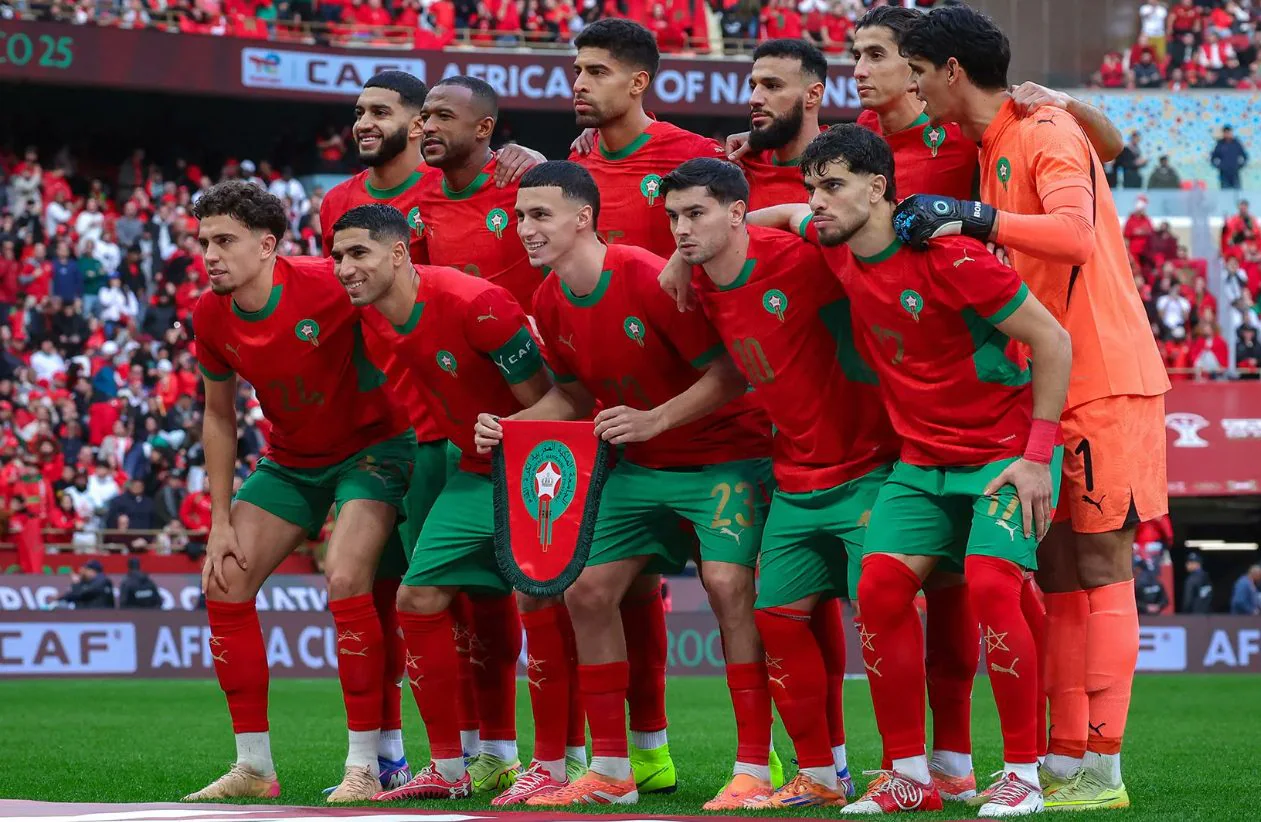
The most striking case is that of Curacao, a country located in the southern Caribbean Sea, whose players called up were all born outside (especially in Holland) except one, Tahith Chong. Morocco qualified for the 2022 World Cup with a team in which there were 14 players born outside the North African country. Today there are 19 and in the debut match 10 out of 11 starters were not born in Morocco. Congo brings this quota to 20. In these World Cups, only 8 of the 48 national teams (South Africa, Czech Republic, Brazil, Colombia, Panama, Austria, Sweden and Saudi Arabia) are made up exclusively of players born in the countries they represent.
To be eligible to be called up by a federation, a player must meet at least one of these conditions: be born in the territory of the federation, have a biological parent born in the territory of the federation, have a grandparent born in the territory of the federation, have lived continuously for at least 5 years in the territory of the federation after reaching 18 years of age. What made the difference, however, were the increasingly less strict rules when changing national teams.
Things started to change in 2004, when FIFA allowed players to be called up for a national team other than the one they had played for at youth level, provided they had dual nationality, had not played for the senior national team and had requested the change before the age of 21. In 2009 another wall fell: from that year FIFA allowed a player to change national team even after the age of 21, respecting all the other criteria. In 2021 it relaxed the rules further, allowing those who had made up to three appearances for the senior national team before the age of 21 to change their shirts as long as they had never played the final stages of one of the main international tournaments.