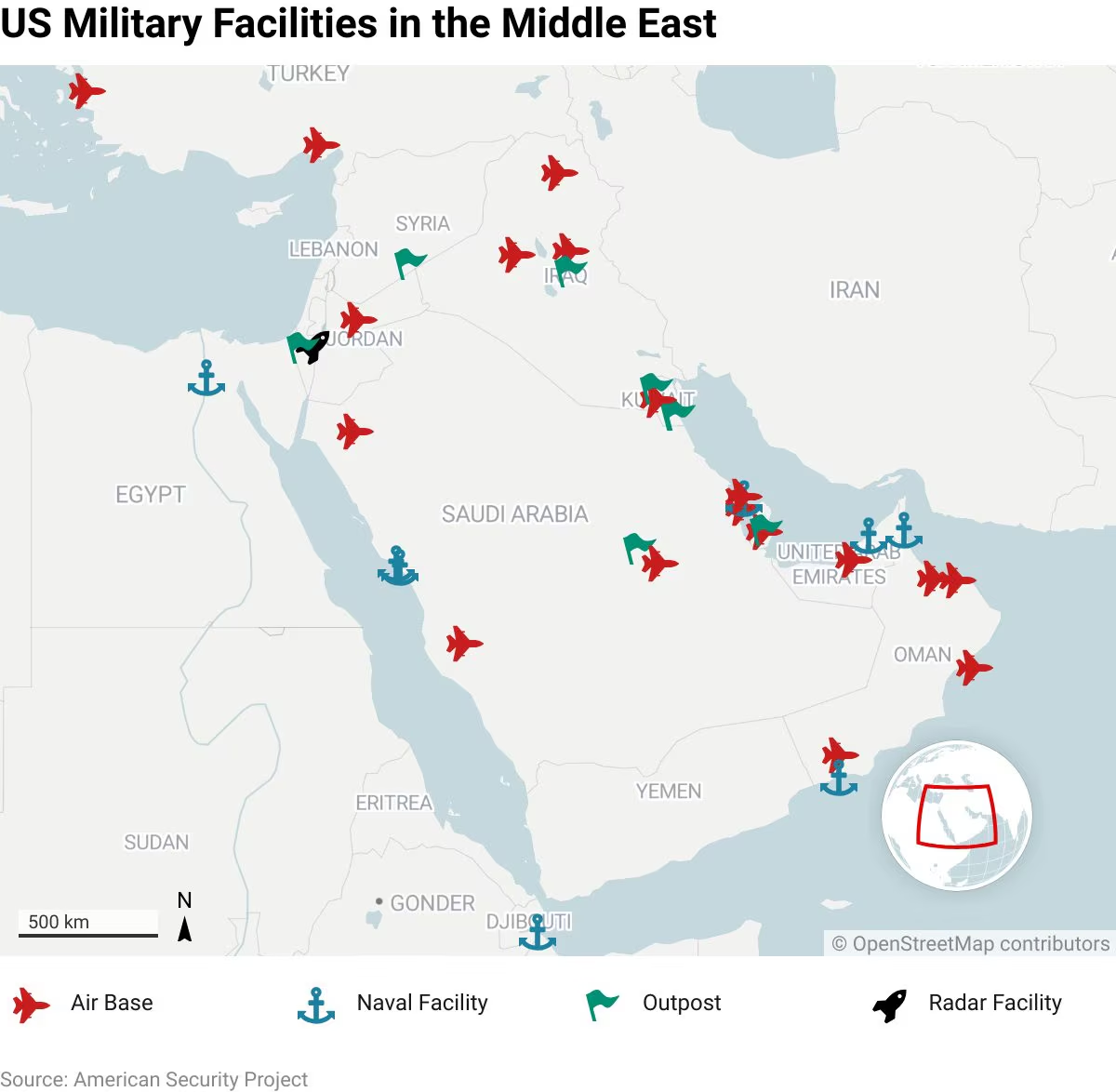
The new tensions between the United States and Iran bring Brent back towards 76 dollars on the day of the Fed minutes. In Piazza Affari the spotlight is on Eni, Saipem, utilities and BTP, while the rise in crude oil complicates the reading for inflation and the ECB.
Hormuz brings oil back to the center of the markets
Oil returns to lead the market day after new tensions in the Strait of Hormuz, one of the most sensitive passages for global crude oil trade. After a phase in which Brent seemed to have lost part of the geopolitical premium, the risk on energy routes is once again weighing on prices and bringing investors’ attention back to the relationship between the Middle East, inflation and central banks.
The Strait of Hormuz remains a strategic point for the flows of oil and liquefied gas, and any sign of instability reopens the issue of security of supplies.
The difference compared to recent days is clear. After the OPEC+ decision to increase production from August, the market had begun to think about a possible excess supply and lower prices.
Brent towards 76 dollars, because the reading on energy changes
Brent returned to the $76 per barrel area and reopened the energy dossier just as investors were looking for confirmation of a cooling in prices. The rise in crude oil weighs because it comes in a delicate phase: inflation remains under observation, growth shows uneven signals and central banks cannot afford to ignore a new shock on energy costs.
A higher Brent does not automatically mean a new surge in prices, but it makes the downward path of inflation less linear.
If the rally remains temporary, it can be absorbed as geopolitical volatility. If, however, the tension over Hormuz were to continue, the energy issue would once again become central in assessments of company margins, consumption, rates and monetary policy.
Fed minutes, oil complicates the rate picture
The day is made even more important by the wait for the Federal Reserve minutes. Investors will be looking for guidance on the U.S. central bank’s reading following signs of a slowdown from the labor market and as U.S. yields begin to rise again. The rise in oil prices, however, adds an uncomfortable variable: it can weaken growth, but at the same time fuel new pressures on prices.
The minutes will serve to understand how much the Central Bank is willing to look beyond short-term volatility and how much it fears a resurgence of inflation expectations.
The market will observe three signals above all: the judgment on growth, the weight attributed to inflation and the degree of internal consensus on the rate trajectory.
Eni and Saipem under scrutiny in Piazza Affari
For Piazza Affari the first impact comes from energy stocks. Eni is back under observation because the price of Brent directly affects expectations relating to revenues, upstream margins, cash generation and shareholder remuneration policy.
The reading on Saipem is more complex. On the one hand, higher oil prices can make investments by large energy companies more sustainable, especially in offshore projects and extraction-related infrastructure. On the other hand, increased geopolitical risk can complicate time, costs and visibility on international construction sites.
Eni responds more directly to the Brent level and the commodity cycle. Saipem also depends on orders, contract execution, project margins and the ability to convert energy demand into actual industrial work.
ECB, BTP and utilities: inflation risk returns to Europe
The rise in oil prices does not only concern oil stocks. For Europe the real issue is the transmission to inflation and, therefore, to the ECB. After weeks in which the market had begun to discount a less tense picture on prices, the return of energy risk is forcing investors to recalibrate expectations.
For Italy the most sensitive channel remains that of BTPs. If oil reignites fears about inflation and pushes global yields, Italian debt may also be affected through greater pressure on rates and spreads. The topic concerns the Treasury, but also banks, utilities and capital-intensive companies.
Utilities are particularly exposed to the cost of debt and investments in networks, energy and infrastructure. A higher yield environment can weigh on valuations, even when fundamentals remain strong. At the same time, more volatile energy prices make reading margins and hedging strategies more complex.
Markets between geopolitics, energy and monetary policy
The session of 8 July therefore opens with a more fragile balance than in the previous days. Oil brings geopolitics back to center stage, the Fed has to deal with a less simple framework on rates and Europe returns to wondering about imported inflation. For investors, it is not enough to look at the level of Brent: it is important to understand whether the rise is temporary or whether it marks the return of a more lasting risk premium on energy.
The risk for the markets is that the relaxation of the last few sessions will be called into question by a new energy shock. Will central banks really be able to ease the pressure on rates if the cost of energy starts to rise again?