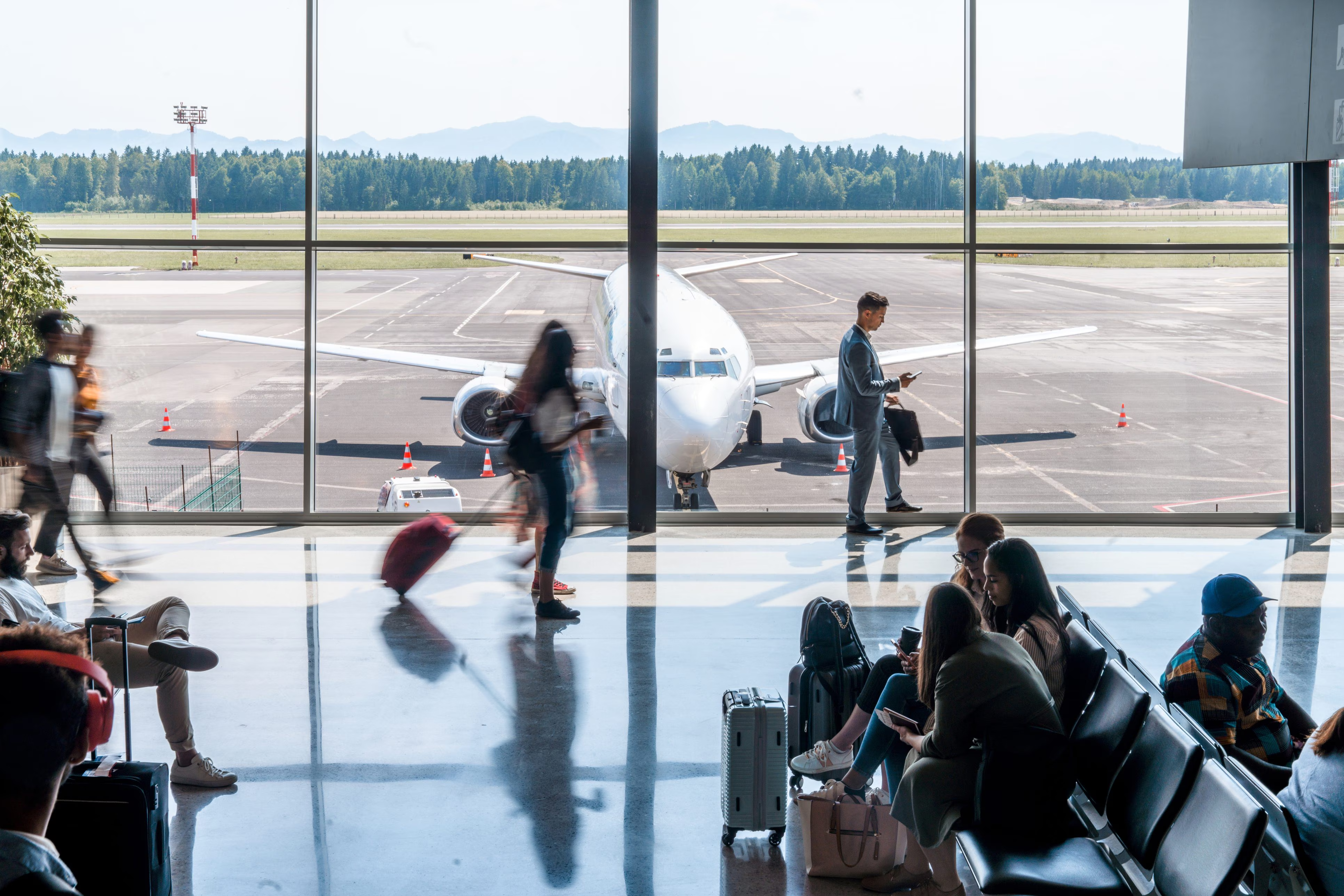
The European Parliament has given the definitive green light to a revision of EC Regulation 261/2004 which regulates the rights of air passengers, a text in force since 2004 and never substantially updated since then.
The text was approved with 646 votes in favor, 12 against and 3 abstentions, and is the result of negotiations with the Council of the EU that lasted years. But be careful: the changes to the Regulations are not yet official. In fact, as required by the European legislative procedure, the text will now have to receive formal approval from the Council of the EU, expected by the beginning of August 2026, before it can actually enter into force.
If approved, the protections for those traveling by air could be strengthened: the obligation of financial compensation confirmed – in addition to the reimbursement of the ticket – in case of delays of more than 3 hours and cancellations communicated less than 14 days in advance. Among the new features, however, the free place for i children under 14 years old alongside their companions, simplified compensation procedures and the abolition of the “no-show”: anyone who misses the outward flight will still be able to use the return flight.
What stays the same and what is unlocked: the new rules
Let’s clarify one thing right away, because it is often lost in headlines: the reform does not overturn anything that was already there, it confirms it. If the flight is cancelled, you are still entitled to a refund or rerouting on an alternative flight, while for delays of more than 3 hours, cancellations communicated with less than 14 days notice or denied boarding, financial compensation remains. However, a difference must be clarified, which often creates confusion: ticket reimbursement and compensation are cumulated when you cancel the flight (cancellation or denied boarding), while if the flight is delayed for more than 3 hours, but leaves anyway, passengers are only entitled to compensation, not the ticket reimbursement.
The amounts also do not change: 250 euros up to 1,500 km, 400 euros on the longest intra-EU routes and on those between 1,500 and 3,500 km, 600 euros beyond this threshold (with the possibility for companies to halve the amount on long journeys if they offer an alternative that arrives at the destination with less than four hours of time).
The cases in which passengers are not entitled to financial compensation, but only to a refund of the ticket, also remain the same: wars, natural disasters, bad weather, strikes involving the airport or air traffic controllers continue to be “exceptional circumstances” which exonerate the carrier.
What really changes is the path to getting the refund, which until now was a nightmare made up of forms, accounts to create and long waits. If the changes to the Regulations are approved, passengers who choose a refund instead of an alternative flight will receive it automatically, without even having to ask for it.
However, if travelers have suffered poor service, the company will have to clearly communicate to them how to apply within four days of the end of the trip, without forcing users to download apps or create profiles. Passengers will have nine months to submit the request and the company will have 30 days to respond, either by paying the compensation or explaining in writing the reason for the refusal.
The news on hand luggage: more protection for families and passengers
The news that will cause the most discussion is the one on hand luggage: a backpack or a personal bag can always be brought on board for free, without surprises at the gate. And to avoid “cheat” prices that inflate with hidden extras halfway through the booking, sites and companies will have to immediately show the price of the ticket with hand luggage included, even if the discounted fares for those traveling without hand luggage will remain legitimate.
Then there are a couple of everyday annoyances that disappear: no more surcharge for a typo in the name on the ticket, no extra cost to print the boarding pass after check-in and the digital card arrives without having to install any app.
More protection also for those traveling with families or with special needs: companies will have to guarantee free a seat next to anyone accompanying a child under 14 and the same goes for people with disabilities, reduced mobility or pregnant women. For passengers with disabilities or reduced mobility there is an additional guarantee: if they miss a flight because the airport did not provide them with assistance in arriving at the gate on time, they will be entitled to compensation.
And you can no longer be denied boarding on the return flight just because you didn’t show up for the outward flight, the so-called “no-show”, a common practice especially for scheduled airlines or long-distance flights. In practice, those who have a return ticket will also be able to use only the return ticket without having flown on the outward journey, without paying penalties.
Now the word passes to the Council of the EU, which must give the final approval by the beginning of August 2026. From there the countdown will start: the new rules will become official 20 days after publication in the Official Journal of the EU, but states and companies will still have a year to adapt before they really take effect.