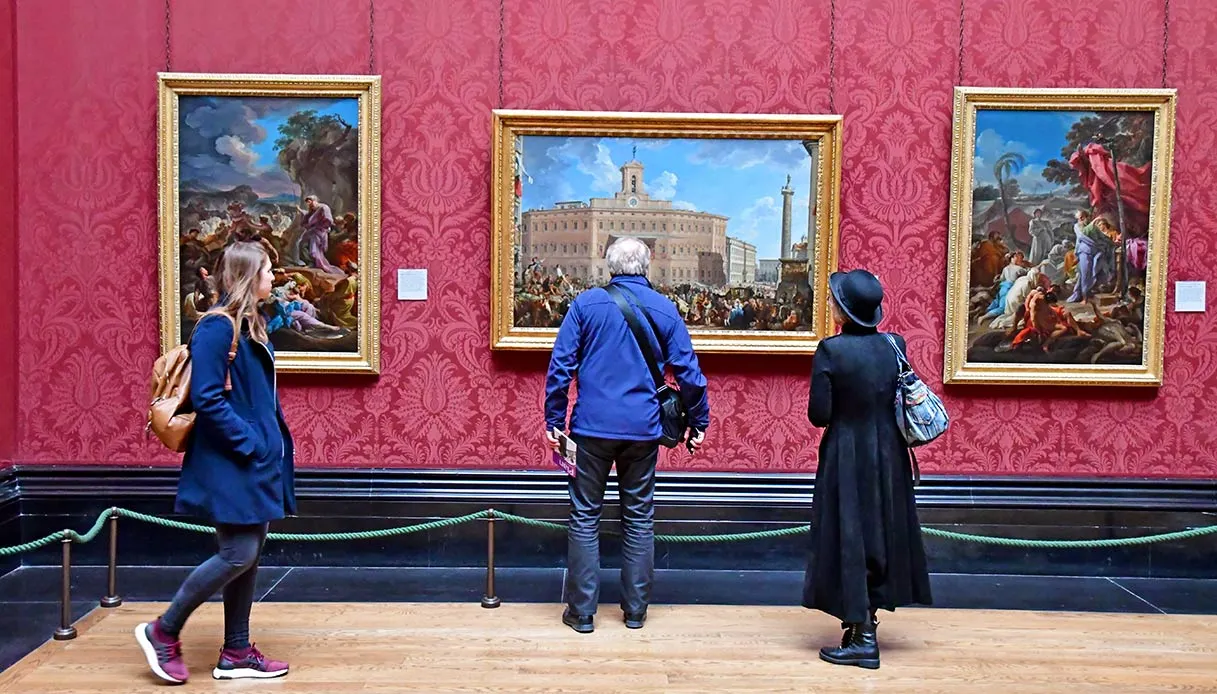
Visits to museums. Evenings at the cinema, perhaps outdoors given the season. Theater shows. If over 65s manage to organize their days to leave regular space for these activities, they gain in health. And they probably tend to feel (and be) younger than their peers, so much so that cultural activities could make their bodies function much more like those of young people. That is, contributing to a lower physiological age. All this, with an impact on the body similar to that of regular physical exercise. This is according to research conducted by experts at the Tokyo Institute of Science, which appeared on Journal of Epidemiology and Community Health.
An original study
Everyone ages, but the rate at which the body ages can vary from person to person. Physiological age reflects how well the body is functioning and can differ from chronological age, which is simply the number of years you have lived. Japanese scholars, in this sense, conducted a longitudinal study to examine this relationship, taking into account unmeasured factors that remain stable over time.
The team analyzed data from 1,899 adults participating in the English Longitudinal Study of Aging, an ongoing longitudinal study of a nationally representative sample of adults aged 50 and over living in England. Participants provided data during at least two surveys conducted in 2004/2005, 2006/2007, or 2008/2009. To estimate physiological age, 10 indicators of physical health were measured, including differential blood pressure, diastolic blood pressure, forced expiratory volume, hemoglobin concentration, fibrinogen, glycated hemoglobin, low-density lipoprotein (LDL) cholesterol, body mass index (BMI), grip strength, and walking speed. These measurements were combined into a single physiological age score. Participants also indicated how often they attended (a) the cinema, (b) a museum or art gallery, and (c) a theatre, concert or opera. Each activity was rated on a scale from 0 (never) to 5 (twice a month or more), producing a total cultural engagement score that ranged from 0 to 15.
The more culture, the more the body rejuvenates
The survey found that people with higher levels of cultural involvement, defined as participating in cultural activities at least every few months, had an average physiological age of 66.9 years. By comparison, those with lower levels of participation had an average physiological age of 69.9 years, a difference of about three years.
Participants with greater cultural involvement were mostly female, had a higher socioeconomic status, had professional commitments and, more generally, had better health. After adjusting the data for factors such as family income, employment and chronic conditions, the researchers found that each point increase in the cultural engagement score was associated with about a one-month reduction in physiological age.
According to the study, a direct cause-effect relationship cannot be established. But cultural activities can certainly strengthen social bonds, encourage healthier lifestyle habits and promote better mental health, all of which can help slow physiological aging.
Strategies for the elderly
The analysis leads to the conclusion that cultural participation is a modifiable behavior that could become an effective public health strategy. More or less, in terms of impact, with a similar benefit to that of physical activity. This is why the push is to make cultural events more geographically and economically accessible to allow a greater number of people to access this “pleasant” anti-aging treatment!