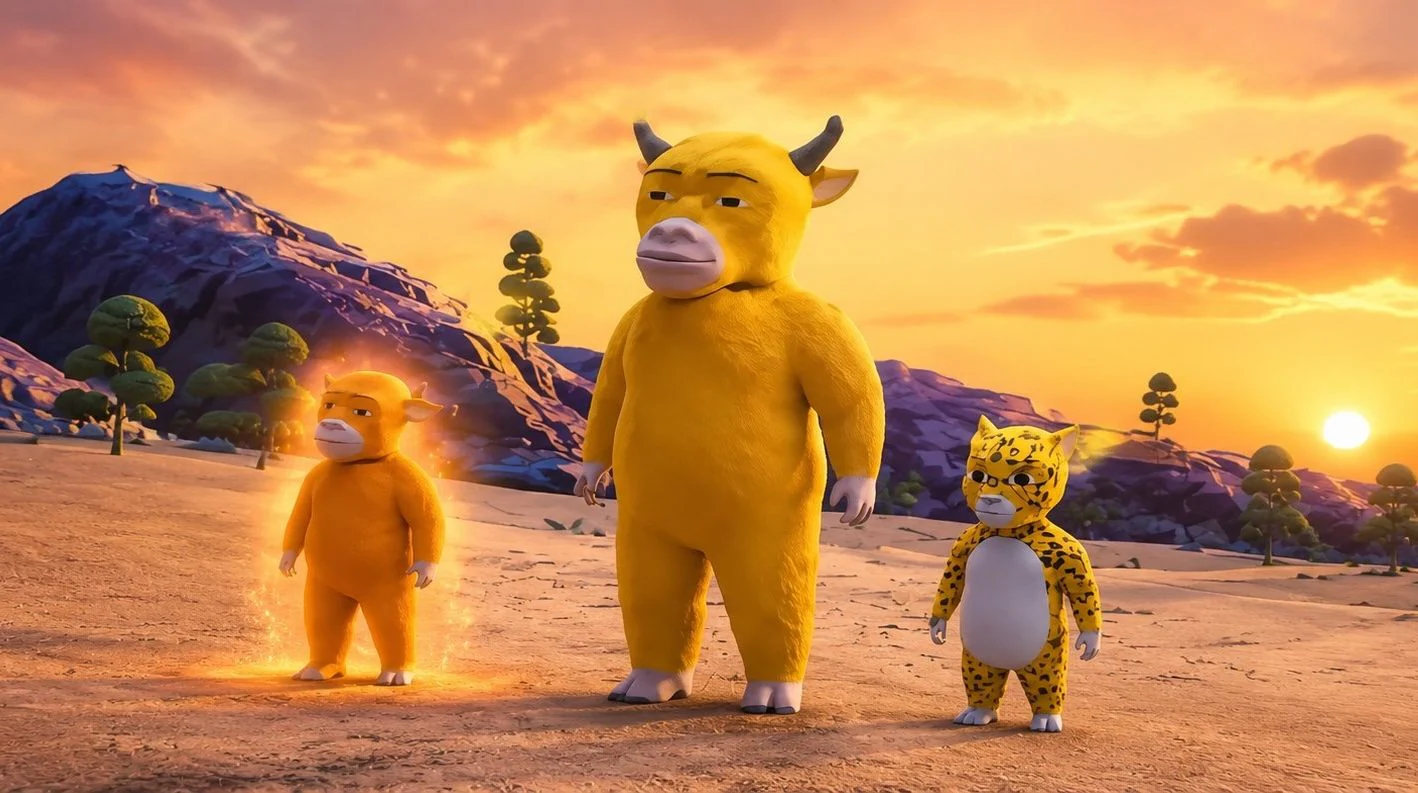
A Chinese animated film was released in Chinese cinemas at the beginning of August, distributed for now in mainland China, which in just a few weeks has become a viral phenomenon and a cult case for the public thanks to its rudimentary aesthetics, which many can easily define as ugliness: it is called “Niu Lai” (牛来), which can be translated into Italian as “The calf is coming”, and in 86 minutes it tells the story of a newborn calf, which learns to walk and faces a constellated path of tests and encounters with other animals. Made mainly by just 2 people with a very low budget (unofficial data speak of figures between a few hundred and thousands of euros and the actual figure has not yet been released), the film “so bad it’s good” was released in theaters on August 5th and exceeded several million in takings in about 3 weeks: the Chinese platform Maoyan speaks of a total of 54.36 million yuan (more than 7 million euros). If the estimates on the extremely low cost of production were correct, the ratio between spending and receipts would be exceptional.
How the Chinese 3D animated film was made
Niu Lai is a 3D animated film that tells a story of psychological growth, in which values such as friendship (that with the orphaned leopard Bao La, who he meets during his journey, and with a lark who acts as his guide), courage and sacrifice are told in an incredibly amateur way, with graphics that bring us back to video games of the nineties and a dreamlike landscape that could actually turn out to be a dream, but let’s not give away spoilers.
The film was made by two people, in five years of work: Xin Yumeng, a 34-year-old interior designer and budding director, took care of the technical and creative part, helped by his mother Sun Lifang, who participated in the writing, dubbing, soundtrack and would also sing in the final song. The character would have been chosen in reference to the animal of the Chinese zodiac of the year of birth of Xin’s father, the ox.
Xin would have embarked on the venture in 2021, without having a professional cinematographic training and learning step-by-step what he would need to create the animations, also using software created for architectural modeling. Produced by Dalian Jingyuan Culture Film and Television Media (the first to operate in the furniture design sector), of which Xin and Sun are legal representatives and CFOs, the film is a riot of pixelated images, low-quality 3D animation and a plot that critics call “poorly written”, all seasoned with home-made dubbing.
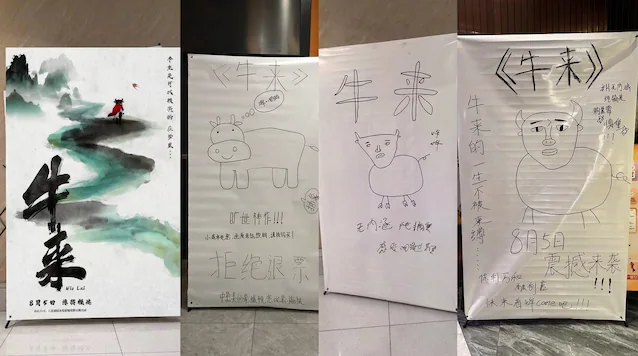
It is therefore not surprising that the film cost just a few thousand yuan: as reported by some sources, making it would have cost between a few hundred euros and a few thousand (the budget initially declared, but yet to be confirmed, would even be less than 200 euros). Before its release it was not accompanied by any promotional campaign: no trailer, nor a real advertising plan, but only a poster for cinemas and theatres. The film was released in theaters on August 5th, going almost unnoticed; Since August 14, many moviegoers have been requesting additional screenings in theaters, to see with their own eyes how bad the film actually was, and theater managers have participated in this “artistic performance” by scheduling more shows and designing their own posters, like the ones pictured below.
The quiet debut in theaters and the sudden virality
Despite minimal investments, after less than a couple of weeks Niu Lai went viral thanks to the reviews and memes of the first viewers, who called it “disastrous”, “primitive”, “catastrophic”, and spread parodies and excerpts of the film filmed in theaters on social media, in which you can hear people roaring with laughter.
The film would have grossed around 7,000 yuan (around a thousand euros) in the first 10 days; between 14 and 15 August, daily screenings across the country would have increased from 21 to 359 and as reported by the Maoyan platform (Chinese review aggregator and ticketing app), as of 17 August the takings had reached 8.2 million yuan (over one million euros). The data updated to August 28th speak of collections of over 55 million yuan (over 7 million euros).
At the same time, interest in distributing it is growing: according to what was reported by the herecomestheox platform, an unofficial page among the many that have sprung up in recent weeks where you can reserve your ticket for fun, the distributor Encore Films has acquired exclusive international distribution rights and should bring “Niu Lai” to Singapore cinemas from 1 September, with six language versions (Mandarin, Cantonese, English, Korean, Japanese, Thai): many, however, are talking about fake news.
How a “disastrous” film can become a cult
“This is not a film, it is an 86-minute collective imprisonment for the audience,” reads one of the hundreds of reviews. The film has become one of the most surprising cinematic cases of the Chinese summer of 2026, a collective cult phenomenon. At a time when AI allows hyper-realistic and almost too perfect effects, the value of this film for many would be precisely in its exaggeratedly lo-fi and nineties approach, which makes it a manifesto of authenticity for many. “A film destined to become a classic, a pioneer of the anti-AI movement,” says a user on the Letterboxd platform.
Among the reviews most cited by the international press is the one according to which: “You will regret having watched it for 86 minutes, but you will regret not having seen it for your whole life”. The evolution of the popularity of this film resembles, with all the relevant differences, a bit of the history of the film The Roomreleased in 2003 and directed, produced and starring Tommy Wiseau, director, screenwriter and leading actor of the film: initially distributed only in some cinemas in California, this film with its inconclusive plot and terrible acting was panned by critics as “one of the worst films ever made” – according to the critic Ross Morin “the Citizen Kane of bad films”. The fact that it was so poor made it a cult and a phenomenon to be shared, everyone going together in the theater not so much to see it, but to comment on it and laugh collectively. In fact, the film has continued to be screened in California (and around the world) for more than 20 years, so much so that in 2017 its story was told in “The Disaster Artist”, directed, co-produced and starring James Franco, with the participation of his brother Dave.