The government has suspended the car tax for motorcycles and petrol or diesel cars (including hybrids) with power up to 80 kW (around 109 horsepower): for those who own vehicles that fall into these categories, the car tax will not have to be paid from 1 January to 31 December 2027. The measure, however, is applicable to only one vehicle per owner and, in the case of multiple eligible vehicles, it will only apply to the less powerful one.
If a driver owns both a car and a motorcycle, the tax suspension can only be applied to the car, if the latter respects the 80kW power constraint.
The temporary exemption will affect over 70% of cars in circulation by power requirement: the number of vehicles actually subsidized, however, will be lower, considering the maximum limit of one vehicle per owner. According to estimates provided by the government, there are approximately 14.5 million vehicles in total: among these there are, for example, the Fiat Panda, the Toyota Yaris and the Renault Clio in their less powerful versions.
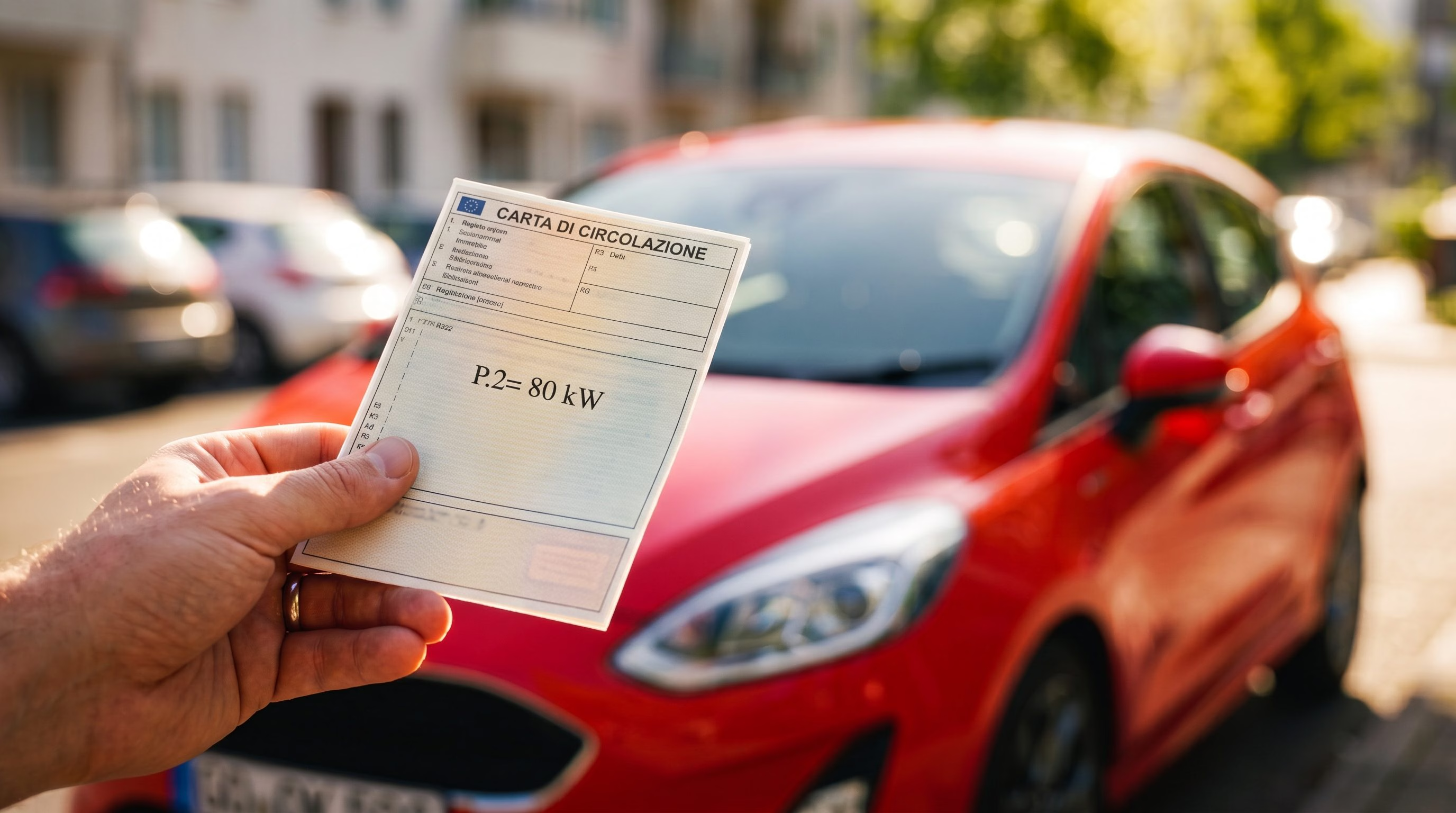
To find out if your vehicle meets the requirements, the first thing to do is to consult the registration document (the so-called booklet) by checking the number indicated after the abbreviation P.2. Recognition should occur automatically, without application, but the definitive methods must still be confirmed with the publication in the Official Journal and the conversion into law of the decree-law.
What are the most popular car models that will have tax exemption for 2027
At this point, the question of most Italian drivers was the same: does my car fall within the power limits? Here is a short, non-exhaustive list of the most common car models in Italy that are less powerful than 80 kW (109 horsepower).
- Fiat: Panda, Pandina Hybrid, 500 Hybrid, Grande Panda petrol 100 HP and Fiat 600 petrol Turbo 100 with 74 kW.
- Dacia: Dacia Duster Hybrid 155 with 80 kW; Sandero Streetway SCe 65 and TCe 100; Sandero Streetway and Sandero Stepway Hybrid 155.
- Jeep: Avenger 1.2 Turbo petrol 100 HP with 74 kW and Avenger e-Hybrid 110 HP with 78 kW.
- Citroën: C3 Turbo 100 HP and C3 Hybrid 110 HP, both with 74 kW combustion engine.
- Toyota: Yaris Hybrid, Yaris Cross Hybrid and Aygo X Hybrid, but only for some versions that report power within 80 kW on the document.
- Peugeot: 208 Hybrid 110 with 74 kW and some petrol versions of the 208 within 80 kW.
- Renault: Clio full hybrid E-Tech 160 in the versions that report the internal combustion engine within 80 kW; Captur and Symbioz full hybrid E-Tech 160, with 80 kW petrol engine.
- Volkswagen: Polo 80 HP and Polo 95 HP; T-Cross 95 HP.
- Opel: Corsa petrol 100 HP.
- Kia: Picanto 1.0, Stonic 1.0 T-GD within 80 kW.
- Suzuki: some models of the Swift Hybrid.
- Skoda: Fabia 80 HP and Fabia 95 HP.
- Nissan: some versions of the Juke Full Hybrid.
- Lancia: Ypsilon Hybrid with 74 kW engine.
The surest way to find out if your vehicle can benefit from the exemption, however, is to consult the vehicle’s registration certificate.
How to read the registration document to find the power and horsepower of the vehicle
But in which section of the registration certificate (what is commonly referred to as the “booklet”) are the car’s power and horsepower reported?
On more recent documents the power is normally indicated by the abbreviation P.2. In this case, you need to look for the second quadrant of the front side, in the section dedicated to the engine. The acronym will indicate the power of the vehicle expressed in kW: it must therefore be verified that the value does not exceed 80 kW.
It is possible that the document only reports the power in horsepower (identified with the acronym CV) and not in kilowatts. In this case, the approximate conversion is 1 kW≈1,359 hp. Be careful, however: the official value to always refer to is the one expressed in the acronym P.2, while the conversion into horsepower is generally a rounding. This is why 80 kW corresponds to approximately 109 horsepower (hp).
Alternatively, if we don’t have the registration document at hand, it is still possible to trace the kW of our car via the ACI website, in the “Car tax calculation” section available at this link. In this case, simply enter the region of residence and the type of vehicle: the system will provide a technical data sheet of the vehicle which includes the kW.