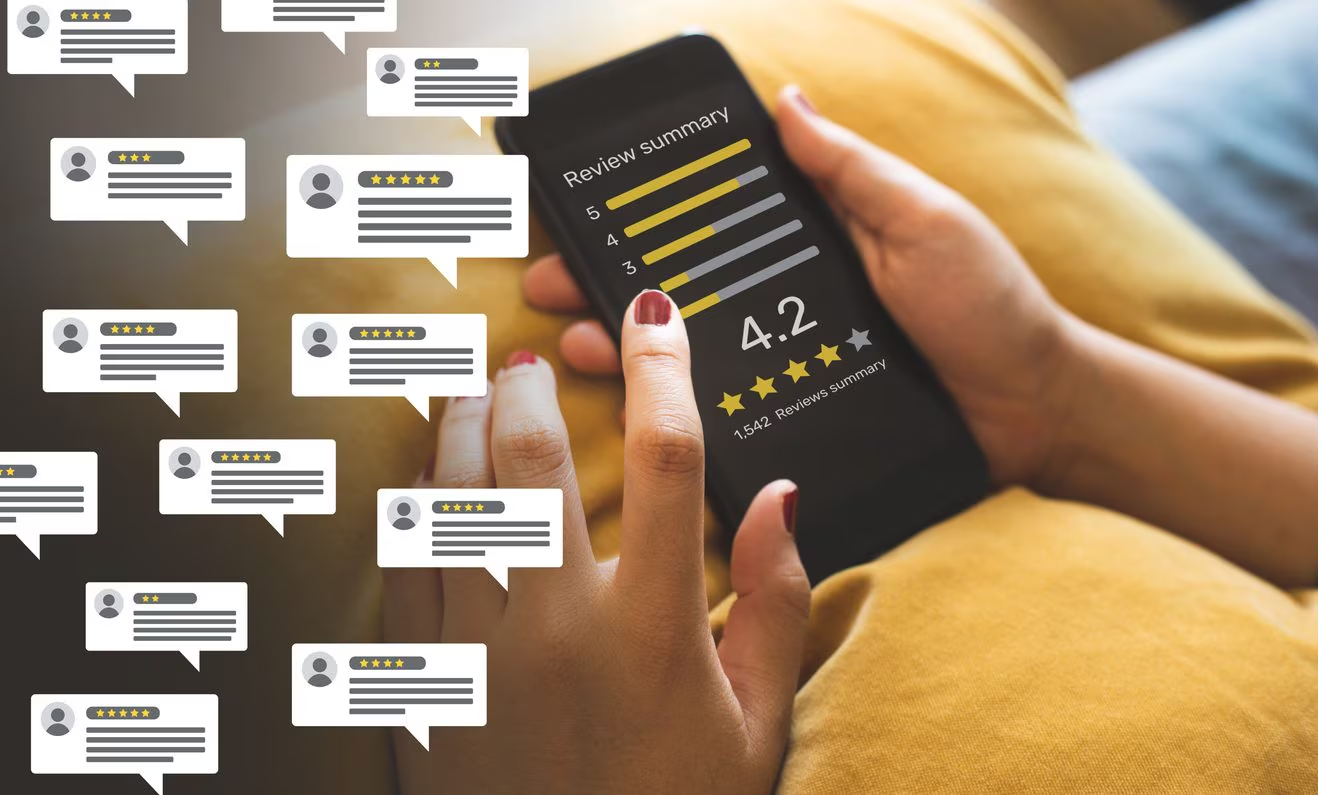
Sometimes it is enough to open the page of a restaurant or a hotel to find yourself in front of an infinite succession of five stars in which often not a single voice emerges from the chorus. Or we stumble upon a barrage of merciless judgments, criticisms that are suspiciously similar. From now on this phenomenon, i.e. illicit reviews on products and services, will be combated with more precise rules and tools.
On 19 October 2026, the Competition and Market Authority (AGCM) released the definitive text of the Guidelines for online reviews, introduced by law 34 of 11 March 2026, the so-called annual law on small and medium-sized enterprises. As stated in the press release, the objective is to guarantee reliable online reviews and combat illicit ones relating to products, services and services offered by catering companies and hospitality sector structures located in Italy. Before arriving at the final version, the Authority gathered the opinion of Agcom, the Privacy Guarantor and the Ministries of Business and Made in Italy (MIMIT) of Tourism. The law, in force since 7 April, dedicates a part of its text to the fight against false reviews in the catering and tourism sectors, which can now finally count on operational instructions that concern everyone: those who write a review, those who receive it and the platforms that host it.
What the Antitrust Guidelines provide
These guidelines were designed precisely to make online reviews credible and reliable and to ensure that they come from those who have actually purchased or used a product or service, given the weight they have on consumer choices. Those who sell reviewed goods and services should provide clear and accessible information on how reviews are published, managed, classified and moderated, while those who host or make them available should take proportionate measures to ensure that reviews come from such consumers, as well as controls to identify and manage unlawful reviews.
As stated in the text, to be considered valid, an online review must have been written no later than thirty days from the date of use of the product or enjoyment of the service, which is counted from the moment the consumer finished using the reviewed service. Anyone who consults a review must be able to understand, on the same page where they read it or via a clearly visible link, how that review was managed and then published; if the professional chooses which reviews to publish he must say on the basis of which criteria, how he verifies their authenticity and, if there is an average score, how it is calculated and whether incentivized reviews or those linked to commercial relationships have an impact.
Verification tools
The measures available fall into three categories. The first concerns those tools that serve to ascertain that the writer has really bought or used the product or service he or she is talking about, for example through proof of purchase, therefore a tax or accounting document, the card statement, the order or booking number, or an invitation to review sent to the email used to purchase, only after the order has been completed and to all customers without selections, or even the collection of reviews exclusively from the customer’s reserved area or through channels guaranteed by QR Code or OTP code. The second concerns those tools that allow us to trace who wrote the review, for example through the traceability of the author, for example through registration, confirmation link via e-mail and IP control. The third concerns automatic systems that identify possible fraud, such as the presence of many reviews from the same IP in a short time, repetitive linguistic patterns or profiles that do not appear to belong to real consumers.
Furthermore, as stated in the text, «professionals should refrain from practices capable of manipulating reviews, such as, by way of example: removing or hiding negative reviews, discouraging the publication of negative reviews, referring consumers’ appreciations to content other than that intended by the consumer, preparing pre-compiled models of positive reviews, involving consumers in the moderation process in order to induce them to modify or delete their already published reviews, presenting aggregate evaluations based on non-explained or non-transparent criteria».
At the same time, reviews whose content is the result of the incentive provided by the professional are always illegal. An advantage can be envisaged but it must not influence the sincerity of the judgment by nature, method or timing. And even when it doesn’t affect him, the reader must be informed that there was an incentive, with graphic signs that are impossible to ignore.
The Guidelines, as stated in the final provisions, “orient the Authority’s activity in the evaluation of commercial practices relating to the publication and moderation of reviews”. As for the future, the Authority has undertaken to review the Guidelines within one year of publication, taking into account the monitoring provided for by Law 34 itself, and to update them sooner if national or European regulations change or if relevant jurisprudential developments arrive.