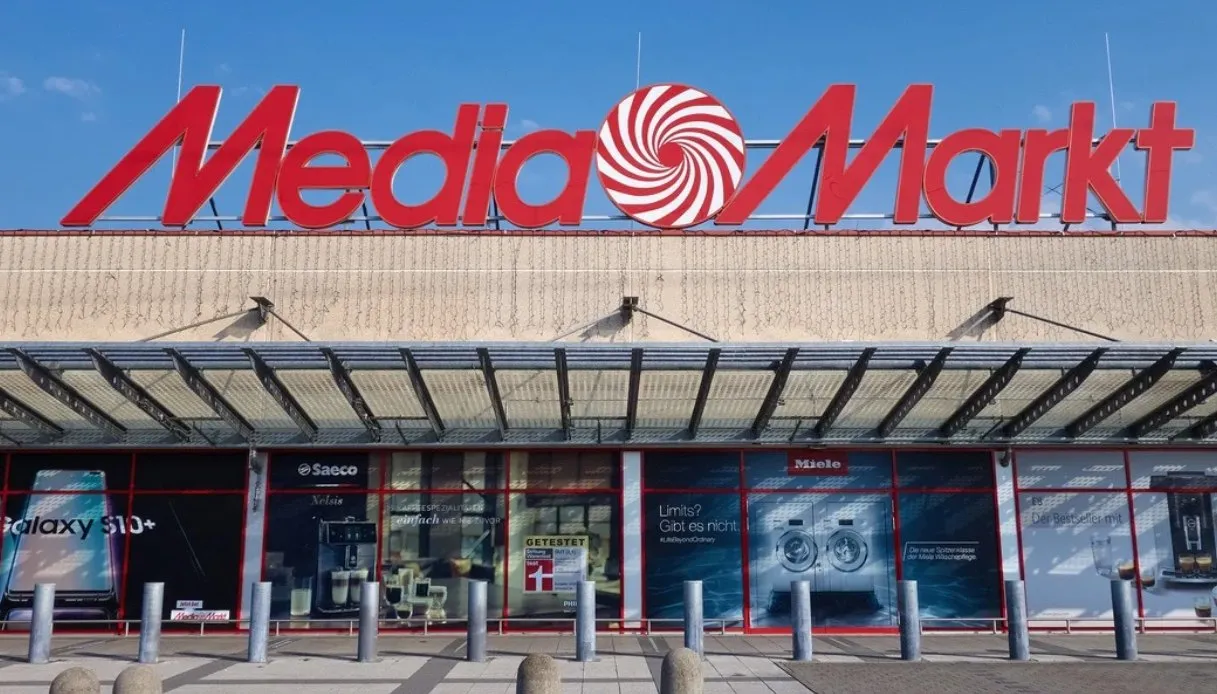
The conditional green light from the European Commission for the acquisition of MediaWorld has been made official. The e-commerce giant JD.com has obtained authorization to take over majority control of the German Ceconomy, the large holding company which also controls the MediaMarkt and Saturn brands.
The operation has a total value of approximately 2.2 billion euros (equal to 2.5 billion dollars). Starting from the next few weeks, the Asian giant will hold over 59.8% of the company shares and voting rights on the board of directors exceeding 85%.
What are the conditions imposed by Brussels
The European Commission has set strict limits on the operation. Since the buyer benefits from public financing and incentives at home, the EU Antitrust has required that these subsidies do not translate into unfair competition within the single market, with a risk of job losses. For this reason, Brussels has made the authorization subject to three binding commitments lasting ten years:
- financing and commercial transactions between the two companies must take place under transparent market conditions;
- the Chinese group’s warehouse services and logistics network must be offered to other European retailers under the same conditions reserved for its own branches;
- access to services and technological infrastructure must be guaranteed to third parties without price discrimination.
The doubts and concerns of Western competitors
Rival chains, including European retail giants such as Fnac Darty, Euronics and Unieuro, and household appliance manufacturers fear that the entry of an operator with strong state support could trigger an aggressive and unsustainable downward price war for the sector.
Alongside the issue of price lists, the fear of distributors and brands from the Old Continent concerns the management of exhibition spaces. Once Ceconomy’s enormous distribution network has been inherited, the new ownership could decide to favor Chinese-produced brands, guaranteeing them greater visibility on the shelves of physical stores and on digital showcases to the detriment of Western companies.
Because the German holding company has decided to sell
The company represents the leading group in Europe in the retail sale of consumer electronics, managing over 1,000 physical sales points in 11 countries, of which 153 in Italy alone.
The property is not in bankruptcy, but is facing a complex transformation of its business model. Stores involve high fixed costs and narrow profit margins, while the e-commerce channel suffers constant pressure from players like Amazon.
To finance the digitalisation of the network, strengthen logistics and convert the company into an integrated service platform, expanding the offer of subscriptions, warranty extensions, technical assistance and consumer credit solutions, the inflow of new capital was essential.
Because the Chinese giant lands on the European market
For the Asian group, expansion into the EU is a strategic choice to diversify its revenues in the face of stagnation and the ruthless price war underway on the domestic market.
By taking over the German company, the buyer has not simply bought a brand, but has secured a logistical and widespread network of over a thousand physical stores already well rooted in the European market.