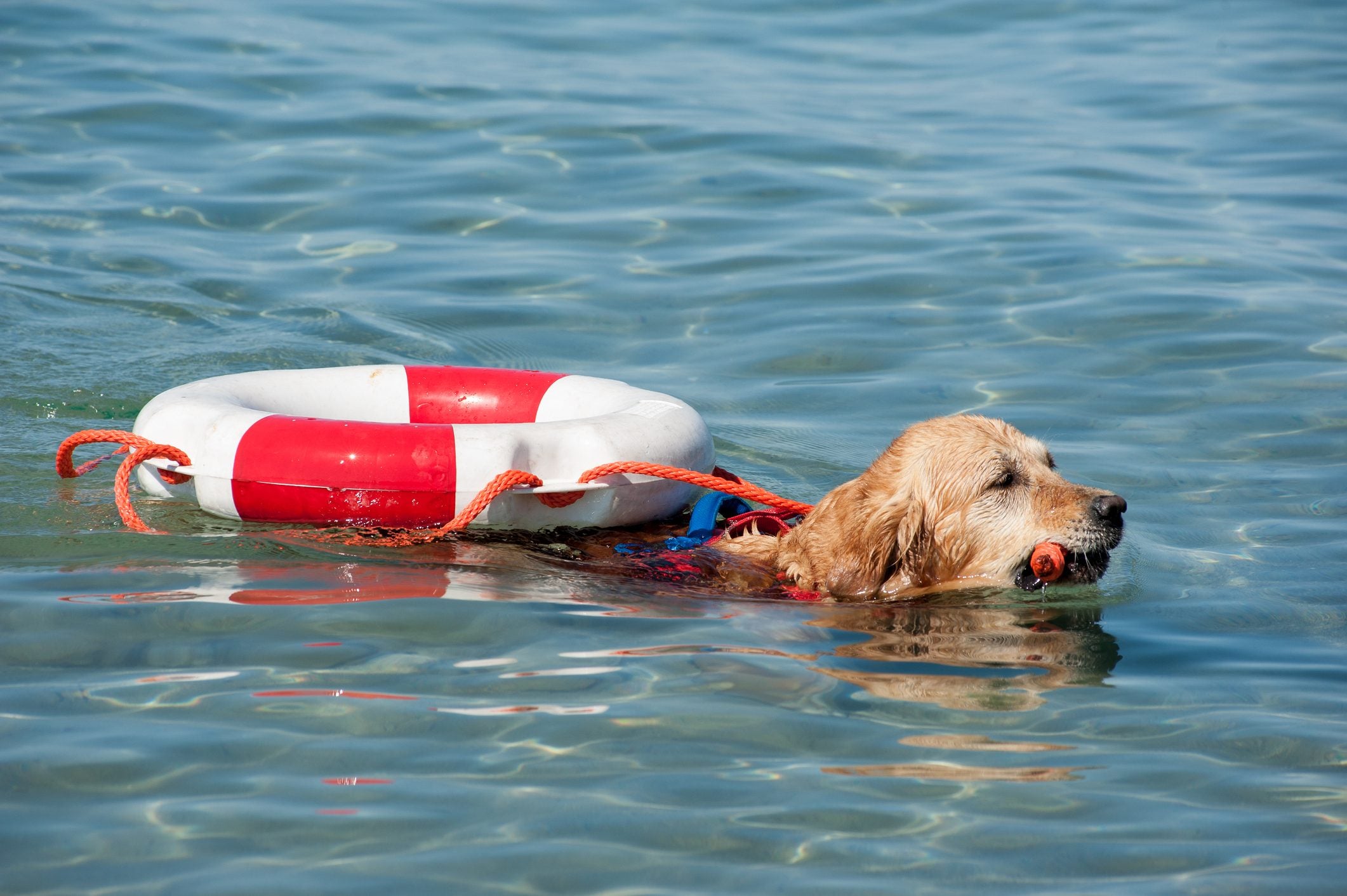
Every summer our beaches are patrolled by rescue dogs in the water: the so-called “dog-bagnino”, accompanied by their conductors. These dogs, mostly belonging to breeds, such as Terranova, Labrador Retriever and Golden Retriever, with particular physical characteristics – such as waterproof hair and palm tams – combine a significant athleticism with excellent swimming skills. To these are added fundamental features for their role, such as sociability with man, important to collaborate with strangers, and great courage, which allows them to face dangerous and stressful situations, from the patrol of the coastal areas to rescue in the open sea, operated by diving as a patrol boat, Acquascooter and even helicopters.
The innate talent and the physical characteristics, however, are not enough: to become Bagnino dogs you need a long and rigorous training, at the end of which dogs and conductors learn to operate as a real team, helping the coast guard and port authorities to monitor our beaches, saving about 35 people every year.
Races and requirements of the dog-Bagnino
Even if there are no particular requirements to become a lifeguard dog, the medium-large breeds (over 30 kg) and with an innate aptitude for aquatic activities, they leave. On the other hand, to dive into a stormy sea and drag one or more people to the shore, you need not only athleticism and physical strength, but also an excellent swimming capacity. In this sense, races like Terranova, Labrador Retriever and Golden Retriever have a real Physique du rôle who makes them skilled lifeguards.
In addition to the robust build and powerful musculature, in fact, these dogs have a series of evolutionary adaptations that make them swimmers exceptional. One of the most important is the double -layer hair: a more external one, covered with an oily substance that rejects the water, and one internal, dense and lapinous, which retains hot air and prevents the water from reaching the skin, keeping the dog hot also in cold waters. Moreover, some of these breeds have palmate legs, which work like real “natural fins”, which make them similar to those of some aquatic birds, such as ducks. Among the fingers there is in fact a leather membrane (called interdigital membrane) which increases the surface of the paw allowing to move a greater amount of water, obtaining a stronger push and better stability during swimming.
Thanks to these physical characteristics, a single Bagnino dog can be able to swim up to three people at the same time. However, in 2022, in Sperlonga, as reported by Corriere della Sera, three Labrador Retriever managed to make a record company, rescuing 14 people in serious danger simultaneously, dragged off by the current and unable to return to the shore.
Bagnino dog: it’s all a matter of character
If to save a person in the open sea, perhaps in adverse weather conditions, a fearless spirit is needed, to launch into water from a helicopter in flight or from a motorboat in the running it takes a real lion heart. Yes, because Bagnino dogs do not operate only on the beaches but, in the event of an emergency, they can also be used on patrol boats, Acquascooters and even helicopters, from which they can dive to reach the person in danger. A more than trivial undertaking, made possible not only thanks to a rigorous preparation, but also to the natural reckless nature of these breeds and their predisposition to collaborate with man.
On the other hand, the story that binds us to the retrievers is long, having been used for centuries precisely for cooperative work and close contact with people. This historical collaboration, strengthened by the artificial selection, made them particularly sociable with man and friendly even with strangers. An essential requirement for a lifeguard dog, who can find himself interacting every day with hundreds of people and who, in the event of an emergency, must not be intimidated by having to help a stranger.
To become rescue dogs in water you need training and patent
As for humans, having natural qualities is not enough to achieve great results. Even dogs with the most suitable characteristics face a long and rigorous training to become lifeguards, which ends with a special rescue patent. That of the Italian School rescue dogs (SICS) is recognized throughout Italy.
This path prepares them to recognize and “sniff” people in difficulty in water, who show signs of danger and drowning, and to intervene to take them to rescue. But above all, it establishes a profound harmony between the dog and its conductor, such as to allow both of them to communicate effectively and collaborate even in situations of strong stress. At the end of the training, in fact, dog and conductor form a single operating unit: the rescue dog unit.
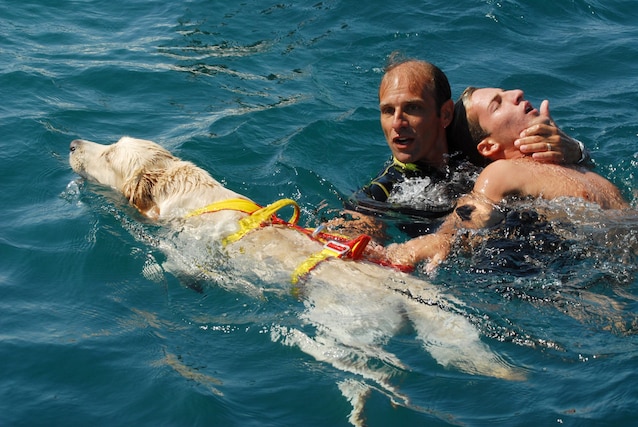
A collaboration that, by combining the physical and sensorial skills of the dog with the experience and human judgment, generates performance that neither species could reach alone. During a rescue operation, in fact, each member of the couple performs specific roles: the man deals with calming and preparing the person rescued for the return, while the dog drags both towards the shore or an emergency boat.
Only after completing the training, and after passing a final exam, the dog-conductor couple is officially recognized as a rescue team in the water, joining the approximately 400 units of volunteers who, in collaboration with the Coast Guard and the port authorities, patrol and protect our beaches every summer.