In the last few days the commercial confrontation between the European Union and the United States has never found peace, with the entry into force of the rates at 15% which is redesigning the balance between the two banks of the Atlantic.
While the White House claims the economic results of the measure, Brussels tries to keep the course in a picture made of still open negotiations, threats of new retaliation and alarm markets.
The real start date of the duties
August 7 was the day when the duties at 15% became reality, but their application is not yet completely clear. Initially in Brussels it was thought that the measure would be taken on August 8, until a night post of Trump has clarified the American decision.
The new rates are not the same for everyone: they range from 50% imposed to Brazil to 10% reserved for the United Kingdom, with the EU in an intermediate position at 15%.
Many points remain to be defined, especially on possible exemptions. In the meantime, the countermeasures suspended on 5 August remain ready to be reactivated if necessary.
EU stops on the duties: “they also apply to semiconductors”
More than an agreement on the duties, it was a real imposition, the result of months and then of weeks of continuous meetings seasoned by a blow and response via social media. The commercial tension between the European Union and the United States remains high, therefore, despite the agreement on a rate of 15%.
But now it’s not yet time to relax. The last threat that came from the White House concerns rates up to 100% on semiconductors, a perspective that has irritated the team of Ursula von der Leyen.
However, the clarification came from the community executive: “The 15% agreement for us also applies to drugs and chips”.
Trump on the new duties: “billions to the USA”
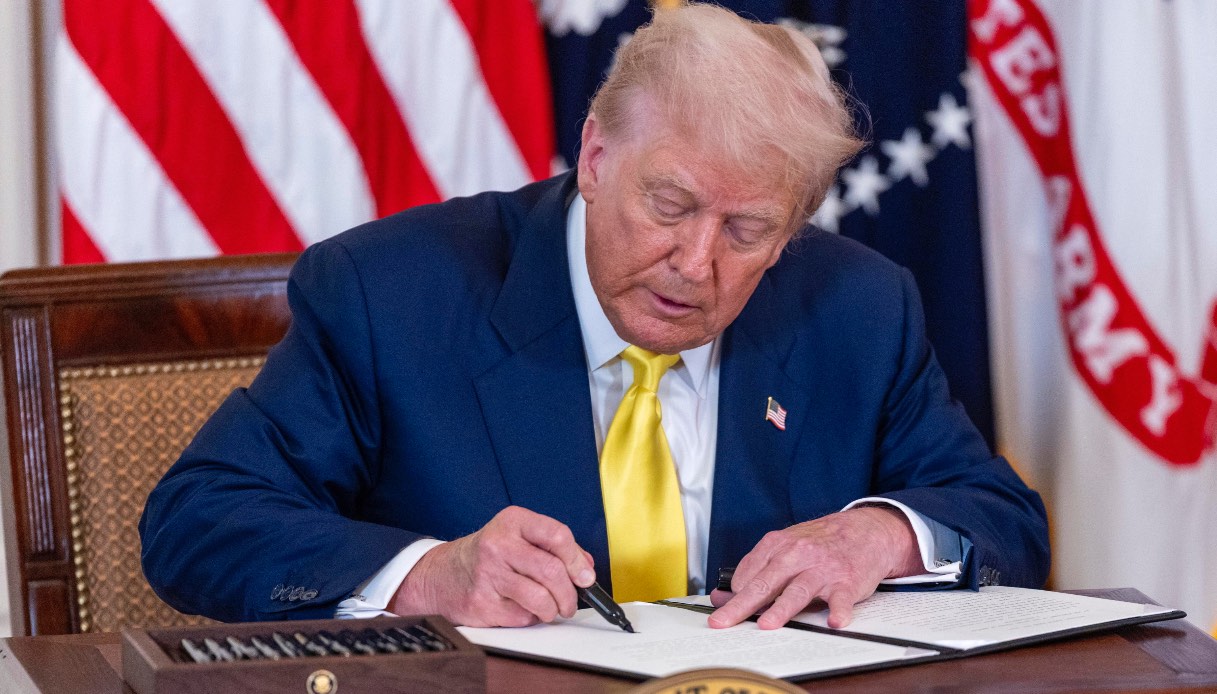
On the other side of the Atlantic, President Donald Trump welcomed the entry into force of the new rates with triumphalistic tones, claiming that they will bring
billions of dollars, largely from countries that have taken advantage of the United States for many years, restoring it in any way, which they will begin to flow to the USA.
The Commission, however, does not escape the need to clarify every aspect: “We were very clear about the commitments made and those that have not been made”, underlined Olof Gill, remembering that the data on energy supplies and European investments in America are estimates on the intentions of companies and non -contractual obligations.
Who strikes the duties on gold
In addition to the duties on industrial products, Washington has decided to also hit the precious metals sector, imposing a tax on gold ingots. It is the most common format in the exchanges of comex, the main world square for Futures on gold, and constitutes the most consistent part of Swiss exports to the United States.
As reported by the Financial Timesthe measure has a direct impact on Switzerland, a global leader in the refining of gold, already marked by a 39% duty previously introduced by the Trump Administration.
Christoph Wild, president of the Swiss Association of producers and traders of precious metals, explained that these new rates risk making it more complicated to satisfy the American question of worked gold.