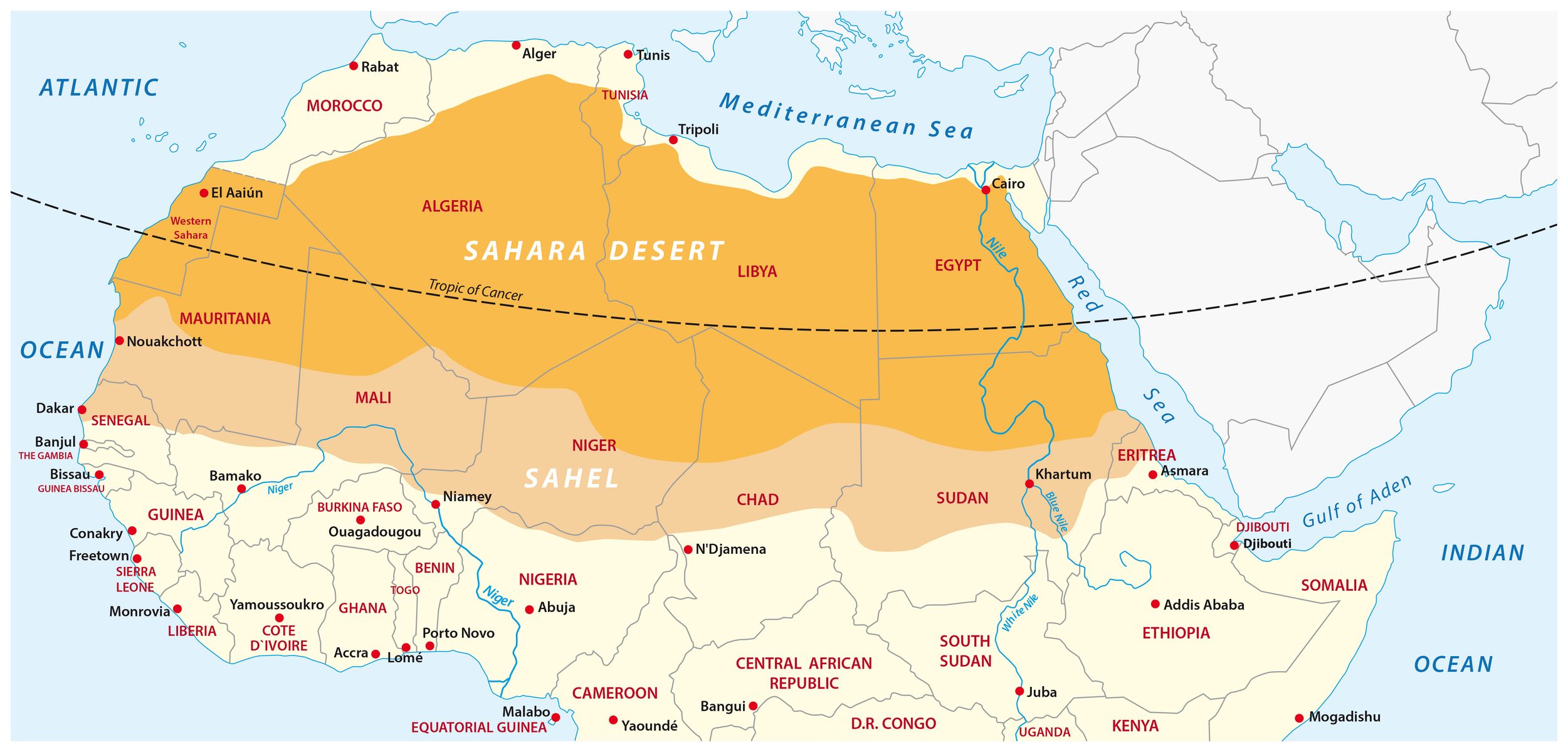
The Sahel region includes a vast band of territory that crosses the northern part of the African continent from east to the west, in the conjunction area between the Sahara desert and the large rain forests of equatorial Africa, characterized by a dry climate and a landscape of savane and acacia forests. The countries of this area (Senegal, Mauritania, Mali, Burkina Faso, Niger, Chad and Sudan) have always been characterized since independence by extreme instability dragged throughout the Cold War period. In recent years, the area has returned to the limelight of the chronicles following a series of state shots that have dangerously cracked the hegemonic position traditionally maintained by France in the area. The causes of these state strokes are to be found in the institutional fragility of states, in economic difficulties and above all the growing influence of terrorist groups related to Islamic integralism.
Sahel and state strokes: history of a failed stabilization
With the only exception of Sudan, who in colonial era was conquered by the British Empire, all the other Sahel countries were French colonies and their own internationally recognized boundaries do nothing but follow the administrative boundaries created artificially by France for its colonies. The independent states that arose in 1960 with the disintegration of the French colonial empire were immediately extremely weak, and even if in the following decades they did not lack of dynamic and strong -willed political leaders, their enormous background weaknesses meant that they could never truly free themselves from the “neocolonial” protection by Paris.
For the following sixty years, France kept these countries under its strict control thanks to a triple strategy: first, promoting and protecting the role of the French language between the elites and local populations, second, through the imposition of a coin (the Franco CFA) anchored to the French Franco before and to the euro after, third, intervening militarily, without too many delay or pity, whenever its interests were in the area. The latest military operation completed by the French state in the Saheline area was the Barkhane operation, which lasted from 1 August 2014 to 9 November 2022, and having as its purpose the containment of the jihadist threat, in particular that linked to ISIS and the Al-Qaida branch in the Maghreb.
In order to better support their actions, the French promoted, during the Nouakchott conference of February 16, 2014, the creation of the so -called “G5 du Sahel”, a coordination group made up of: Mauretania, Mali, Burkina Faso, Niger and Chad. As part of this format, the 5 ex-colonies undertook to coordinate their anti-terrorist activities with Paris, however, which ended up pushing them even more in the arms of France. Needless to say, even the latest French initiatives have completely failed in an attempt to stabilize the fragile local balances with the result of leading instead to an enlargement of the jihadist insurrection.
Today’s strokes
Things began to take a different turn from the year 2021 when a series of rapidly succession state strokes led to a radical change in geopolitical balances in the area. To start the beginning of this new trend was Mali where, on May 24, 2021, the Malian armed forces arrested President Bah Ndaw, Prime Minister Moctar Ouane and the Minister of Defense Souleyman Doucouré who were replaced by a military junta led by the then vice president, General Assimi Goïta who has since become the undisputed “strong man” of the Nation.
Just over a year later, on September 30, 2022, the interim president of Burkina Faso, Paul-Henri Sandoogo Damiba, was defended by another coup d’état who brought captain Ibrahim Traoré to power, a man who has since reached great popularity both at home and abroad. Finally, on July 26, 2023, a last military pronouncement, this time in Niger, led to the deposition of President Mohamed Bazoum and the power taken of a military council capacity by General Abdourahamane Tchiani.
Despite the events in Mali, Burkina Faso and Niger are necessarily scrutinized under the lens of the specific dynamics of local power, however there is a minimum common denominator, namely the role that Russia has played, especially through the deceased PMSC Wagner, in supporting and in consolidating the power taken of the Golder forces as well as in the coordination of their efforts for the creation of the so -called “confederation of the Sahel states”, Geopolitical project declaredly anti -inflammatory but which also opposes the hegemonic ambitions of nearby Nigeria.
The decline of the Françafrique
Needless to say, the state strokes that affected the countries of the Sahelina area, as well as the parallel events that, in the same time span, affected other important geopolitical actors of the area such as Senegal, Guinea, Chad, Gabon and even before the civil war in the Central African Republic have contributed to completely unhinge the geopolitical and military device that for decades guaranteed the thrilling and maintenance of interests French in that part of Africa.
Every day that passes, the one that was once known as “Françafrique” is taking an increasingly autonomous road that is mainly directing it towards Russia and Brics. The ability with which Russia has managed to navigate the complicated internal political events of the Françafrique countries so far, as well as the leading role that Moscow is playing in the context of civil wars that continue to affect Libya and Sudan has had its counterbath in the inability shown by France to “counter” and regain its positions lost even if they still are still able to count on important levers. on site.
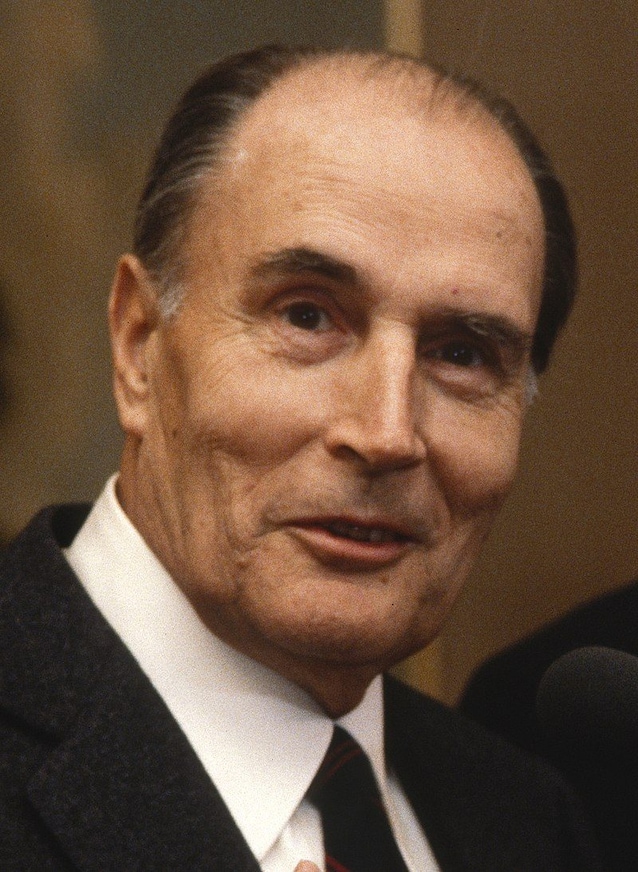
Completely absorbed by European affairs and the Russian-Ukraine war and it itself subjected to a process of creeping Anglicization, the Parisian elite seems to have definitively lost its strategic compass sacrificing on the altar of atlantism and westernism, control over what is traditionally its sphere of privileged influence, which was correctly identified by François Maurice Adrien Marie at the time Mitterrand, long-term French politician and ex-president of the Republic as: “The area the possession of which will decree the future stay or not of France in the restricted circle of the great powers”.