The Council of Ministers called to approve the Bills Decree, the measure which aims to reduce the cost of electricity by intervening on the price of gas used by thermoelectric power plants, ends with a stalemate today. The most important measure under study was the price cap on the gas tariff, i.e. a ceiling of 58.9 euros per megawatt hour on the fuel used to produce energy, with the aim of easing the bills of families and businesses starting from 2027.
The provision, also known as the Bill bis Decree, should have been examined by the Council of Ministers on 28 October, but its discussion was postponed to allow for further technical checks.
And today comes a new postponement. According to rumours, the basis of the new postponement was some observations and requests for clarification raised by the General Accounting Office of the State, which would have made further investigations necessary before proceeding with the examination of the text.
The gas price cap: how it works
The central point of the decree was the introduction of a limit on the price of gas used to produce electricity. The threshold indicated in the drafts is equal to 58.9 euros per megawatt hour, a value that should be recognized for the fuel used by thermoelectric plants.
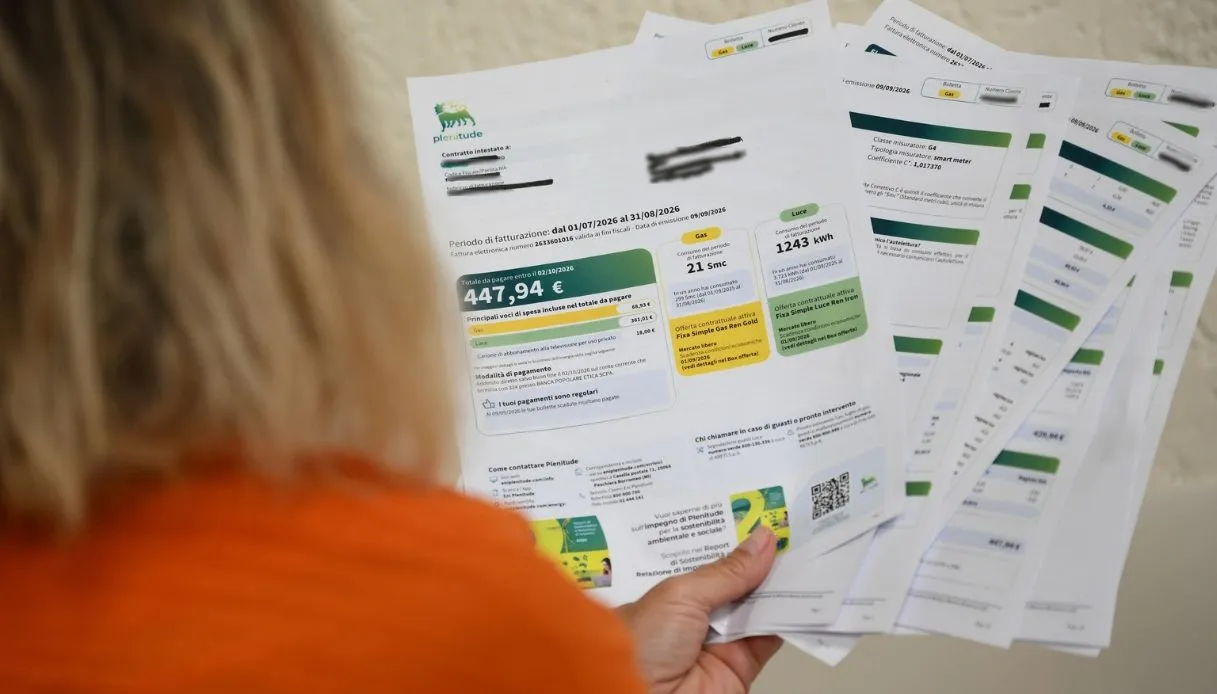
The mechanism takes inspiration from the model adopted in Spain during the previous energy crisis and was born from a preliminary agreement reached on 16 October between the Italian Government and the European Commission. The intervention should have an initial duration of 12 months, with the possibility of extending it up to 18, and starting from 1 January 2027. Limiting the cost of gas paid to power plants means trying to reduce the price of wholesale electricity. The benefit could subsequently be transferred to consumers’ bills, with an estimated reduction of around 10%.
The most delicate point of the measure concerns how to cover the difference between the ceiling set for the gas price and the actual prices of the TTF, the reference market of the Amsterdam Stock Exchange. The hypothesis under study envisages distributing this burden on two fronts: one part would be recovered through the system charges component, while another would fall directly on energy producers. According to estimates circulated, the overall economic impact could reach around 7 billion euros per year.
Protests from energy producers
The prospect of having producers bear a share of the difference between the market price and the limit set by the Government has attracted strong criticism in the electricity sector. In fact, companies fear that the new mechanism will add to a series of interventions that are already impacting their budgets. Opposition was also expressed by Salvatore Pinto, president of Elettricità Futura, during the association’s annual meeting, organized in Rome. According to Pinto, in the space of a few weeks the sector found itself facing a succession of measures with an economic impact estimated at between 6 and 7 billion euros.
“It has been a troubled year – said Pinto – which began with a bill decree which saw the sector contribute several billion euros. Now other measures are announced which, once again, penalize us. In the space of a few weeks the electricity sector has seen one measure after another come upon it. A new IRAP worth hundreds of millions, while in Italy our companies publish quarterly reports with a significant decline, with margins already in line with or lower than those of our European competitors”.
During the association’s meeting on November 4, Pinto argued that “a cap on the price of gas, the so-called Italian Tope, which from what has emerged would burden producers with costs that no one knows how to calculate and would hit precisely those who have chosen the fixed price, the solution that is protecting families and businesses from increases. On the Bills bill we hope for a discussion table, to achieve the objectives set by the government without causing damage to anyone”.
Hence the request to open a discussion with the Government, to comprehensively evaluate the effects of the decisions adopted and identify solutions that do not compromise the economic sustainability of energy companies.
The Government is evaluating a change to the mechanism
To overcome the producers’ objections, the Ministry of the Environment and Energy Security had spoken of a possible revision of the compensation system. The hypothesis consisted in introducing an intermediate threshold, placed below the market prices but above the price cap. In this way, producers would not be charged the entire difference compared to the actual price of gas, but only the part that exceeds the new identified level.
The amount of the threshold has not yet been defined. Minister Gilberto Pichetto Fratin had had the opportunity to confirm that discussions were underway to finalize the provision, suggesting that the mechanism could be modified to contain the impact on companies in the sector.