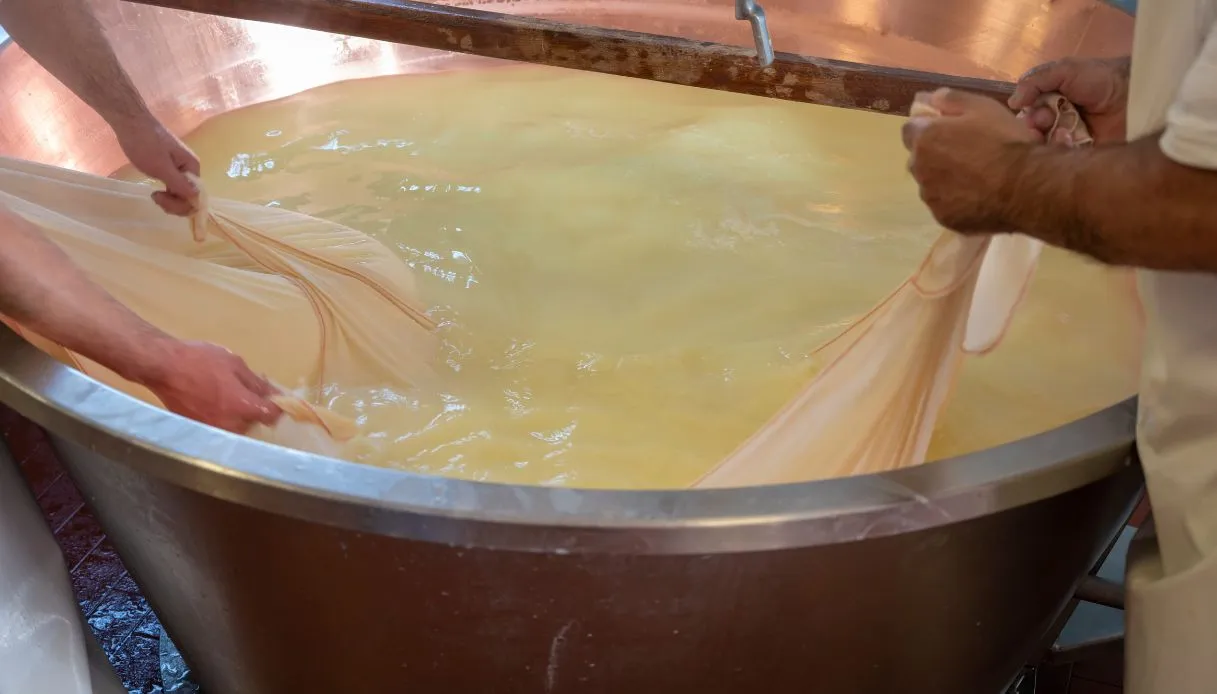
Despite the difficulties linked to inflation and trade wars that have affected international markets in recent years, the Made in Italy cheese sector has recorded record numbers. The most significant data, however, concerns exports. Abroad, in fact, Italian cheeses have reached an all-time high in sales.
Made in Italy cheeses know no crisis: what is the market worth?
According to an analysis by Coldiretti on Istat and Ismea data, the so-called “milk economy“Italian milk has reached a total value of 31 billion euros, involving thousands of farms, livestock farms, processing industries and distribution operators. From the Alpine pastures to the countryside of Central and Southern Italy, Italian milk fuels an excellent production that has few equals in the world.
The supply chain is not limited to the production of fresh milk, but includes a vast range of products with high added value, in particular PDO cheeses which have contributed to building the international reputation of Made in Italy agri-food.
Record export numbers
Analyzing the dynamics of the various markets, the numbers in foreign sales are equally positive. In 2025, Italian cheeses reached an all-time high in cross-border sales, reaching close to 680 million kilograms exported. Furthermore, over the last ten years exports have grown by 90%, practically doubling the volumes marketed on international markets.
It is no coincidence that exports today represent one of the main drivers of development for the sector, allowing Italian companies to compensate for any slowdowns in internal demand and to intercept new consumer segments throughout the world.
The best-selling cheeses
Exports are mainly driven by the large protected designations of origin.
Italian PDOs, in fact, account for over 40% of global consumption of Italian cheeses.
Among the most requested specialties include:
- Parmigiano Reggiano;
- Grana Padano;
- Gorgonzola;
- Pecorino;
- Taleggio;
- Provolone.
According to Coldiretti, based on Ismea calculations, cheeses represent approximately 60% of the overall value of the entire Italian sector of food designations of origin. Over half of the wealth generated by Italian certified products – the so-called Dop economy – derives from dairy specialties.
The ranking of PDO products with the greatest economic value includes certified productions, such as:
- Grana Padano;
- Parmigiano Reggiano;
- Buffalo mozzarella;
- Gorgonzola;
- Pecorino Romano.
Which markets buy the most Italian cheeses
International demand for made in Italy cheeses continues to be particularly strong in Europe.
In fact, the ranking of the main importing countries sees at the top:
- Germany;
- France;
- United Kingdom.
Outside of Europe, the United States remains the main reference market. Despite periodic trade tensions and tariff discussions, American consumers continue to show a strong preference for authentic Italian dairy products.
The problem of prices and unfair foreign competition
Alongside commercial successes, the sector must however deal with a threat that continues to take away turnover and opportunities from Italian companies: the phenomenon of Italian sounding. In fact, in the supermarkets of many foreign countries, products continue to be marketed that recall the names, images and characteristics of Italian specialties without having any connection with our country.
Some of the best-known examples include:
- Parmesan;
- Roman;
- imitation mozzarella and fake ricotta;
- provolone produced abroad;
- copies of Asiago.
In many cases these are products made with different raw materials than those required by Italian specifications, but which exploit the notoriety of national brands to gain market shares.
Furthermore, another particularly sensitive issue concerns competition from foreign productions. In Italy, approximately 13.5 million quintals of milk are produced every year and over half of this quantity is used to make PDO cheeses. However, the national market records a significant influx of raw materials from abroad.
In fact, every year around 10 million quintals of foreign milk and around 4.3 million quintals of curds, cheeses and other dairy products arrive. And this situation, according to experts, exerts downward pressure on the prices paid to Italian farmers, risking creating greater possibilities of fraud or confusion for consumers.









