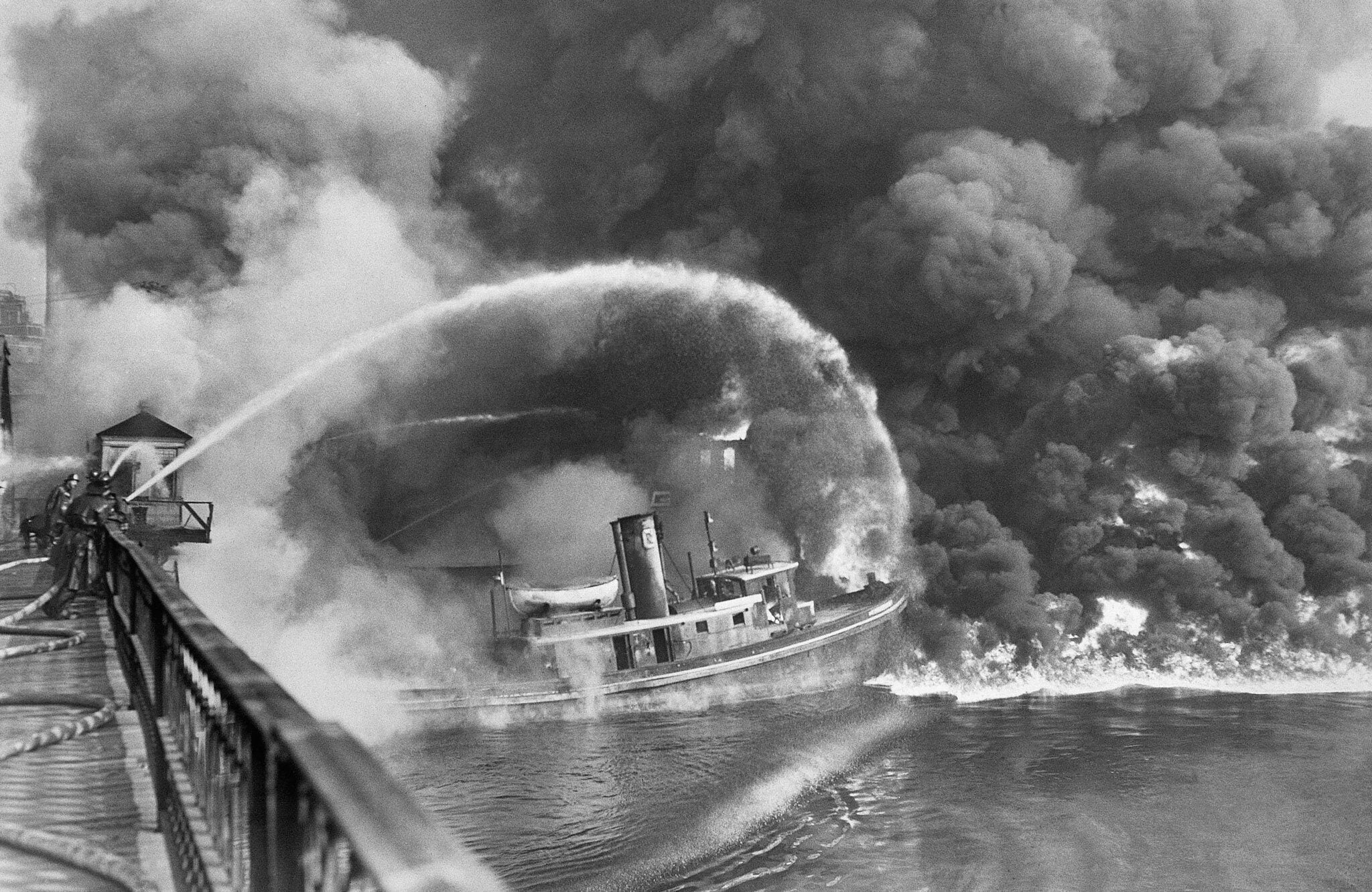
An on -flame river is certainly an unreal, nightmare vision, yet in the recent history of industrialized nations these events are really successful: this is the case of the fire of the Cuyahoga river of 1969, in Ohio (United States), an event today celebrated as the disaster that was born the EPA (agency for US environmental protection) and an environmental consciousness in the US. Highly contaminated by waste water and flammable pollutants deriving from the nearby industrial area, the fires to the river had become the norm for the inhabitants of Cleveland, up to that of ’69.
In those years, the relationship between the Americans and the environment had already been changing for decades, but the fire of ’69 marked a turning point for media attention to “River Fire” and the involvement of politics, also thanks to the commitment of the then mayor of Cleveland Carl B. Stokes and the journalist Betty Klaric. Thanks also to these figures, an accident like many could become a flag of US environmentalism and the river today is again the house of a varied fauna.
Fires on the Cuyahoga river
For the inhabitants of Cleveland, the fires on the Cuyahoga river were, for years, the normality have been: from 1868 to 1969 at least twelve fires were recorded on this river, which from the homonymous Valle leads to the Lake Erie, the southernmost of the large lakes on the border between the USA and Canada where the waters from the Niagara waterfalls flow.
Overlooking this lake and at the mouth of the river, Cleveland was then a city of more than 700 thousand inhabitants, and the entire region possessed a strong industrial fabric that developed from the mid -19th century civil war along the entire Cuyahoga course: for this reason the river waters were heavily contaminated with industrial waste, oil and combustible materials, as well as by the urban waste waters not adequate. It is easy to understand, given the high amount of flammable pollutants, how much these could easily catch fire by giving life to a fire.
Witnesses of the time speak of a river covered with sludge and oil spots, in which the only traces of fauna were the corpses of the animal in decomposition; A sadly normal situation, as well as dangerous, for citizens, so much so that already in 1922 traces of contaminants were revealed in the powerful waters of the city.
The fire went down in history, developed on June 22, 1969 and lasted about 30 minutes, damaging only a few boat and a bridge: a relatively less event, briefly treated by the local media accustomed to this kind of accidents.
Carl B. Stokes and Betty Klaric: politics and media light the debate in the USA
The US environmental consciousness, however, had changed in recent years, and this umpteenth fire triggered an unprecedented reaction, thanks also to the intervention of the mayor of the city, Carl B. Stokes. First African American administrator elected in the United States, attentive to social and environmental issues, already in ’68 together with the municipal administration had attempted to reduce pollution due to city sewage plants, with a 100 million dollar plan.
Not being able to intervene directly on polluting factories, located above all outside the city borders, Stokes decided to denounce the disastrous state of the waters by organizing press conferences along the banks of the river, and loudly asking for changes in national and federal environmental policies.
Among the journalists present, Betty Klaric, Cleveland Press Penna followed firsthand the Stkes “Press Tour” and was one of the most important voices of the “Save Lake Erie” campaign becoming, in fact, one of the first environmental journalists of the country.
Political pressures and media attention accelerated processes already taking place in the USA: in fact, 1970 saw the birth of the APA (United States Environmental Protection Agency), the US environmental protection agency, an institution has been fundamental since then in the study and management of environmental disasters in all the United States, including the “Love Canal” case in the nearby city of Niagara Falls.
Cuyahoga VIRCO Today: a reborn ecosystem
Attention to the environment led to ten -year interventions and monitoring; To these efforts was added an industrial crisis, which in the 1960s was hitting the area and which today brought the city under the 400 thousand inhabitants, a drop that however had the reduction of polluting activities as a positive side effect.
This has allowed, in the decades, a reconquest of the habitats by the river fauna. Insects and fish have slowly colonized most of the river, also favoring the return of amphibians and birds, to the point that since 2006 a couple of “white head” eagles has also been established in the area, an animal with a strong symbolic meaning for the USA.
The struggle of the city of Cleveland against pollution has certainly made its fruits: to make it appear on the titles of the newspapers, since then, the environmental disasters have no longer been … at least until the invasion of the 1986 Palocini, but this is another story.