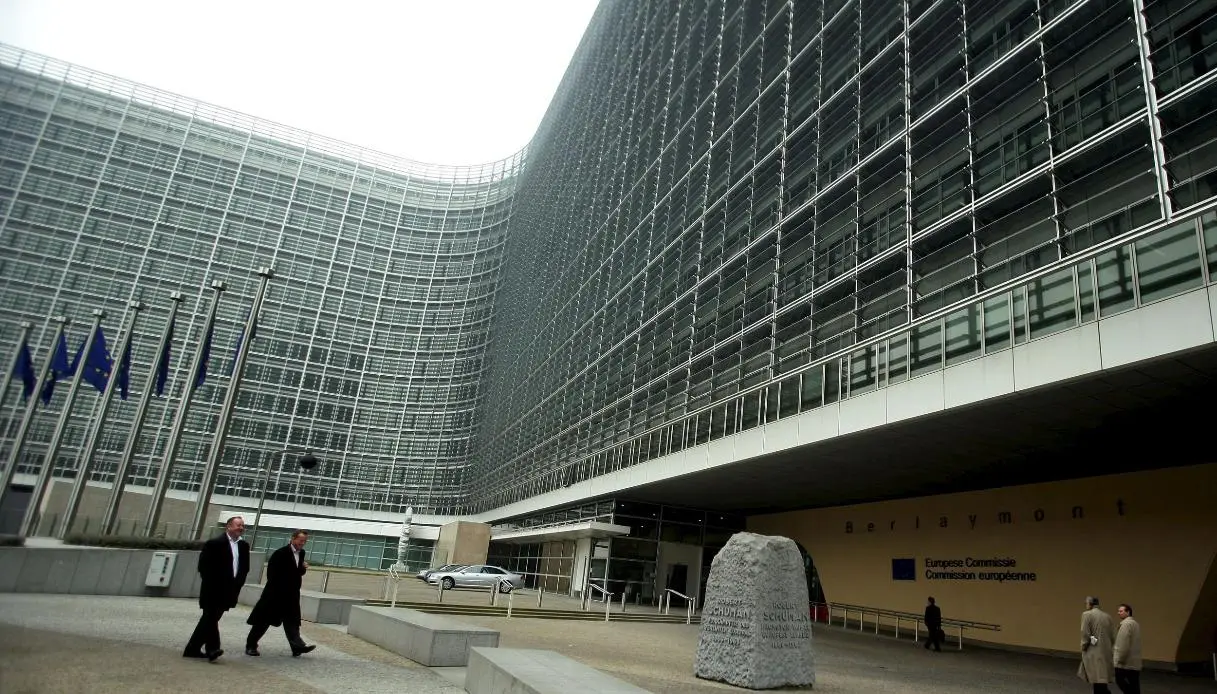
Every year the European Union publishes a sort of report card of the member countries. They are called “Country Reports” and provide a detailed analysis of the economic and social developments and challenges of each Member State, assessing the extent to which these are addressed by national policies. They are published as part of the larger Spring Package, an annual exercise that coordinates economic and social policies. Based on analyzes conducted on individual states, the Commission reports a series of country-specific recommendations, with advice on where to intervene and how.
The main Italian challenge is the high public debt, followed by slow productivity that risks stagnating, a bureaucracy that is being streamlined, but which is still too difficult, for example, due to authorization procedures, and high energy prices, which damage competitiveness. But not everything is bad, in fact there are some points in which Italy shows itself to be strong and clearly improving. Let’s see Italy’s report card, whether it has been postponed to September in any subject, where it can improve and what its excellences are.
Italy’s report card: economic developments
GDP growth in Italy has slowed down and the cause is geopolitical uncertainty. This has weighed on household spending, and investment has rebounded after the decline in 2024, due to the withdrawal of tax incentives for residential construction. Yet, despite the difficulties, Italy is recording growing export figures, reversing the negative trend of the last two years.
Employment also performed well: both the number of people employed and the hours worked increased by 1.1% in 2025. In particular, the increases were recorded in the sectors:
- of services;
- of constructions.
On the other hand, workers are decreasing in the following sectors:
- of agriculture;
- of the manufacturing industry.
Permanent workers and self-employed workers are increasing, while fixed-term workers are decreasing (-7.9%). Overall, the unemployment rate is falling, to 6.1%. But despite this progress, the European Union reports an employment rate that has remained below the EU average, particularly for women and young people. Well, in this regard, the targeted measures and incentives for the Single Special Economic Zone (SEZ).
Wages are growing by 2.5%, especially in industry and construction, and real wages have recovered part of the previously lost purchasing power.
Productivity stopped
However, the performance of the labor market is not accompanied by growth in productivity. From the European Union report card it emerges that, apart from the period following the Covid-19 pandemic, Italian GDP growth has consistently lagged behind employment growth.
Behind the stagnation there are both macroeconomic and microeconomic factors. The report describes a predominance of small businesses and specialization in traditional low-value-added sectors contributing to chronically low investment in research and innovation. Regional disparities between North and South, high energy costs (Italy depends on energy and imported raw materials and this makes it particularly vulnerable to surges in raw material prices, as occurred following the conflict in the Middle East) and an unfavorable business context also weigh.
Sustainable Development Goals: Italy is improving
However, Italy is making important progress on all the Sustainable Development Goals relating to competitiveness and economic stability, although performance still remains below the European average.
Improvements are seen above all in innovation, while resilient industry and infrastructure have seen improvements, but slower, due to low levels of investment and high public debt.
Significant progress instead for the indicators relating to:
- quality education;
- decent work and economic growth;
- peace, justice and solid institutions.
In practice, Italy is improving on most of the Sustainable Development Goals relating to sustainability and all those relating to social equity, but at the same time there are indicators that show negative trends such as those relating to drinking water and sanitation. In fact, the impact of drought on ecosystems is increasing and the areas at risk of soil erosion are expanding.
Health indicators remain above the European average and the perception of one’s health status has improved slightly. Even if indicators on the risk of poverty are improving, Italy still has to catch up compared to the European average.
Italy’s report card: the quality of finances
What is done on an economic level has a positive impact on public finances. The Italian public administration deficit decreased from 3.4% of GDP in 2024 to 3.1% in 2025, thanks above all to the increase in revenue due to growth in employment and wages.
The debt-to-GDP ratio declined after the peak of the pandemic, but began to rise again in 2024 and today still remains above the pre-pandemic level. Italy continues, according to the report card, to face vulnerabilities linked to high public debt and weak productivity growth.
We read how, despite the improvement in primary balances, Italy’s public debt/GDP ratio has reversed its downward trajectory and has begun to rise, mainly due to the delayed impact of tax credits for the Superbonus.
Public spending on pensions and slow productivity growth also weigh on the situation. Therefore, according to the Commission, risks to fiscal sustainability remain high in the medium term, even though the Government has implemented several positive policies to promote fiscal sustainability, including strengthening annual spending reviews, reducing the tax wedge and reviewing tax breaks.
The demographic challenge
In this context, the demographic challenge appears to be of fundamental importance. In fact, Italy is facing an aging population and a low fertility rate. The total Italian population is expected to decline by more than 4 million by 2050.
This is a long-standing demographic decline, particularly in the South, which leads to a contraction of the workforce, further aggravated by the low participation of women and young people in the labor market.
For the European Union, migration can accelerate demographic renewal in the short term, but in the long term the challenge of Italy’s low birth rate must be addressed. We need to promote a more favorable environment for parenthood through stable jobs and employment policies, especially for young people.