Four geological wonders that have inspired artistic works
Nature has always inspired man, with its colors, its light and its geometries. From Etretat’s cliffs to Fingal cave, from Mount Fuji to Vesuvius, nature has inspired painters, writers and musicians from all times. Unique shapes, colors and suggestions have created works by Monet, Verne, Turner, Mendelssohn, Warhol and many others.
Four geological wonders
1 The cliffs of Etretat in France
2 The fingal cave in Scotland
3il Monte Fuji in Japan
4s Vesuvius in Naples
The cliffs of Etretat in France
We are in Normandyon the coast of alabasterthe stretch of western France overlooking sleeve channelin the Department of Senna Marittimawhere the river that also crosses Paris flows. The Etretat cliffs they are spectacular white limestone formations overlooking the sea: their beauty and grandeur have inspired Artists, painters and writerswho portrayed the cliffs in their works and set their stories here. Among them we find nothing less than Claude Monetwhich dedicates various works to Etretat including Etretat, the Manneporte, Reflets Sur L’Eaupainted in 1885 and today preserved in Orsay Museum in Paris. Preserved in the same museum, and dating back to a few years earlier, too La Falaise d’Etretat Après L’orage Of Gustave Coubertanother painter who has chosen cliffs as subjects also for other paintings.
Also Eugène Delacroix And Camille Corot they depicted Etretat in their canvases, which also ended up among the pages of Tales of Arsenio Lupinwritten by Maurice Leblanc. In Arsenio Lupin and the secret of the spire Among the cliffs, in fact, the treasures of the king of France would be hidden that the gentleman thief More famous than ever must find and, to do it without being disturbed, he sticks his death.
The Fingal cave in Scotland
In the hebrid islands, in Scotland, in the Natural Reserve, there is the Marina di Fingal cave, a splendor of nature formed by basaltic hexagonal columns. The cave formed about 60 million years ago, when a lava flow in contact with cold water cooled, and then be eroded from the waves for millions of years: the result is the very particular form of the columns through which the wind dance, creating a truly unique acoustic effect. This suggestive place inspired musical and literary works of some of the greatest artists of all time.
Jules Verne set here the final part of THEthe green radiusMontale appoints the cave in her poetry Magenta colored cloudsWilliam Turner painted it in 1832 in the work Staffa, Fingal’s Cave, now kept in Yale. But not only: Die hebridenmusical work by Felix Mendelssohn, takes its cue from the sounds of the cave, as well as Gest Aus Ossians Fingal by Brahms. In more recent times, the Pink Floyd composed an instrumental piece, entitled Fingal’s Cavand, that it was to be included in the soundtrack of Michelangelo Antonioni’s film Zabriskie Pointbut that in the end it was not chosen.
Mount Fuji in Japan
3,776 meters high, formed about 100,000 years ago, Mount Fuji is a volcano, as well as the highest mountain in Japan. The last eruption dates back to 1707, but is still considered still active, and is in fact constantly monitored: beloved by premises and tourists, revered as a place of spirituality and pilgrimages, as well as a favorite destination for naturalistic travels and excursions.
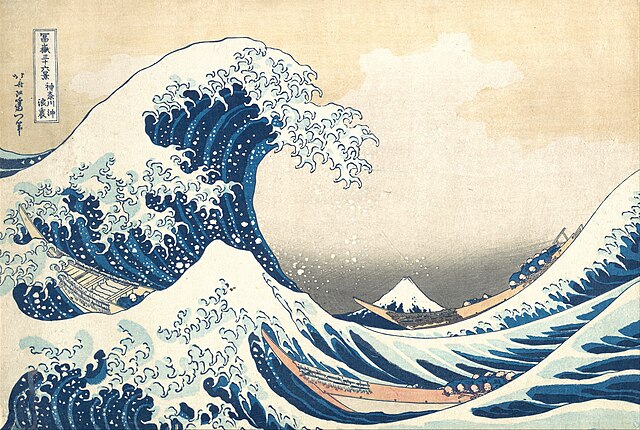
Its grandeur, its snowy peak, the colors of the sky and the panoramas have made Mount Fuji subject of different artistic works, such as the famous 36 views of Mount Fujimade by Katsushika Hokusai between 1826 and 1833, including the famous Great wave of Kanagawa. Many other artists have also painted Fuji: you can see a collection of works dedicated to this volcano at this link.
Vesuvius in Naples
The scene of one of the greatest natural disasters of antiquity, the disappearance of Pompeii and Herculaneum, Vesuvius is richly present in painting and literature: it is the subject of many paintings by neoclassicism forward, following the discovery of the buried cities, which began in 1738.
Among the artists who depicted Vesuvius, there is also Andy Warhol who with Vesuviusserigraphy made in 1985, wanted to pay homage to the city of Naples.
Of the fascinating volcano then write goethe in Journey to ItalyLeopardi in the ginestra – “Vasevo exterminors” – And Emily Dickinson also cites it, writing the wonderful verse: