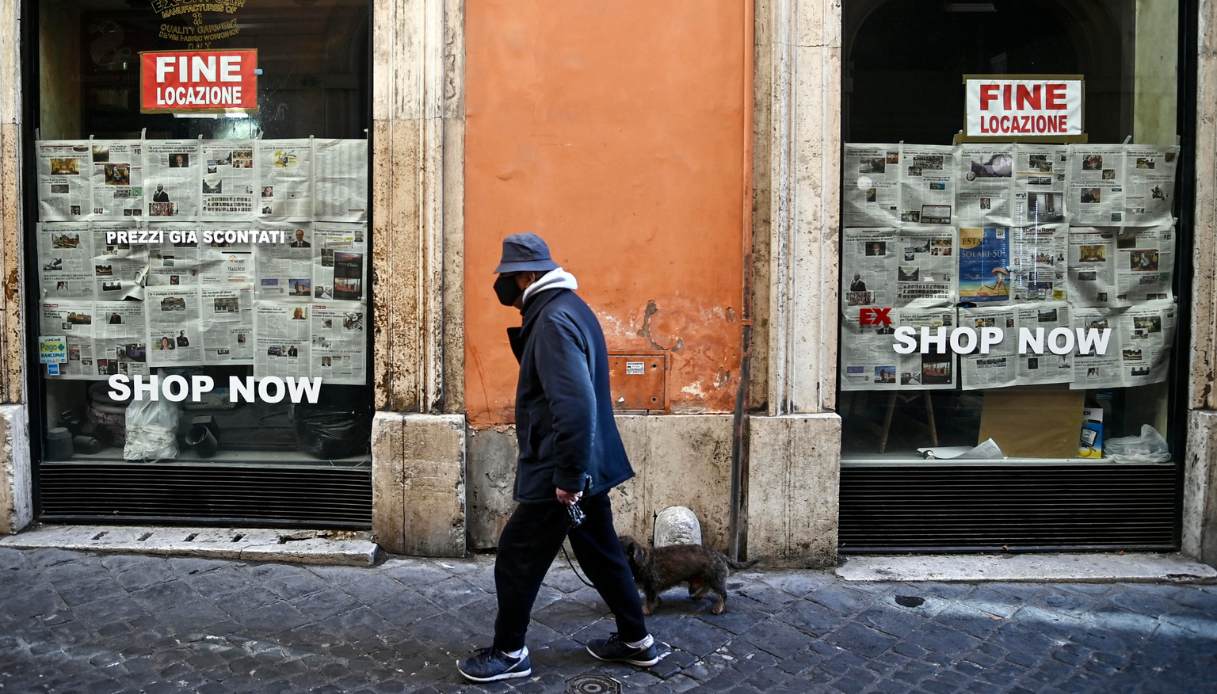
Over 114 thousand shops will disappear from Italian cities within 10 years. Confcommercio supports this by raising the alarm of desertification, which has already caused 140 thousand commercial establishments in urban contexts to close, destined to be increasingly abandoned between now and 2035.
Not only an economic problem, as explained by the president of the trade association Carlo Sangalli, but also a social and safety one.
The desertification of shops
The emergency is photographed in the analysis presented by the Confederation of Merchants, according to which without urban regeneration policies and new interventions, cities will be emptied of 20% of commercial activities over the next decade.
A phenomenon that is already underway and which has seen more than 140 thousand shutters lowered since 2013, especially those of retail outlets, both street and non-street, with peaks of closures recorded in historic centers and small towns.
According to Confcommercio estimates, the ratio between shops and number of inhabitants, calculated in commercial density, shows how commercial desertification will sp in the medium-large cities of Central-Northern Italy, where the use of online shopping is more widespread, compared to the centers of the South.
Among the most lost activities are:
- fuel distributors, which saw a drop of 42.2%,
- shops selling cultural and recreational items (-34.5%),
- non-specialised trade (-34.2%),
- furniture and hardware (-26.7%),
- clothing and footwear (-25%).
In contrast, sectors linked to tourism, such as bars, restaurants and clubs, grew by 17%, driving accommodation and catering services in general (+5.8%).
As underlined by the president of the association Carlo Sangalli, the impoverishment of the urban economic fabric risks also having repercussions on the social life and safety of citizens.
The desertification of shops is an economic, social and cohesion problem: every lowered shutter means less safety, fewer services, less attractiveness and less sociability in our cities. And without effective and timely urban regeneration interventions, by 2035 we risk having real ghost cities
Confcommercio’s warning about ghost towns
Raising the alarm, Confcommercio has therefore presented an Agenda of policies to incentivize local economies through the Cities project, asking for the participation of the Government, Regions and Municipalities.
Among the first interventions, the association is asking for solutions to relaunch the over 105 thousand vacant shops.
“To avoid this prospect, national policies and strategies shared between institutions, businesses and territories capable of combining competitiveness, sustainability and quality of life are needed. But above all, it is necessary to support local trade with fairer tax policies, easier and less expensive access to credit and specific measures to address the economic transition”









