The Woodstock Festival took place in the locality of Bethel, in the United States, from 15 to 18 August 1969. The organizers called him Woodstock because it was the name of the town, located about 70 km from Bethel, in which they had founded their company. At the concert I attend 400-500,000 young people, in large part followers of the Hippie culture and other youth counterclocks symbols of the youth revolution of the 1960s. During the iconic event, in which artists of the caliber of Janis Joplin, The WHO, Joe Cocker and Jimi Hendrix performed, the spectators made wide use of drugs and expressed pacifist and non -violent ideals.
Hippie culture at the Woodstock Festival
To understand the importance of the Woodstock Festival, it must be remembered that the 1960s were a period of development of youth countercultures, partly derived from previous cultural “revolutions” such as that caused by the beat generation of the 1950s. One of the most popular countercultures was the hippie, which preached the return to nature and pacifism, expressed in the slogan “Put flowers in your cannons”. The hippies also followed an alternative lifestyle, supported the revolution of sexual customs, listened to psychedelic rock and used drugs, in particular cannabis and LSD.
The 1960s were also a period of evolution of music, because rock, born in the previous decade, associated with other musical genres, giving life to new experiments: pop rock, psychedelic rock etc., particularly appreciated by young people and in particular by hippies. The context in which the Woodstock Festival is placed is that of new musical trends, made famous by groups such as the Beatles, the Pink Floyd, the Rolling Stones, which became one of the symbols of the period.
The organization of the music festival and the choice of the place
The festival was born from the idea of four young American producers – John Roberts, Joel Rosenman, Artie Kornfeld and Mike Lang – intending to organize a 3 -day musical “marathon”. The four therefore activated themselves to choose the headquarters of the event and, after some attempts to be emptied, found the agreement with a landowner of Bethel, a locality of the State of New York, who agreed to rent them his hold. Therefore the festival, despite the name, was not held in Woodstock (far from Bethel just under 70 km), but it was called so because the city was home to the business activities of the organizers, who had founded a company, the Woodstock Ventures, to organize the event. The name is the official of the event was An Aquarian Exposition: 3 Days of Peace & Music.
The organizers invited many of the best known singers and rock groups and expected an influx of about 50,000 spectators. The event was to take place from 15 to 17 August.
The artists present in Woodstock and the renunciations
On the stage of the Woodstock Festival, some of the best known musical artists of the moment followed one another: Joan Baez (who was six months pregnant), Carlos Santana with his band, Janis Joplin, The Who, Country Joe and the Fish, Arlo Guthrie, The Band, Shy and the Family Stone, Jefferson Airplane, Joe Cocker, Jimi Hendrix and others.

There were also numerous waste received by the organizers: among the artists who did not agree to participate there were the Beatles, the Rolling Stones, Eric Clapton, Bob Dylan, the Doors, the Led Zeppelin and other groups and musicians.
The performance of the Woodstock Festival
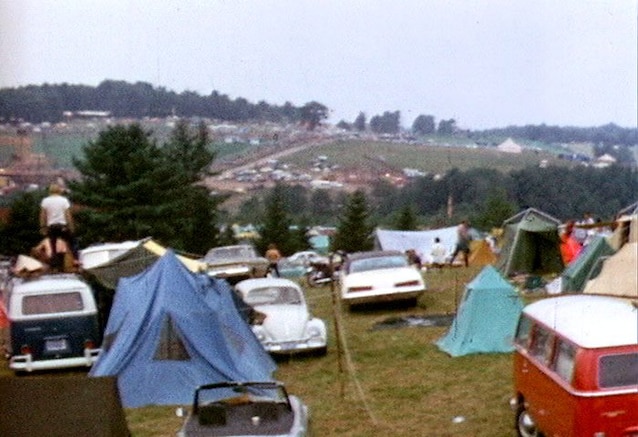
The concert proved to be an event larger than expected. Already when the organizers put tickets for sale, they understood that the estimate of 50,000 presence was much lower than reality. In fact, more than 150,000 coupons were sold; Many other young people showed up at the gates that enclosed the festival area without a ticket and were equally able to access. It is estimated that in Bethel they were present between 400,000 and 500,000 people, staying at best in curtains or sleeping bags lying on the ground, despite the rain had created a lot of mud. The spectators consumed cannabis and abundant acids and many artists also arrived on stage under the effect of drugs.
The influx of public created serious organizational problems, because the area was not equipped to host such a large number of people. In a vast sector of the New York State, the streets clogged, to the point that the artists had to be brought by helicopter to the concert area. Also at the bathrooms were kilometer files and the food was scarce. Nonetheless, the young people showed no intention of giving up the event and the concert lasted a day more than expected, the last performance was that of Jimi Hendrix, who played on the morning of August 18. During the festival two people lost their lives, one for overdose and one because it was hit by a tractor while sleeping in the sleeping bag. According to some sources, two children and four other pregnant women were also born during the concert, they met spontaneous abortions.
The meaning and myth of Woodstock
Woodstock was not only a music festival, but an event with a strong symbolic charge and the expression of a different conception of the world. The young people who attended the event brought a message of peace to a world marked by the war in Vietnam and other conflicts. The festival is now considered the symbol of an era and over the years books and promoted initiatives have been published to remember it. Already in 1970 the official film of the event was disclosed, entitled Woodstock and destined for great success, and many other initiatives were organized in the following years, especially on the occasion of the anniversaries.