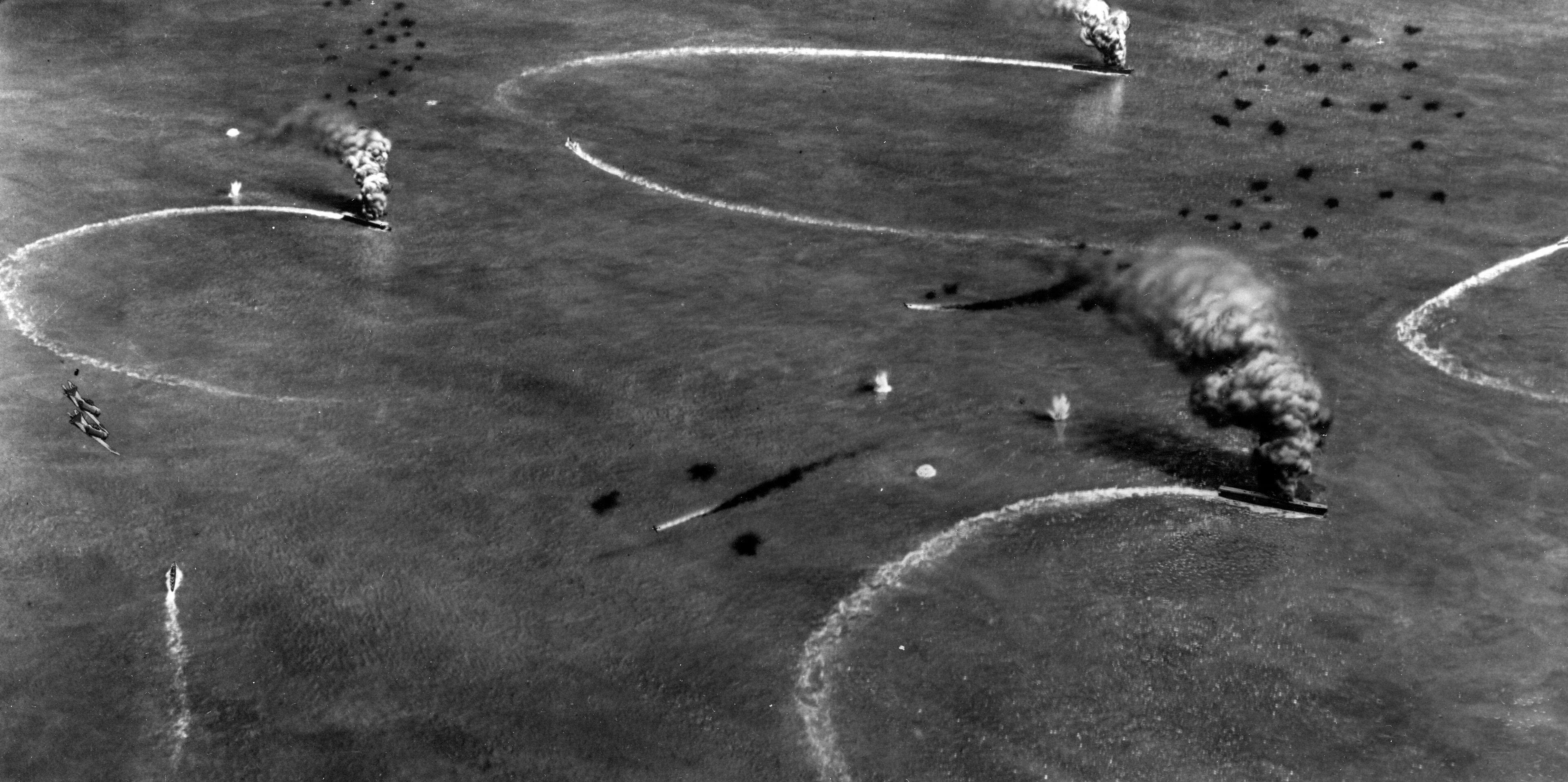
The Battle of Midway was fought between the United States and Japanese fleets between June 4 and 7, 1942. The Japanese empire, which after the attack on Pearl Harbor had begun a powerful expansion in the Pacific, intended to inflict a mortal blow on the Americans, occupying the Midway atolls, located in the heart of the Pacific, and destroying the fleet that would have rushed to defend them. The Americans, however, had deciphered the Japanese secret codes and were not taken by surprise. They managed to destroy the four aircraft carriers sent to the islands and inflict a crushing defeat on the enemy, starting a slow, but irreversible, advance towards Japan.
What was the Battle of Midway
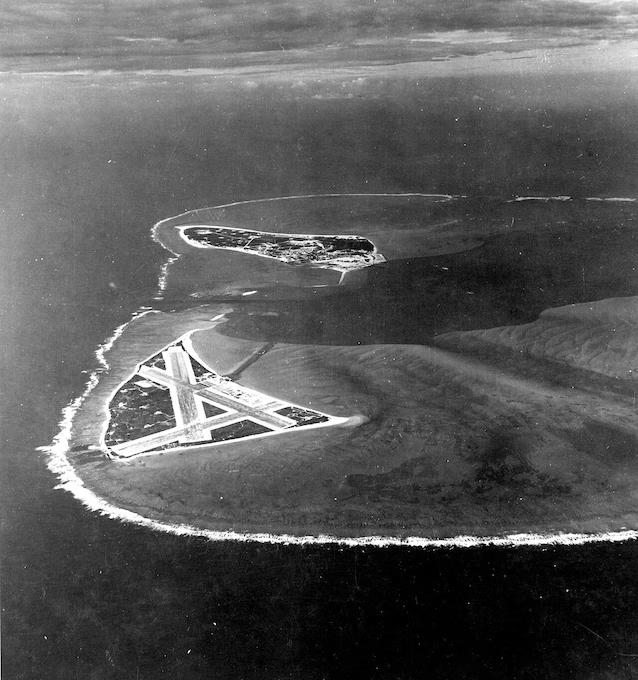
The Battle of Midway was the air-naval clash that marked the fate of the Second World War in the Pacific. The battle took place between 4 and 7 June 1942 between the forces of the United States and the Japanese Empire near the Midway Islands, two atolls located in the center of the Pacific, about a thousand kilometers east of the Hawaiian archipelago. The islands, belonging to the United States, had been transformed into an air base. During the battle, the ships never came into contact: the clashes developed only through planes launched from the aircraft carriers.
Japanese expansion
The battle took place a few months after the start of the war in the Pacific. As we know, on December 7, 1941, Japanese forces attacked the American fleet at Pearl Harbor, Hawaii, opening a new front in World War II. Other states, such as the United Kingdom, lined up against Japan, but in the first months of the war the forces of the Rising Sun carried out a powerful expansion: they conquered the Philippines, Malaysia, the Dutch East Indies, Burma and various islands in the Pacific, such as Guam and Wake. The United States and the United Kingdom were forced to retreat.
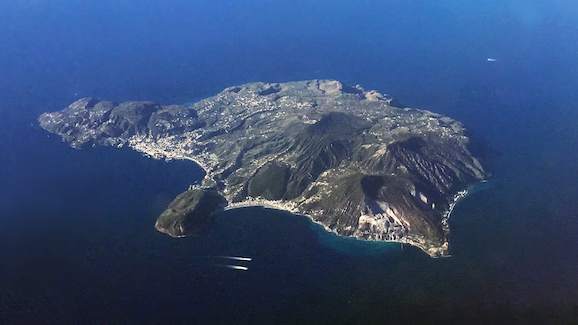
In May 1942, an air-naval clash took place between the Americans and the Japanese in the Coral Sea: the two fleets did not come into direct contact and only faced each other through aircraft taking off from aircraft carriers. The battle ended in a substantial draw, but convinced the Japanese that they could destroy what remained of the American fleet.
The Japanese plan for Midway
The Japanese armed forces knew that time was working against them: although the expansion appeared unstoppable, the American industrial potential was far superior and, if the war had lasted long, it would have guaranteed their enemies superiority in means and armaments. For this reason, the members of the Japanese General Staff, including Admiral Isoroku Yamamoto, decided to deal a mortal blow to the United States and force them to surrender. They therefore decided to occupy the Midway atolls, with the aim of attracting the US fleet and destroying it with aircraft from their aircraft carriers.
The Americans, who had not yet fully recovered from the blow received at Pearl Harbor, found themselves in an inferior position: although they had put a large number of ships into production, at the time they had a fleet that was qualitatively and quantitatively inferior to that of Japan. The United States, however, had an ace up its sleeve: they had deciphered the Japanese secret code and therefore knew their moves in advance.
The battle
At the end of May, an imposing fleet left Japan, made up of four aircraft carriers: Akagi, Kaga, Soryu and Hiryu, all veterans of the attack on Pearl Harbour, under the orders of Admiral Chuichi Nagumo. Along with the aircraft carriers, numerous other ships and a landing force were present. At the same time, other Japanese units launched a diversionary attack against the Aleutian Islands in the North Pacific to confuse the enemy.
Admiral Chester Nimitz, commander of the US fleet, was aware of the Japanese plans and had his ships ready, deploying three aircraft carriers around Midway: the Enterprise, the Hornet and the Yorktown, the latter hastily repaired after it had been damaged in the Coral Sea.
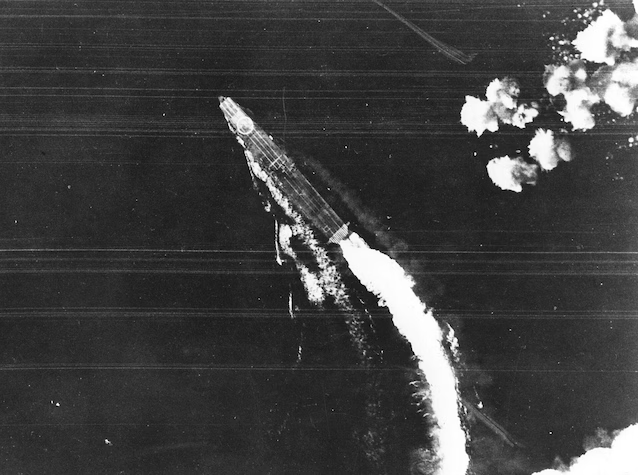
The Japanese, who arrived at dawn on June 4, failed to occupy the islands and, realizing the presence of the American aircraft carriers, launched their planes to hit them. However, they failed in the undertaking, while, after two unsuccessful attempts, one of the American attacks was successful: the planes hit three Japanese aircraft carriers, the Akagi, the Kaga and the Soryu, damaging them irreversibly. The fate of the battle was now sealed, but the Japanese did not give up and launched other air attacks, hitting and sinking the Yorktown. Later, another American attack also destroyed the Hiryu. The Japanese had lost four squadron carriers, as well as numerous aircraft and pilots, and were forced to withdraw without occupying Midway.
The consequences
The battle irreversibly damaged Japan’s armed forces, which were unable to replace their losses. The United States, on the contrary, was able to accelerate production and, in the following months, fielded numerous other ships. From a psychological point of view, the defeat at Midway was a hard blow for the Japanese, who until then were certain they were invincible. After the battle, a slow counteroffensive began by the Americans who, from island to island, reconquered the territories occupied by Japan and in 1945, also thanks to the atomic bomb, they definitively defeated the enemy.









