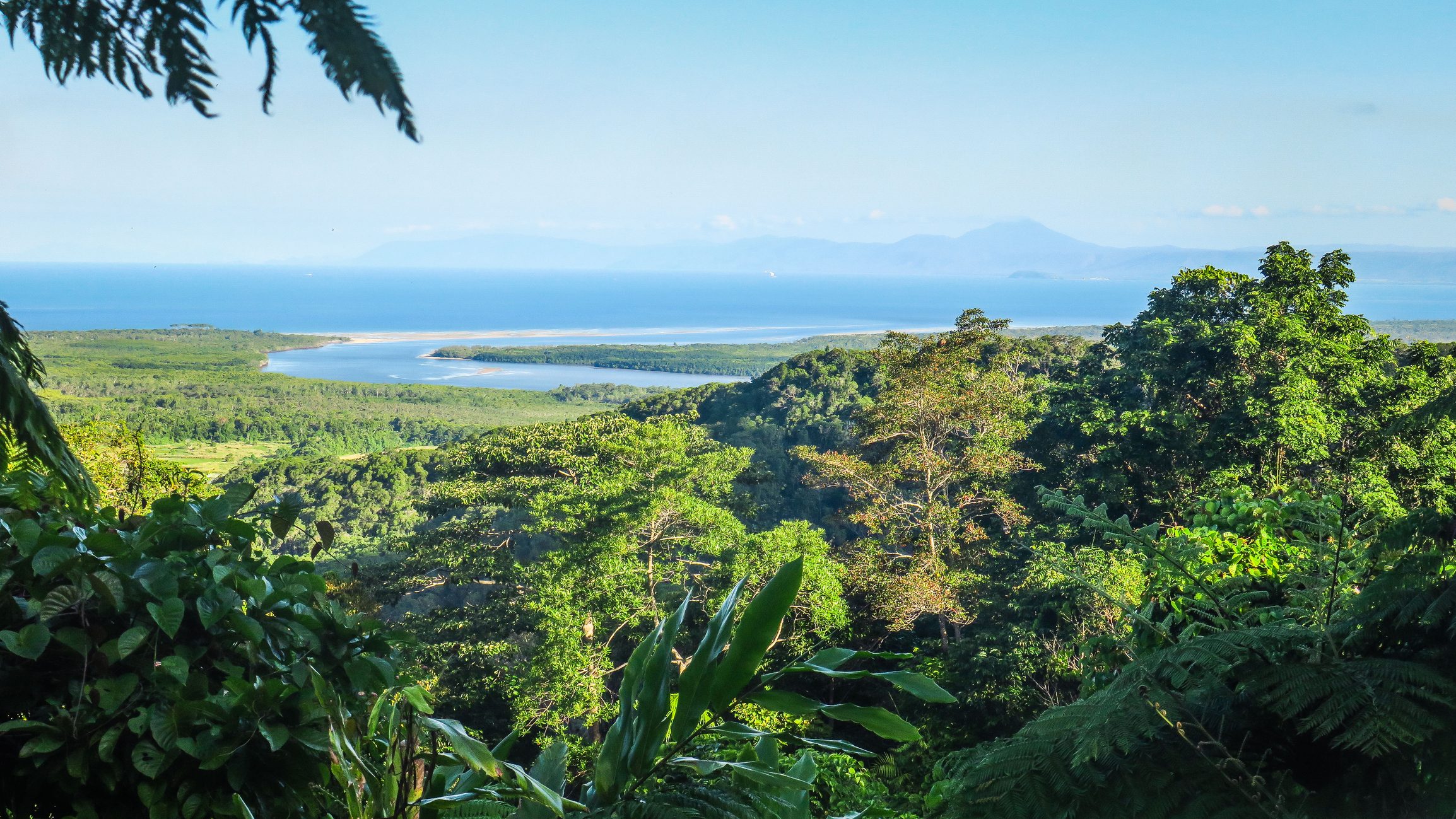
The Daintree Forest, in Queensland in north-eastern Australia, is often called the world’s oldest rainforest, with an age estimated to be between 130 and 180 million years. Its history is lost in time: some species that inhabit it date back to the supercontinent Gondwana, which existed hundreds of millions of years ago. Very rare plants, thousand-year-old ferns and primitive flowers live here, together with hundreds of endemic animals, such as the tree kangaroo and the southern cassowary. More than the age of the trees, Daintree is extraordinary for the continuity of its ecosystem, which has remained stable through glaciations and climate changes. Listed among the UNESCO World Heritage Sites, it houses a unique biodiversity in the world, but the fragile balance of the forest is threatened by climate change, invasive species and tourism. Visiting Daintree means immersing yourself in a thousand-year-old ecosystem and understanding how precious it is to protect this natural “time machine”.
The Daintree forest extends for over 1,200 square kilometers in the north-east of Australia, within the state of Queensland, and since 1988 it has been part of the UNESCO World Heritage Sites list due to its exceptional biodiversity and the presence of very ancient phylogenetic lines of plants and animals.
According to several studies, in fact, the ecosystem and many of the species that inhabit it derive directly from ancestors widespread in the super continent Gondwana, which existed between 660 and 180 million years ago. Not for nothing, this place is home to a unique botanical heritage in the world: here we can find all seven of the oldest known fern species and twelve (of the nineteen) primitive flowering plants still existing on Earth.
When the super continents of Laurasia and Gondwana separated to give life, after a very slow continental migration, to the planisphere as we know it today, a small part of those primitive ecosystems survived thanks to the tropical and stable climate of north-eastern Australia, becoming the original nucleus of the Daintree forest.
The forest today is the habitat of more than three thousand species of plants and hundreds of endemic animals, which do not exist, that is, anywhere else on the planet. Among these we find several species of the genus Dendrolagus: tree kangaroos adapted to living in trees and widespread only in this region and in the rainforests of nearby New Guinea.
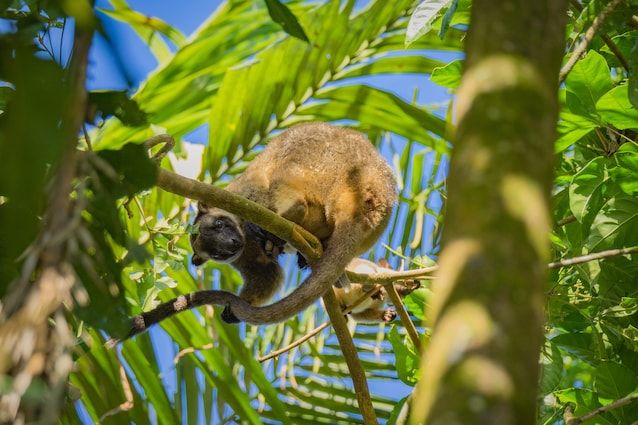
The forest is also home to 50% of Australia’s bird species, including the southern cassowary, and around 12,000 different insect species.
Research conducted by the CSIRO (Commonwealth Scientific and Industrial Research Organisation) confirm that many phylogenetic lines present in this area date back to pre-Pleistocene times, demonstrating that the forest has maintained a stable ecosystem during the numerous climatic changes of the Earth’s geological history. The Daintree forest, which according to sources could be between 180 and 130 million years old, is therefore not ancient because the trees that characterize it are ancient, but it is considered among the oldest on the planet precisely by virtue of the continuity of its ecosystem. Although today protected as a UNESCO World Heritage Site, the forest maintains a fragile balance: climate change, invasive and alien species and tourist pressure put its ecosystem at risk.









