Like every year, the UNESCO World Heritage Committee – that is, the United Nations Organization for Education, Science and Culture – has assessed the proposals of new cultural and natural sites from all over the world, and for 2025 it has added 26 to the list of world heritage, touching the share of 1248 sites scattered in 170 countries. Among the sites of this year there is also that of the Domus de Janas, ancient prehistoric rock tombs carved into the rock in Sardinia dating back to the Neolithic, which has been added to the Via Appia (which has become a UNESCO heritage in 2024) bringing to 61 the sites recognized as a World Heritage Site by UNESCO in Italy.
But what does this recognition involve? That certain cultural heritage have a global importance and, as such, deserve to be protected by war and environmental degradation. Among the powers of the UN Agency, from which the United States have recently decided to withdraw (again), there is also the granting of greater protection for the sites considered at risk.
This year, almost a third of the new members is linked to prehistory, and some are connected to local indigenous communities. But where are the new sites? Let’s see them for continents.
The sites in Asia
In Asia there are many: there is the birthplace of the “Zen Vietnamese tradition” of the Truc Lam Buddhism, with a complex consisting of over 20 sites in Vietnam; Then, in Cambodia, to honor the memory of the millions of victims of the Khmer Rossi regime, the Cambodian memory sites were registered, once places of violent repression; In Tagikistan the sites of ancient Khuttal were added, which illustrate the rich cultural diversity of the medieval kingdom of the same name that flourished between the VII and the 16th century AD; There are two new ones in South Korea, that is, the petrolfi along the Bangucheon stream and Mount Kumgang (“Mountain of diamond”), famous for its white granite peaks and unspoiled ecosystems; Then there is the Forest Research Institute Malaysia Forest Park Selangor, a rainforest created artificially in Malaysia on land degraded by the extraction of the tin; In China, the imperial tombs of Xixia were added, an imperial necropolis of the homonymous dynasty at the foot of the southern Helan mountains; Then there is the Paleopaexaggio of Faya, in the United Arab Emirates, with testimonies of human occupation dating back to the middle and Neolithic Paleolithic; Military Marathha of India’s military landscapes, consisting of 12 fortifications built, adapted or enlarged by the marathas between seventeenth and nineteenth centuries; The prehistoric sites of the Khorramabad valley, in Iran, where the first human presence dates back to 63,000 years ago; and the lids of Bin Tepe in Türkiye around ancient Sardinian, capital of the powerful civilization of the shores of the Iron Age (VIII-VII century BC).
The sites in Europe
The Domus de Janas in Sardinia have been added to Europe, hypogean tombs dating back to the Neolithic also known as “Fairy Houses”; The four castles of King Ludovico II of Bavaria (Neuschwanstein, Linderhof, Schachen and Herrenchiemsee), built in Germany between 1864 and 1886 on the inspiration of the German fairy tales; the megalites of Carnac and the banks of Morbihan in France, built in the Neolithic; the great Møns Klints in Denmark, of the 70 million years limestone cliffs overlooking the Baltic Sea; In Crete, in Greece, the Minoan Palazial Centers have been registered, which represent one of the main prehistoric cultures of the Mediterranean, the Minoan precisely one; Finally, in Russia, the rock paintings of the Shulgan-Tash cave, in the southern urals, dating back to the late Paleolithic, were added.
The sites in Africa
In Africa there are four of them: they are the cultural landscape of the Diy-Gid-Biy of the Mandara Mountains, a set of 16 archaeological sites distributed on seven villages in Cameroon; The Bijagós archipelago-Omatí Minhô in Guinea-Bissau, which combines a series of coastal and marine ecosystems; The Malawi Malawi Malawi mountain range, curated by the Yao, Mang’anja and Lhomwe peoples; And the Gola-Tiwai complex in Sierra Leone (the first site for the country), which includes the Gola Pluvial Forest National Park and the Faunistic Sanctuary of the island of Tiwai. A good of South Africa, then, was extended to Mozambique, creating a cross -border natural park.
The sites in America
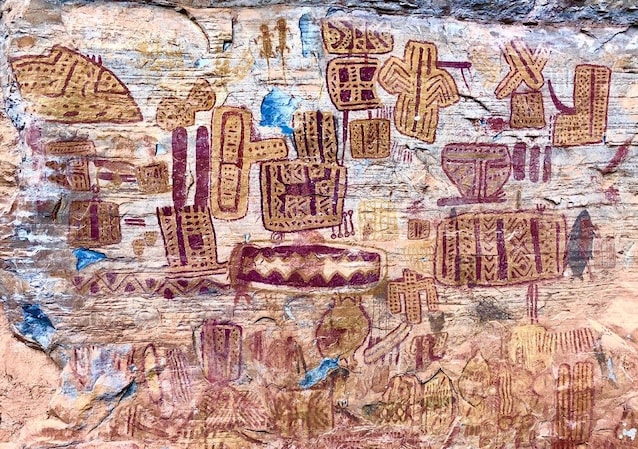
The canyon of the Peruaçu river, in Brazil, with a system of karst caves full of biodiversity was added in the Americas; The Wixárika journey, a heritage that extends for over 500 km through five states of central-northern Mexico by connecting central sacred landscapes for the spiritual and cultural practices of the homonymous indigenous peoples; the transistmic colonial route of Panama, one of the two main terrestrial interchanges between the Atlantic and Pacific Oceans; and the seventeenth-century archaeological complex of Port Royal, in Kingston, in the south-eastern Jamaica, which collects what has survived the important English port city after the devastating earthquake of 1692.
And the only new site in Oceania
Finally, there is only one in Oceania: the landscape of Rocce engraved by Murujuga, in north-western Australia, shaped by the presence of natives ngarda-garli, traditional owners and spiritual custodians of the site for over 50,000 years.