How much are the promises of artificial intelligence really worth? For those who have invested in it, even through a fund, there comes a time when those promises must be confirmed in the accounts.
Today, October 15, the markets’ eyes are on TSMC, the Taiwanese group that produces chips for Nvidia and Apple. While Asian stock markets retreat and concern about the cost of money returns, its quarterly report will offer a concrete measure of the demand supporting the race for AI.
Expectations are high: analysts expect quarterly profit to grow by 65%, to around 23.4 billion US dollars. This is an estimate yet to be verified. The market will also look beyond that number, looking for sufficient reasons in the prospects for the coming months to continue betting on the future.
Because TSMC results also matter outside Taiwan
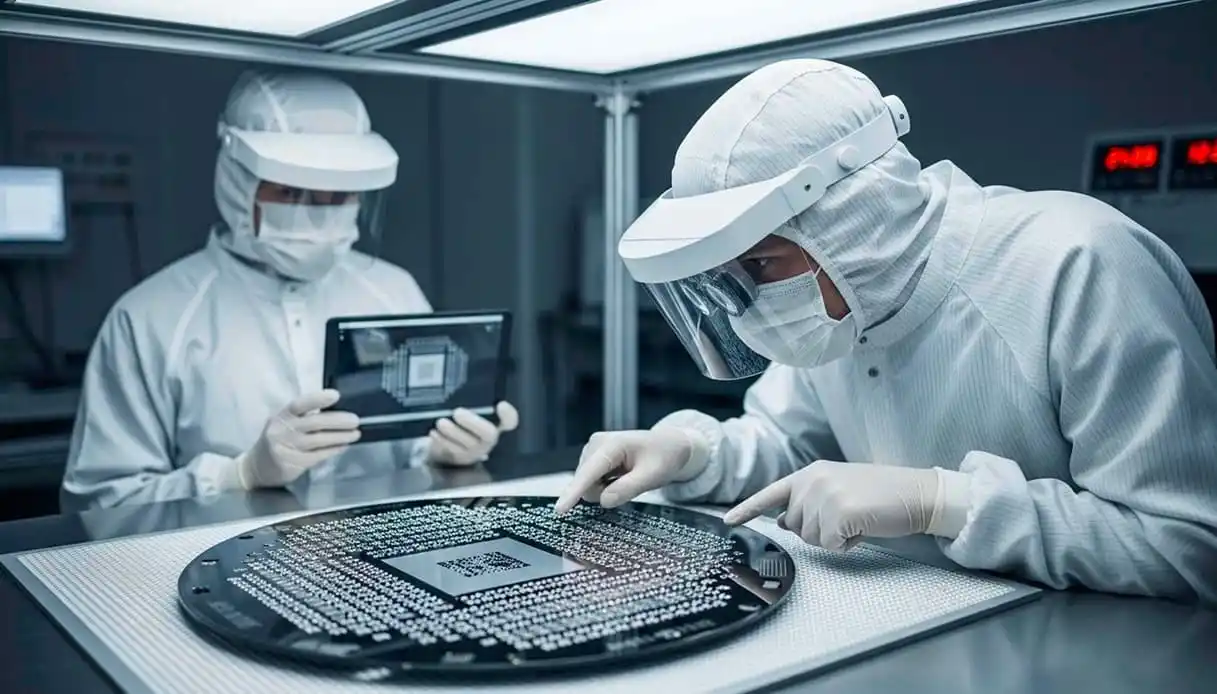
TSMC is a less familiar name than the brands that appear on our devices. His role, however, is central in their production. The company’s model is that of a semiconductor foundry: it makes chips designed by customers, without competing with them through its own line of TSMC-branded products.
This position allows you to observe a concrete part of the digital economy. Orders received, plant capacity and profitability tell what happens when a technological project has to be manufactured on a large scale.
| Ride | What does it mean |
|---|---|
| Design | Companies define the characteristics of chips |
| Production | A foundry like TSMC makes semiconductors |
| Integration | The components go into computing devices and systems |
| Usage | Businesses and people access the services made possible by those machines |
Simplified supply chain diagram: design and production can belong to different companies.
Asia retreats as caution over AI grows
Overnight, sales on Asian markets followed American weakness. The higher-than-expected US inflation data has rekindled fears of further rate increases. On Wall Street the Nasdaq lost 1.9% in the October 14 session; the technology sector remained at the center of pressure.
The latest reading of the Asian session showed the South Korean Kospi falling by 8%, the Japanese Nikkei by 5% and the Taiwanese Taiex by 3.4%. They are photographs of a session still in progress, not definitive closing changes.
Because the cost of money weighs on technology
The interest rate is also the price you pay for using borrowed capital. When it increases, financing a project can become more expensive. It is a mechanism familiar to those who have applied for a mortgage and also concerns, on different scales, businesses.
In the technology sector, however, a distinction must be made. A chip manufacturer, an infrastructure manager and a company that sells software have different budgets and needs. The word “AI” brings them closer in the story of the markets, but does not make their risks equal.
Caution can, therefore, spread to the entire sector even when individual companies present different situations. It’s one more reason to read the results, instead of stopping at the red or green color of a session.
What do we know and what is yet to come
The third quarter results conference is set for 2pm in Taiwan, 8am in Italy, according to the official calendar. When checked before publication, the company page still reported its previously made forecasts for the quarter.
| Voice | Indication available before results | How to read it |
|---|---|---|
| Quarterly revenues | Previous company forecast: US$44.6–45.8 billion | Interval indicated by the company, not final |
| Gross margin | Previous company forecast: 65–67% | Portion of revenues that remains after the cost of goods sold |
| Operating margin | Previous company forecast: 56–58% | Profitability of the operating activity |
| Conference | October 15th, 8:00 am Italian time | Presentation and discussion with analysts |
Source: TSMC official page for the third quarter of 2026. The ranges are the guidance prior to the announcement of the results.
The distinction between prediction and outcome matters. An analyst estimate expresses what the market expects; the guidance indicates what the company expects; the final report tells what actually happened.
Questions to ask the accounts
Reading the quarterly report does not end with profit. To understand the quality of growth you need to put together several elements.
| Item to observe | The useful question |
|---|---|
| Revenues | How much has the business grown and over what period? |
| Margins | Does growth leave the company with adequate profitability? |
| Investments | How many resources do you need to support future capacity? |
| Forecasts | What does the company indicate for the coming months? |
| Customer demand | Which activities support the orders? |
Article reading grid, not anticipation of the company’s responses.
Even a very positive quarter must be placed in this perspective. A manufacturer’s results may document the strength of demand for chips, but they do not alone prove that every investment in AI will be profitable. The supply chain includes different companies, with different costs and return times.
Those who cash in today and those who bet on tomorrow
In the race for artificial intelligence, revenues and costs meet along the same supply chain. For semiconductor manufacturers, orders become sales. For those who buy those chips and build infrastructures, they are investments to be recovered through services that someone will have to be willing to pay for.
It’s a distinction that helps when reading TSMC’s accounts. A brilliant quarterly can show how intense the construction of AI infrastructure is. To understand whether that push will last, we also need to look at the customers: how much they will use the purchased capacity, what revenues they will be able to generate and with what margins.
The two things can proceed at different speeds. Factories are receiving orders, while businesses are still experimenting with how to turn AI into a useful and profitable service. It is understandable, therefore, that solid industrial results coexist with investor caution: the market tries to anticipate how long the purchases will continue.
For this reason, today the words with which TSMC will describe the coming months will also count. Behind the ordered chips there are decisions made by companies that are committing resources to the future.