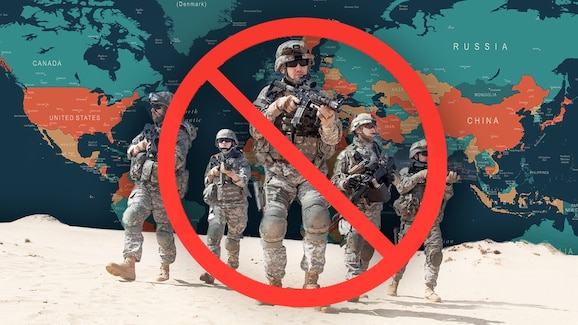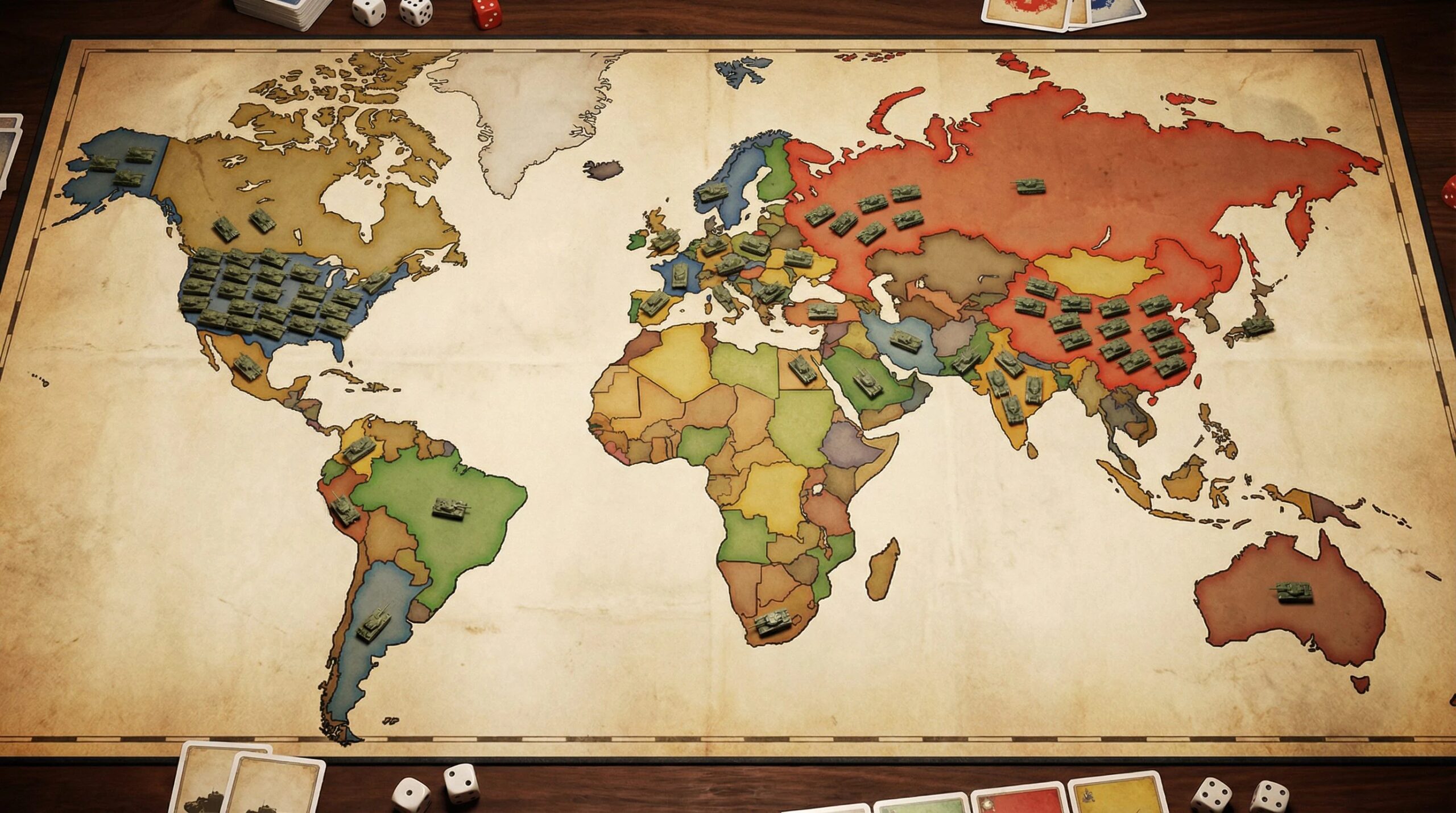
In the historical era in which we live, unfortunately characterized by the multiplication of armed conflicts, the ability to classify the land armies and armed forces of individual countries in an orderly hierarchy has once again become of primary importance. In particular, the great powers have this need, in order to understand who could emerge victorious in a direct military confrontation.
In order to correctly classify the armies of individual countries, however, it is not sufficient to look at the raw numbers of troops in service, those of reservists and the presence of any paramilitary support forces. It is also necessary to take into consideration the overall quantity of equipment (light weapons, artillery, armored vehicles, trucks and other logistical vehicles, drones, just to name a few macro-categories) and the presence of stratified military-industrial complexes capable of producing them quickly and keeping them effectively in service. Finally, it is equally important to carefully evaluate the degree of operational readiness, capabilities and war experience accumulated over recent years. Once all these analyzes have been carried out, it is possible to draw up a ranking that is fairly close to reality.
- 1Russia and Ukraine: in first place thanks to the war
- 2USA and China: a second place in the name of numbers and technology
- 3India and Pakistan: a “balanced” third place
- 4The two Koreas: fourth place is played on “firepower”
In first place Russia and Ukraine, thanks to the war
The main effect of the more than three and a half years of the Russo-Ukrainian War was to favor the exponential growth, both in terms of numbers and operational experience, of the ground forces of the Russian Federation and the Republic of Ukraine, currently the only two countries that are truly experiencing, literally on the skin of their own soldiers, the technical characteristics and harshness of the first large-scale and long-lasting conventional war of the 21st century.
To support their respective war efforts, both Moscow and Kiev have heavily militarized their economies: at the end of 2024, according to data published by SIPRI, Moscow allocated 7.1% of its GDP to defense while Kiev as much as 34%. In addition, millions of men have served on both sides of the front to date. The experience that Russian and Ukrainian soldiers are accumulating is already being studied, because the lessons they learned, literally with blood, will show the way for armies around the world. For these reasons, Russia and Ukraine currently deserve first place in this ranking.
USA and China: a second place in the name of numbers and technology
Immediately after the top seeds, we find the United States of America and the People’s Republic of China, the big players who, together with the Russian Federation, represent the trio of superpowers reigning in the world today.
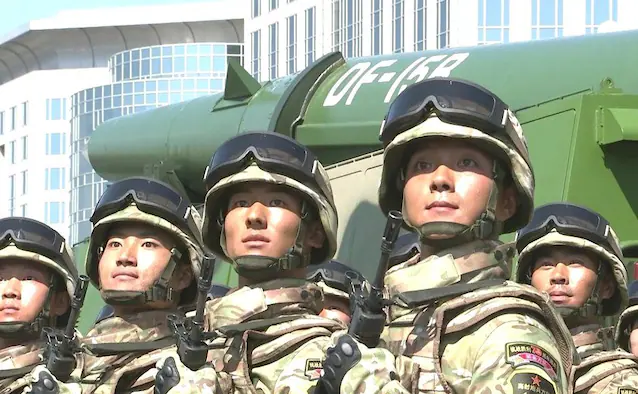
With one million active duty personnel and half a million ready-to-use reservists, the Ground Forces of the Chinese People’s Liberation Army represent the largest land army in the world (net of the uncertain and fluctuating numbers of the aforementioned Russia and Ukraine). Thanks to a slow but inexorable modernization process, which began as early as 1987, they are now also establishing themselves as a first-rate technological power.
For its part, the US Army (which also controls the Army National Guard and the US Army Reserve) has just under a million men but, despite being smaller than its Chinese counterpart, can line up a considerable fleet of vehicles, most of which are at the cutting edge from a technological point of view (at least on paper).
China and the United States can therefore boast both numbers and technological capabilities, as well as being equipped with the two largest and most stratified military-industrial complexes in the world. However, both countries are at a disadvantage compared to the aforementioned Russia and Ukraine because they have not yet had a real experience of “21st century warfare”. The last real large-scale conventional wars were fought by the Chinese and the Americans in 1979 and 1991 respectively. To date we cannot say with certainty how their soldiers and the military means with which they are equipped will behave “in the real test of fire”. For this reason they share second position.
“Balanced” third place for India and Pakistan
In third place in our ranking we are witnessing a challenge that takes us to the Indian subcontinent, where the army of the Indian Republic and that of the Islamic Republic of Pakistan clash (not just metaphorically speaking). Although India, territorially and demographically speaking, is much larger than Pakistan, their armies are similar in many respects, even considering the fact that they have a common origin, dating back to the British colonial period.
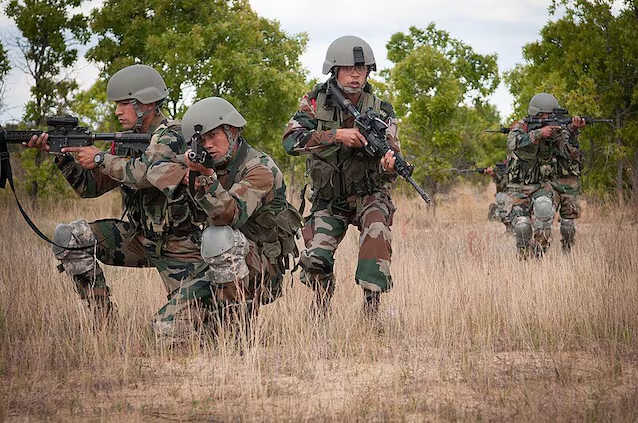
The Indian army has approximately 2,150,000 men, including active soldiers and reservists, who are counterbalanced by 1,330,000 Pakistani troops and reservists. The level of training between the two sides of the border is substantially comparable and both New Delhi and Islamabad spare no expense when it comes to equipping and training their military. India and Pakistan also boast numerous industries operating in the defense sector, but they are not currently self-sufficient and still have a long way to go to reach the level of those of the United States, Russia and China.
Finally, although the armies of the two countries are constantly engaged in asymmetric and guerrilla conflicts against numerous terrorist and separatist movements in their respective territories, the last time they fought a large-scale conventional war was in 1971 (Third Indo-Pakistani War). For all these reasons, the armies of India and Pakistan occupy the third position in our ranking.
The two Koreas: fourth place is played on “firepower”
In fourth position we find two countries born during the Cold War and still today divided by a heated political and military rivalry: the Democratic People’s Republic of Korea, more commonly known as North Korea, and the Republic of Korea, known to most as South Korea.
Both North and South Korea can boast numerous land armies which amount to hundreds of thousands of soldiers on active duty (mostly conscripts) supported by millions of potential reservists (here, however, it is difficult to have precise data available). North and South Koreans can also boast impressive military-industrial complexes that allow both Pyongyang and Seoul to be largely (but not totally) self-sufficient with regards to low, medium and now even high technology systems. From this point of view, the militarization of the industrial and production systems of the two Koreas has been even faster than in India and Pakistan.
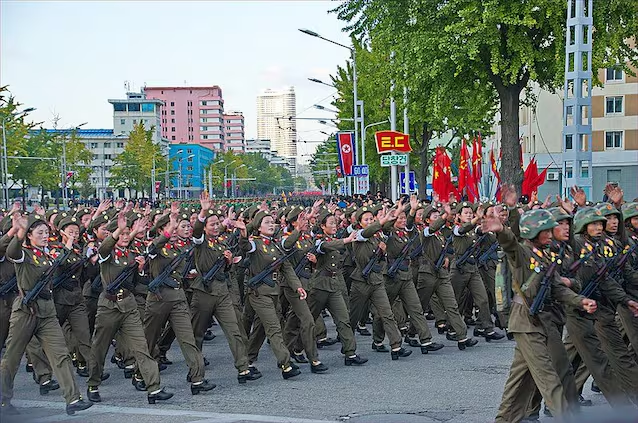
However, North Korea and South Korea are small countries from a territorial and demographic point of view (26 million North Koreans against 51 million South Koreans) therefore, even if they wanted to, they would not be able to withstand a prolonged armed confrontation with the other great powers mentioned previously. Furthermore, since the end of the Korean War of 1950-53, neither North Korea nor South Korea have been involved in major conventional wars and are therefore in an even more acute state of unpreparedness than the other countries mentioned.
Aware of the situation, the political and military decision-makers of the opposing chancelleries therefore opted for the onerous policy of “multiplication of arsenals”, exceptionally increasing the aggregate firepower of the armies deployed on both sides of the 38th parallel in order to exploit it as a “ram and power multiplier” for their own ranks of armed men.
For this reason, for example, North Korea, already in 2021, had the second arsenal of artillery after Russia in terms of number of “guns”, and the trend shows no signs of stopping. The South Koreans were no different, investing immense sums of money in the production of tanks, self-propelled artillery and other armored vehicles. The fact that they boast a “firepower” vastly superior to that of many other countries that are much larger, more populous and richer than them is undoubtedly noteworthy and allows the two Koreas to firmly secure themselves in fourth place.