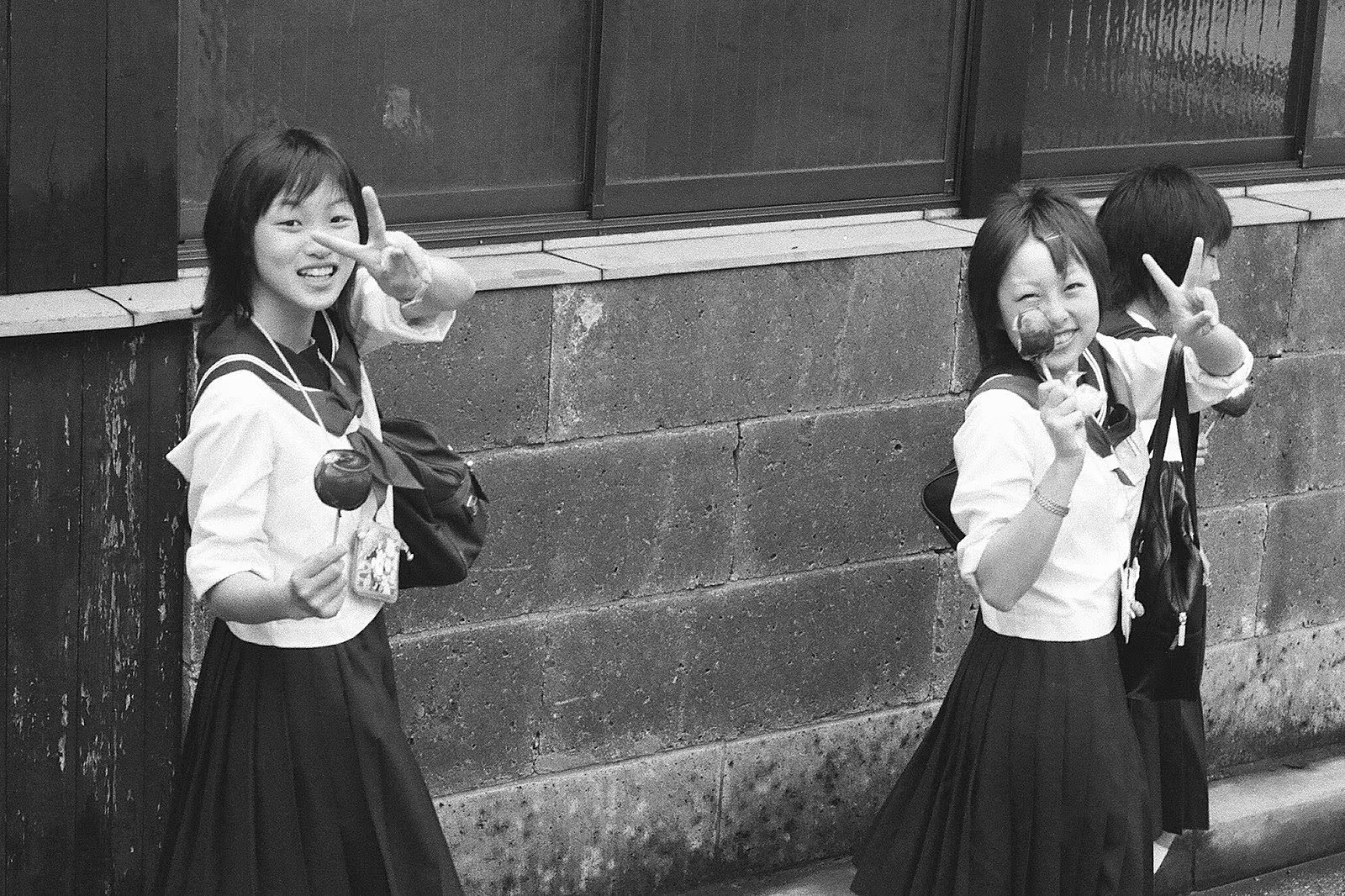
Taking a photo in Japan often means showing two fingers in a “V” (with the index and middle fingers raised with the palm facing outwards): the famous sign of peace. This gesture, born in the 1960s, but widespread from Tokyo to Osaka especially since the 1980s, draws inspiration from the Western “victory” sign which later spread in pop culture to indicate friendship, joy and the desire for peace, becoming a distinctive feature of the culture kawaii (literally “pretty”).
Behind a seemingly simple gesture, however, lies a combination of international influence, youth fashions and symbolism that deserves to be explored.
The “V” sign: the origins
The “V” sign has Western origins, made famous during World War II by Winston Churchill as a symbol of victory. In the West the gesture therefore had a military and patriotic meaning, very far from the idea of joy that it conveys in Japan today.
In the 1960s and 1970s, the growing influence of Western media (films, magazines, photographs and television programs) brought the gesture to Japan, where it was completely reinterpreted by young people.

In this process, the original meaning of victory transforms into something lighter: a symbol of positivity, friendship and light-heartedness.
The diffusion with photos among adolescents and the role of purikura
The gesture becomes especially popular among Japanese teenage girls in the 1970s. The photo booths purikurawhere it was possible to decorate photos with stickers, drawings and writings, offer a creative space to experiment with playful poses and gestures.
Making the peace sign becomes an easy way to appear cute, cheerful and socially approved. Its mass repetition among peers generates a contagious effect: imitating the “V” becomes an almost obligatory behavior in group photos, sanctioning its diffusion as costume cultural.
Symbolism and meaning of the gesture for the Japanese
In Japan the “V” brings with it positive and socially reassuring meanings.
The letter V recalls the word victory (victory) and suggests feelings of success, joy and friendship. Furthermore, in a culture where direct expression of emotion may be considered excessive or embarrassing, the peace sign offers a discreet but effective means of communicating happiness, friendliness and sociability.
In this sense, the “V” becomes a social tool, capable of transmitting emotions without words and making each shot more harmonious.
The globalization of the sign of peace
The “V” phenomenon is not limited to Japan: thanks to anime, manga, Japanese celebrities and especially social media, the gesture has become recognizable globally.
Its simplicity makes it easily imitable, creating a virtuous circle in which the gesture is constantly replicated and shared.
Today, even those who do not know Japanese culture can immediately understand the message of positivity and sociability it communicates: a small example of how cultural symbols can travel and transform into a universal language.
Today the “V” is more than just a gesture: it is an iconic element of photographic culture. In the 80s and 90s, thanks to films, anime, pop music and tourist trips, the gesture crossed continents and also returned to Europe, where it was adopted especially by young people as a symbol of peace, friendship and good humor in front of the camera.
Today it is universally recognized as “the gesture of peace”, a bridge between different cultures: an example of how a simple movement of the fingers can tell a long story of cultural influence, reinterpretation and global diffusion, transforming a local gesture into a language shared throughout the world.