The origin of the role of the “fourth official” in football is more recent than you might think. The birth of this figure, in fact, can be traced back to 25 February 1999. On this date during the Ligue 1 match between Marseille and Strasbourg, referee Bruno Ruffray suffered severe pain in his calf and was no longer able to run. At that point linesman Perrot took his place and was in turn replaced by a fan referee present in the stands. From then on, the importance of this figure began to be discussed more and more, so much so that, following a change to the regulations, the definitive introduction of what was called the “fourth official” was achieved. Obviously, beyond the purely substitute functions that it covers today, there are several equally important ones that contribute to ensuring the normal and correct running of every football match.
Who is the fourth officer
What happened that day at the Marseille Velodrome was incredible. The race director gets injured and, obviously, cannot continue the race. The linesman therefore replaces him, but there is still a vacant position in the referee team. At that point, the stadium speaker asks if there is an officially recognized referee in the stands and so the fan Miloud Boutouba, a regional category referee who finds himself refereeing a top flight match in his city and, in all probability, also for his favorite team, will take to the field.
Beyond the curious episode that led to the installation of this figure, let’s try to better understand who exactly the fourth officer is and what he does. The referee team that operates on the pitch is currently composed of: referee, two assistants, fourth official and possible reserve referees or assistants. VAR and AVAR, on the other hand, assist the referee from the famous video room. The two assistants are also known as linesmen and their function, better known than the protagonist of the article, is to support the referee in different situations such as throw-ins, corner or goal kicks, offsides, etc.
What it does and what it is used for in football: the main tasks
The fourth official, contrary to what we are often led to believe, carries out functions of fundamental importance, aimed at ensuring the normal and correct running of a football match.
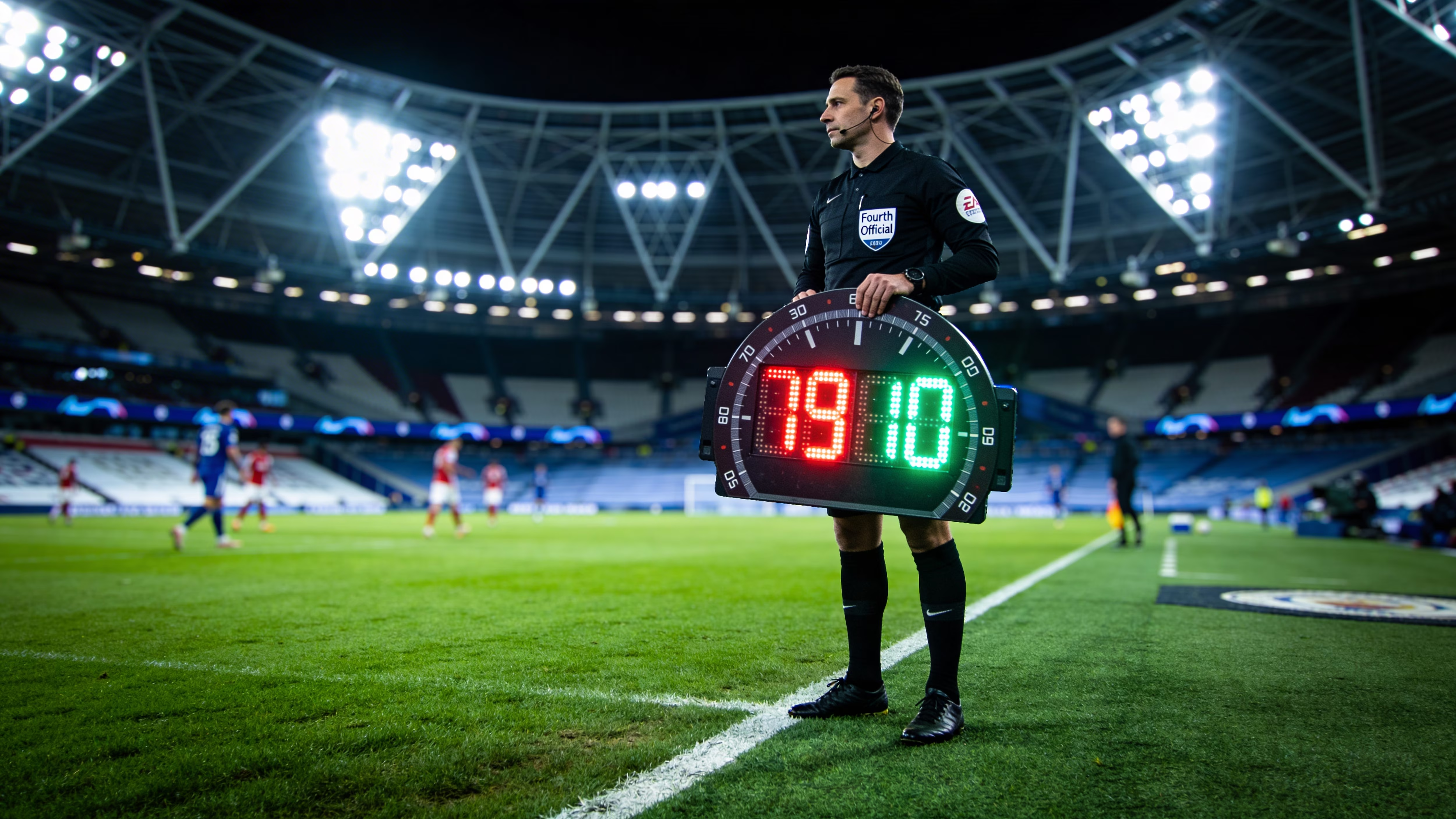
- Management of replacements: supervises the entire procedure ensuring compliance with the regulation. He is the one who raises the overhead projector with the red numbers (the player who leaves) and green (the player who enters).
- Equipment check: check that the clothing and accessories of owners and reserves are up to standard, having prohibited or dangerous objects (such as earrings or chains) immediately removed.
- Authorization to return to the field: manages the return to the pitch of players who have temporarily left (for example to receive medical treatment), granting the green light only after receiving the referee’s affirmative signal.
- Management of reserve balloons: supervises the additional balls positioned on the sidelines to ensure the fluidity and continuity of the game.
- Recovery reporting: shows on the sidelines the amount of injury time decided by the match director at the end of each regular or extra period.
- Supervision of the technical area: observes the behavior of coaches, staff and reserves on the bench, promptly reporting to the referee any misconduct that requires a sanction.
- Support for the referee: if he has a better view he can report any infringements or serious disciplinary incidents to the match director. An example of this is Zinedine Zidane’s headbutt to Marco Materazzi in the 2026 World Cup final won by Italy. On that occasion it was the fourth official (the Spaniard Luis Medina Cantalejo) who saw and reported the blow to the referee, leading to the historic expulsion of the French champion.