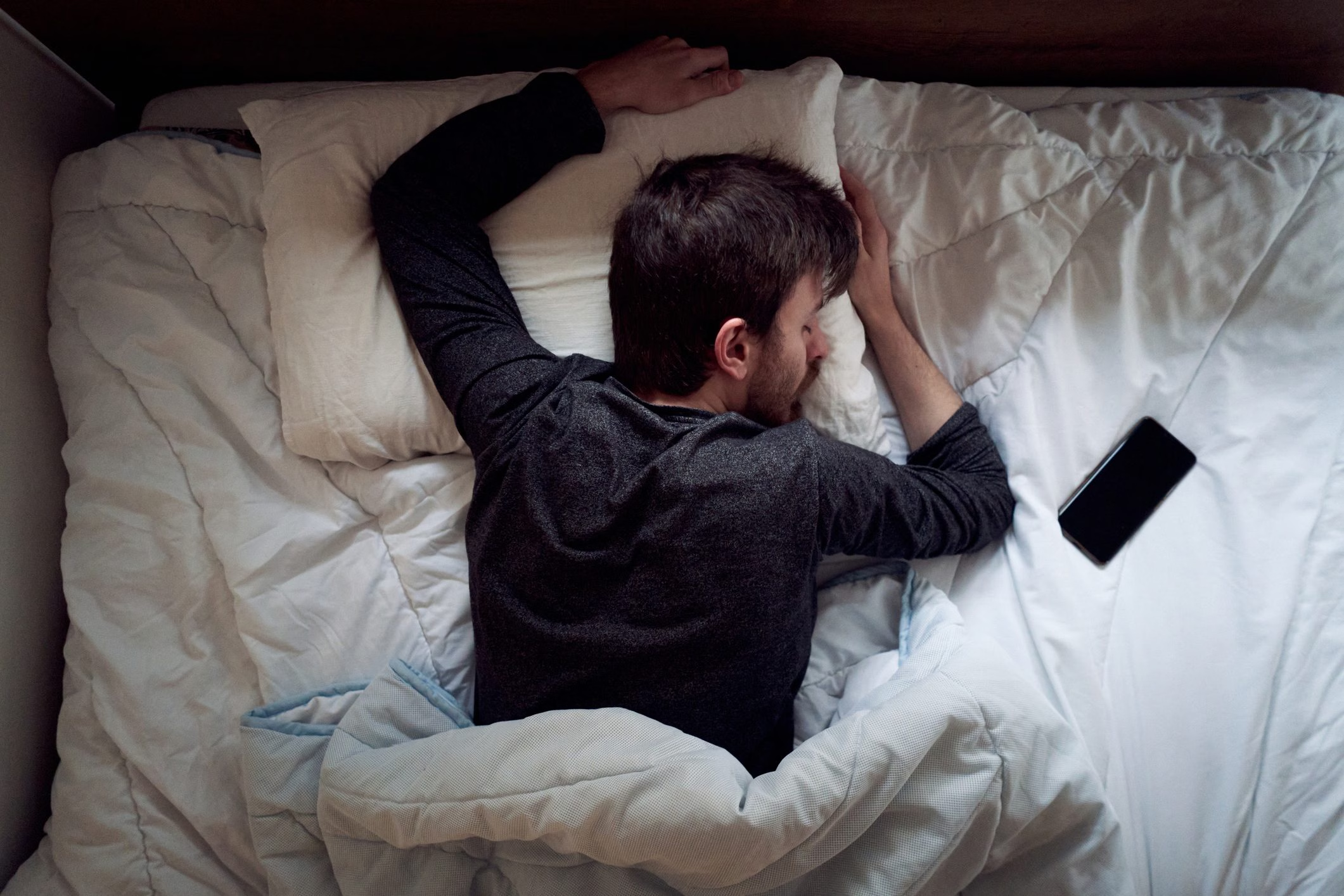
Sleeping with your smartphone under your pillow is a habit that is strongly discouraged, but not for the reasons that some fear: based on the scientific evidence currently available, there appears to be no correlation between cell phone use and the risk of developing brain tumors. This is what decades of studies and a massive 2024 review conducted by the Australian Radiation Protection and Nuclear Safety Agency (ARPANSA) and commissioned by the World Health Organization (WHO) have highlighted: although the use of these technologies has increased, in fact, there does not appear to have been an increase in cases of brain tumors. The fears historically linked to radiofrequency waves have proven to be unfounded in the oncology field, as they are non-ionizing radiation, i.e. energies incapable of breaking chemical bonds and therefore mutating our DNA.
The real danger hidden between the sheets is, however, if the smartphone is not set to airplane mode or do not disturb mode, the chronic impairment of our sleep-wake cyclealso known as circadian rhythm. Leaving the device under the pillow or, in any case, near our bed, exposes the brain to uninterrupted stimuli: the reception of notifications and vibrations keeps us in a state of constant alert, fragmenting rest. The result? A potentially compromised quality of rest, which inevitably translates into stress, difficulty concentrating and fatigue during our days.
Keeping the smartphone under the pillow, even in airplane mode, should also be avoided due to the possible risk of overheating the battery.
Smartphones do not cause cancer
The IARC, or theInternational Agency for Research on Cancer (not to be confused with the AIRC Foundation for cancer research) has classified the radiofrequency waves emitted by cell phones among the “possible human carcinogens” (Group 2B) and this is equivalent to saying that, unlike smoking and alcohol (substances classified as certain carcinogens, present in Group 1), at the moment there is not sufficient evidence that the use of cell phones can cause the onset of tumors in humans. Other agencies, such as the US EPA (Environmental Protection Agency) and NTP (National Toxicology Program), they even chose not to classify cell phones as potential carcinogens.
This is because, reviewing the data collected by the international scientific community, we note that epidemiological investigations have never shown a dose-effect relationship, i.e. an increase in tumors proportional to the increase in telephone use. Colossal studies like the Danish Cohort or the recent Australian survey byARPANSAfound no associations between exposure to radiofrequency electromagnetic fields from cell phones and the onset, or increased risk, of brain tumors (brain tumors).
This is because the only real physical effect that smartphone frequencies can generate is a very slight surface heating of the tissues if they are in contact with cell phones. To protect consumers, the authorities have imposed a strict limit called HRH (Specific Absorption Rate), the so-called tspecific absorption ratewhich measures the amount of energy absorbed by the human body, set in Europe at a maximum of 2 watts per kilogram. The smartphone models currently on the market operate at significantly lower levels, emitting energies that are completely unsuitable for causing biological damage during night standby.
A couple of good reasons not to sleep with your cell phone under your pillow
The focus of the problem then shifts to the impact that cell phones have on sleep. The mere proximity of an inexhaustible source of interactions could potentially prevent us from completely relaxing. Imagine that you are sleeping soundly and you hear your cell phone ringing: it is easy to hypothesize that even just the arrival of sound notifications and/or vibrations could abruptly interrupt our rest, worsening its quality.
Finally, the neurological impact is combined with a rare but documented physical risk linked to overheating of lithium batteries. If you suffocate under the weight of the pillow, not being able to properly dissipate the heat generated, these electronic components can theoretically trigger combustion and cause serious burns. This is an extremely rare eventuality, we reiterate, but potentially possible. For these two reasons, therefore, sleeping with your mobile phone under your pillow is not a good idea.