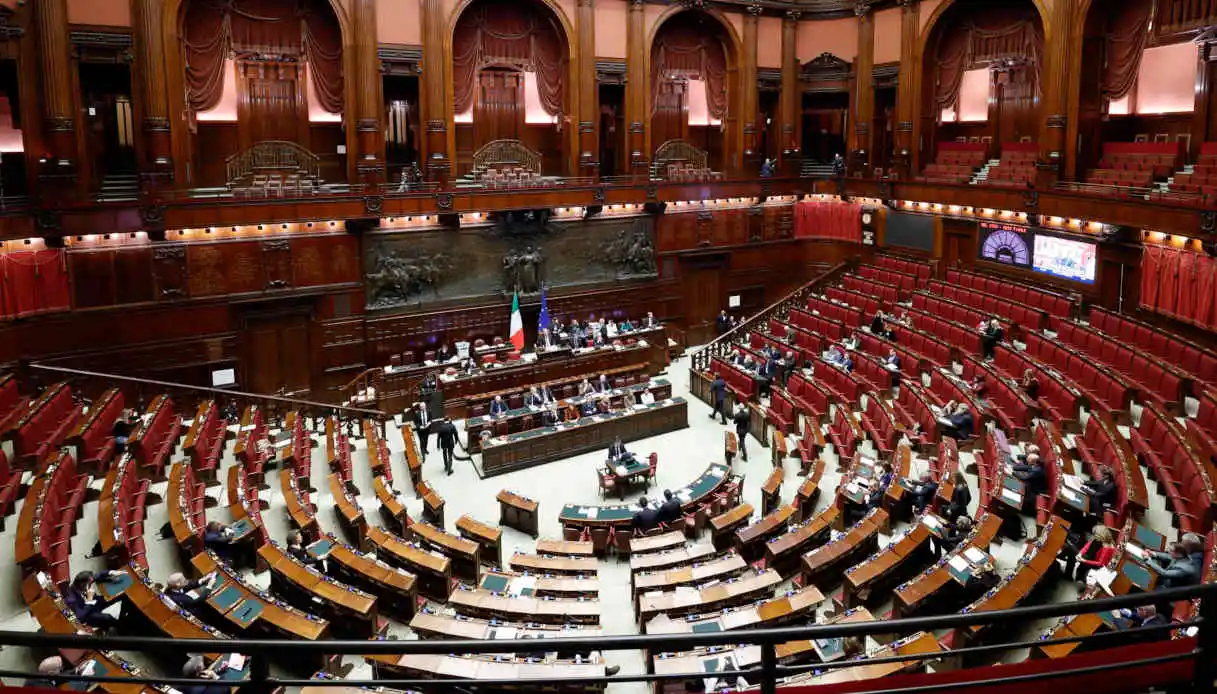
The bills decree arrives in the Chamber on Monday 30 March with the Government ready to give its vote of confidence. The text aims to intervene on the cost of energy, on support for families and on energy matters.
According to the calendar set by the Montecitorio group leaders’ conference, declarations of vote are scheduled for Tuesday 31 March from 12.20pm and the roll-call will be called from 2.00pm. In the meantime, the text of the Bills Decree has been enriched with amendments that significantly modify the version approved in the Council of Ministers.
Social bonus extended to district heating
Among the most important innovations is the extension of the social bonus also to district heating users. This was announced by Alberto Gusmeroli of the League, president of the Chamber’s Productive Activities commission.
The approved amendment also allows these families to access discounts based on the ISEE, filling a regulatory gap that was previously exclusive to electricity, gas and water.
This is a measure that concerns a wide audience: in Italy, district heating serves approximately 1.36 million homes, for over 2.5 million citizens. The declared objective is to strengthen the fight against energy poverty and make the system fairer.
This is what Gusmeroli commented to the microphones of Rai Parliament:
One measure in particular is the extension of the social bonus to all vulnerable families who benefit from district heating. It is very important because the bill decree is made specifically to help families. It will be in the chamber on Monday and will therefore soon be able to go to the Senate for final approval.
Bioenergy, less burdens and new rules
The bill decree also intervenes on the bioenergy front with a reduction in general system costs and a review of incentive mechanisms.
There are, in particular:
- updating the guaranteed minimum prices for the period 2026-2037;
- the introduction of limits on hours and priorities to contain spending;
- the reduction of incentives for plants not linked to production processes.
A new support system is also envisaged within 24 months for:
- non-convertible biogas plants;
- biomass plants.
The new model will have to be based on criteria of efficiency, flexibility and emissions reduction.
Reduced and remodulated incentives
Another key point concerns the progressive reduction of incentives for biogas and biomass. The text revises the system, partially accepting operators’ requests.
The guaranteed minimum prices will only be recognized:
- for systems up to 1 MW;
- for biomass and biogas from the supply chain.
A choice that aims to contain public spending, while maintaining support for smaller and more integrated entities in the territory.
Exit from coal by 2038
Among the most discussed changes is the postponement of the coal phase-out with the deadline moving to 2038. The decision is motivated by the need to guarantee energy security in an unstable global context, marked by the war in Ukraine and tensions in the Middle East.
According to supporters of the measure, it is a pragmatic choice to:
- protect families and businesses;
- avoid shocks on energy prices;
- maintain industrial competitiveness.
Renewables and the network, acceleration of investments
The decree also introduces measures to facilitate the development of renewable energy and improve the efficiency of the network.
As reported Sky TG24 according to Giuseppina Di Foggia, CEO of Terna, the provision will have positive effects on several fronts:
- simplification of administrative procedures;
- acceleration of connections;
- better investment planning.
One of the most relevant technical points is the review of the so-called “virtual saturation of the network”, which in recent years has slowed down new connections.
The decree provides:
- a new calculation of available capacity;
- the reassignment of unused connections.
This will free up space for new plants and investments in the energy sector.
Crack on telemarketing
A crackdown on wild telemarketing is also expected with regards to electricity and gas contracts: contracts stipulated by telephone will be void if the user has not previously given his consent to be contacted for commercial purposes.