The war in the Middle East could cost Italy much more than you think. Not only freezing and stagnation of the economy, but also recession. The Bank of Italy outlines the possible scenarios in the event of a prolonged conflict, according to which there may be a risk of zero growth in 2026 and a negative sign next year.
In updating the forecasts drawn up in December, the central institute places particular emphasis on two factors: oil prices and price and consumption dynamics. With an inevitable reduction in Italian GDP estimates.
The moderate scenario: GDP at 0.5% in 2026 and 2027
The basic scenario designed by the Bank of Italy refers to market prices updated at the end of March. And it sees a slowdown in GDP to 0.5% in 2026 and also in 2027, with a slight increase to 0.8% in 2028. Over the three-year period as a whole, however, this is half a point less than the considerations published at the end of 2025. A revision induced above all by the increase in the price of energy goods.
The general picture outlined in the institute’s four-page report sees Italian growth not stopping completely, but almost. The shock in oil and gas prices will be gradually reabsorbed in the coming months, bringing 2026 GDP to +0.5% compared to the +0.6% of the December estimates and 2027 GDP from 0.8% to 0.5%.
Inflation completes the panorama, rising to 2.6% this year, above the threshold established by the ECB, before returning below 2% the following year. All due to the predominant effect of energy prices: oil at 103 dollars per barrel and gas at 55 euros per megawatt hour on average in the second quarter. On an annual basis, the price lists would see 89.7 dollars for crude oil and 51.3 euros for gas.
The worst case scenario: from stagnation to recession
However, Via Nazionale let it be known that the forecasts are linked to significant unknowns: “Increased uncertainty, deterioration of confidence and tensions on the financial markets, with tightening of financing conditions”. In the event of further negative data, Italy would risk zero growth this year and a 0.6% contraction of GDP in 2027. In particular if the price of oil exceeds 150 dollars per barrel in 2026 and 120 dollars in the following two years, and if the cost of gas travels above 120 dollars per megawatt hour.
Given that the USA and Israel are already negotiating a way out with Iran without anyone appearing defeated in the eyes of their respective public opinions, the long-term effects on the Italian economy will also unfold in the months to come.
In this case, the hammer of inflation would fall with greater force on our real economy, rising to 4.5% in 2026, 3.3% in 2027 and 2.2% in 2028. The domino effect triggered by the surge in energy costs would cascade into other areas, causing the erosion of purchasing power and higher costs for businesses. The mix would be lethal: low growth and rising prices.
The effects on families, increases of 860 euros per year
The price dynamics described by Bank of Italy would thus affect the disposable income of families, causing “weak growth in consumption”. According to Codacons calculations, this would translate into increases of 860 euros per year per family.
Business investments, which had driven the recovery of bank loans in recent months in crucial sectors of our industry, in particular machinery and equipment, would also pay the consequences of the slowdown in the Italian economy. Perhaps only the construction sector would remain shielded by the shield of funds guaranteed by the Pnrr.
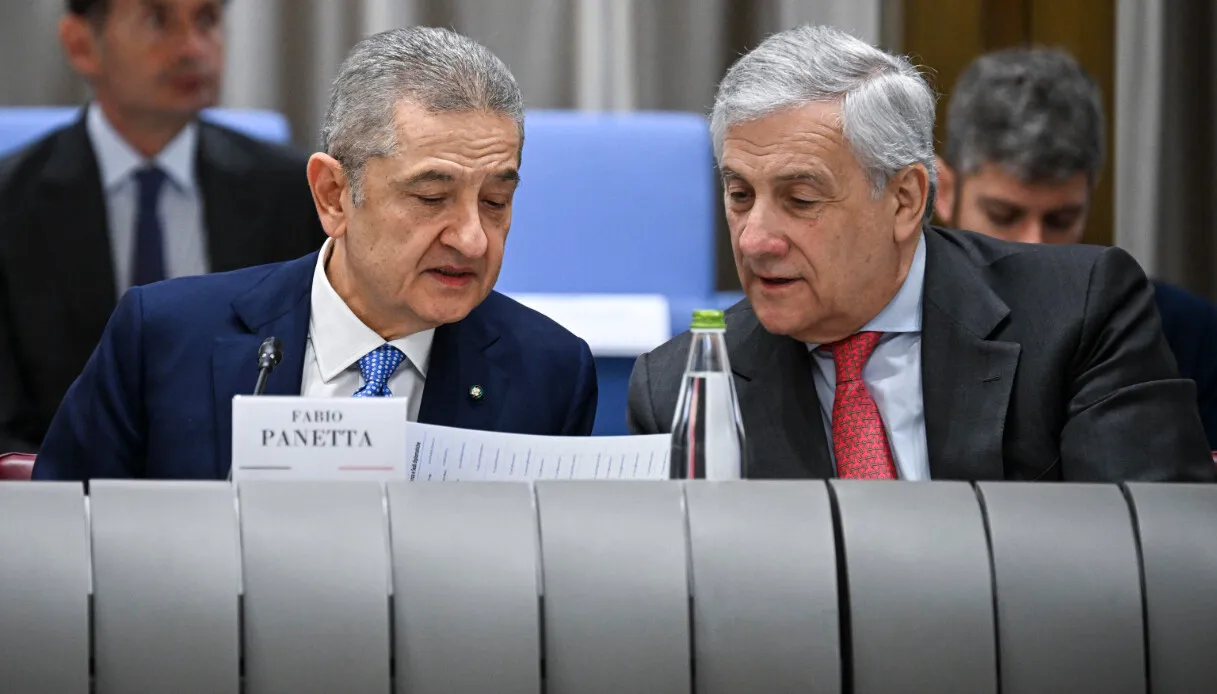
As underlined by the governor of the Bank of Italy, Fabio Panetta, much of our economic future will depend on the actual duration of the conflict. Because, even in the event of a quick ceasefire, the normalization of the energy market will take much longer. With inevitable repercussions on the export sector, an authentic driving force of the Italian economy.