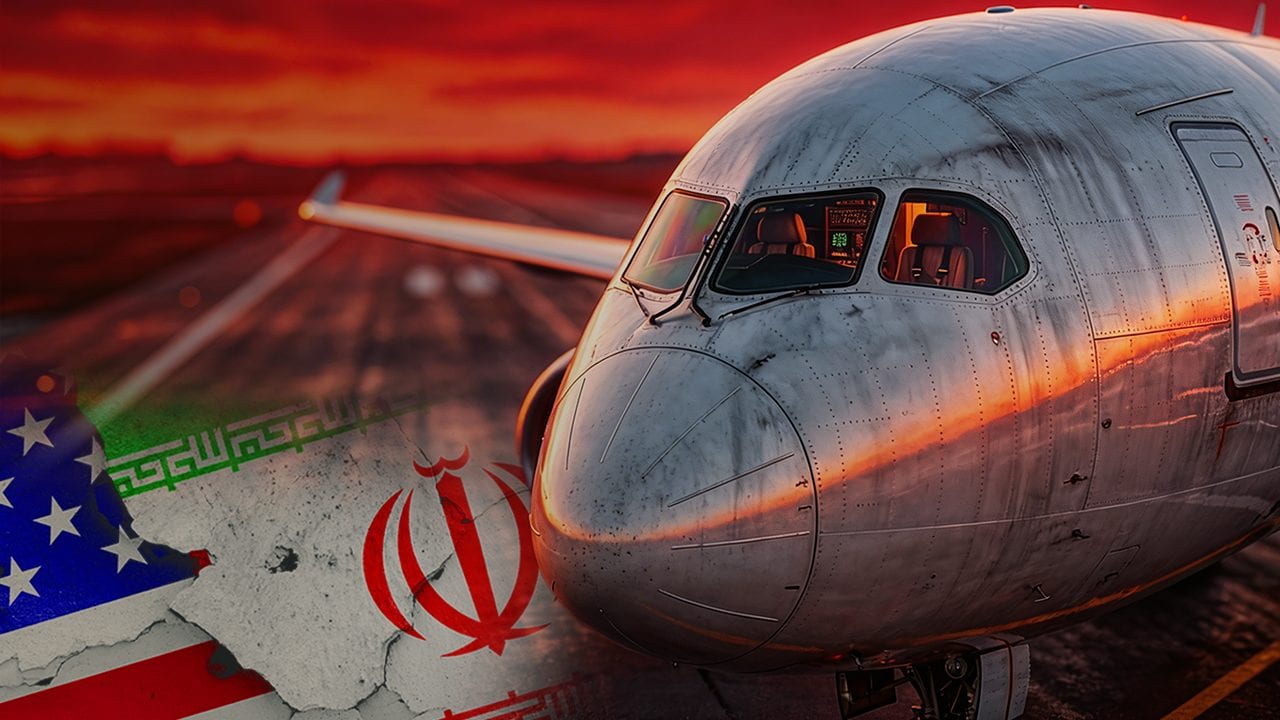
Donald Trump has threatened a total US closure of the Strait of Hormuz following the failure of negotiations with Iran held in Pakistan. All this happens while the kerosene crisis – the fuel for airplanes – is starting to be felt in European airports, including Italian ones. In fact, let us remember that kerosene is a petroleum derivative and 20% of global crude oil trade passes through Hormuz. Trump’s is a sort of “symmetric deterrence”: if you don’t let Western ships pass, then we won’t let yours pass either. All this, in practice, translates into enormous uncertainty about the availability of kerosene even in view of the summer holidays, with the risk of canceled flights. We therefore try to clarify the situation and answer practical questions based on passenger rights and European regulations.
Because having the price blocked does not guarantee take-off
In recent weeks you have probably read that ITA Airways has covered 80% of its fuel needs for the next nine months, or that Ryanair and Lufthansa have significant hedges. These news are true, but we need to understand what exactly is meant by the term coverage.
When an airline says it has covered its fuel needs, it is talking about a financial hedge on the price, not a guarantee on the physical availability of kerosene. It works like an advance contract with your supplier: the company agrees today on a fixed price for a certain quantity of fuel to be delivered in the following months, in order to protect it from market increases.
But if kerosene is not physically available at the airport from which the flight is to depart, that contract becomes meaningless. Airlines are therefore protected from financial risk, not from logistical risk, which depends on airports, local warehouses, and the physical supply chain. And it is exactly that second risk that the Hormuz crisis is putting under pressure.
Summer holidays 2026, is it better to book flights now or wait?
Those who book now lock in the current price. The problem is that that price has already increased compared to a few months ago, and could increase further if the crisis is prolonged. On the other hand, those who book today have more choice of destinations and times. Those who wait, however, could benefit if the crisis is resolved in the near future and flight prices decrease, but they risk finding less availability and higher fares.
The advice that emerges most frequently from industry experts at the moment is only one: if you book, choose flexible rates. In such an uncertain context, paying a little more for a changeable or refundable ticket is not a luxury, it is a concrete form of risk management. It costs more now, but gives you the freedom to change plans without losing everything if the situation deteriorates or, conversely, if you find a better alternative when the dust settles.
A warning: the flights most exposed to possible cancellations are short-haul flights to destinations that can also be reached by train, charters to the smaller islands of the Mediterranean and seasonal routes operated from airports with a single fuel supplier. Long-haul flights and connections to destinations that can only be reached by air are protected last.
Flight refund: if they cancel it, am I entitled to get my money back?
European Regulation 261/2004 always guarantees full refund of the ticket within 7 days in the event of cancellation, or alternatively a replacement flight to the final destination. This applies regardless of the cause of the cancellation, including of course fuel shortages.
However, the situation regarding additional compensation is uncertain, ranging from €250 to €600 depending on the distance of the flight. If the company can demonstrate that the cancellation was caused by extraordinary events beyond its control it can be exempt from paying that additional sum. It’s not automatic, and companies have to prove it on a case-by-case basis, but it’s an eventuality.
Is travel insurance worth it?
If you have only purchased the plane ticket, the insurance adds little to what European law already guarantees you. The refund in case of cancellation is already provided for by Regulation 261/2004, without the need for additional policies.
The insurance, however, becomes more relevant if you have booked a complete holiday package (flight, hotel, possible tour operator) and you want to protect the entire expense in case you are the one who has to give it up, for personal reasons and not for a cancellation by the company. In that case, a cancellation policy can reimburse you for expenses already incurred if the cancellation is documented and falls within the causes provided for in the contract.
Be careful though: many standard policies explicitly exclude events attributable to armed conflicts or energy crises of war origin. Before purchasing any coverage at this time, please read the exclusion clauses carefully and verify that scenarios related to the Hormuz crisis are actually covered.