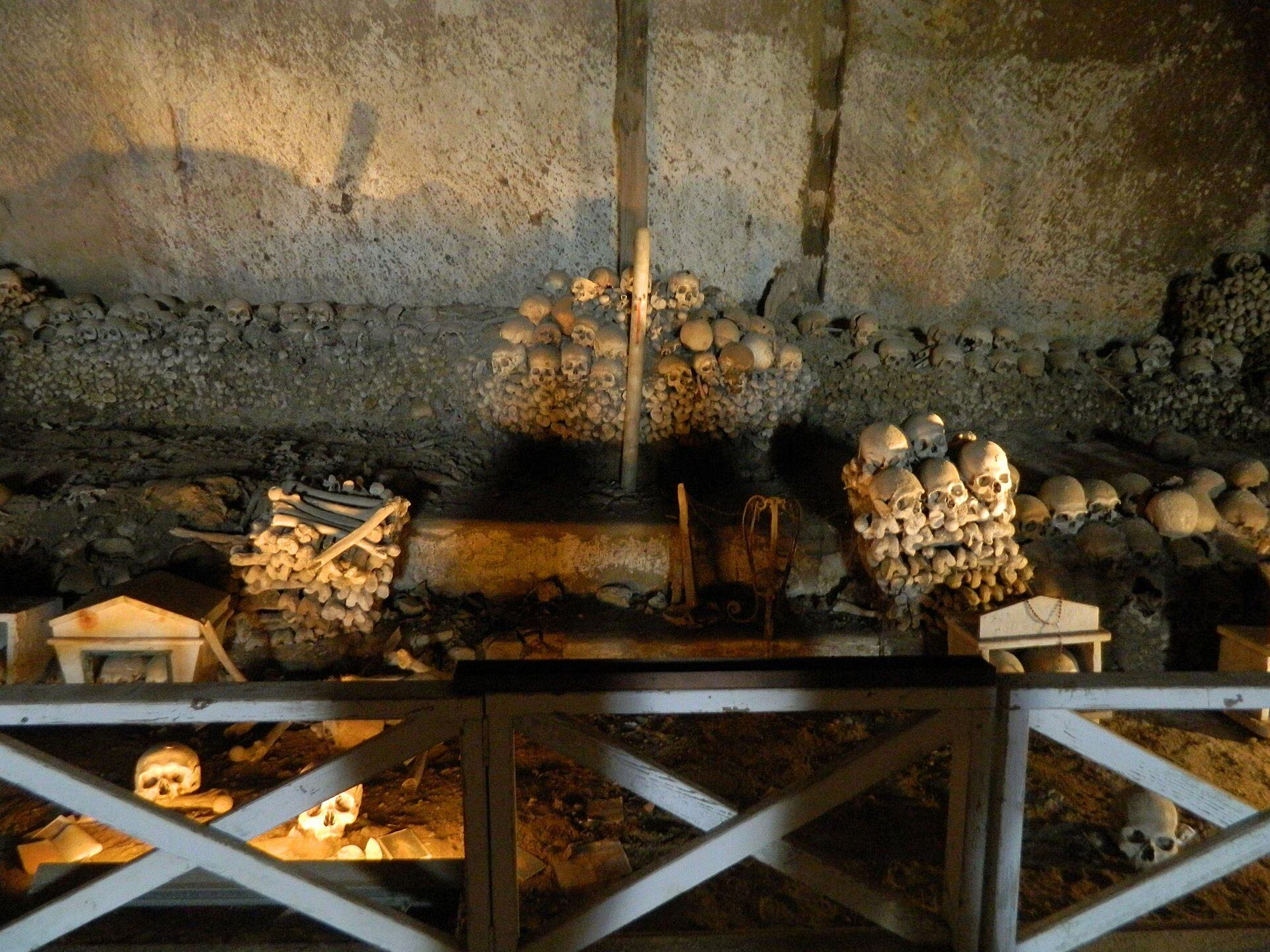
The Fontanelle Cemetery is an ossuary located in Naples. It houses the remains of around 40,000 deceased (but there are theories according to which the people buried would be much more numerous), piled up in large naves dug into the tuff quarries. The remains largely belong to poor people, many of whom died during the plague epidemics of 1656 and cholera in 1836. The cult of the “capuzzelle” was widespread in the Fontanelle cemetery, which consisted of taking care of a specific skull (the “capuzzella”), to receive in exchange graces and numbers to play the lottery. The cult was prohibited by the Church in 1969 because it was considered a pagan rite.
What is the fountain cemetery
The Fontanelle Cemetery is a historic ossuary in Naples, located in the Rione Sanità. It owes its name to the fact that there were once some water sources in the area.
The ossuary is located inside tuff quarries and is structured in large underground naves, in which the bones are stacked. In the cemetery there are therefore no “normal” graves, but only piles of bones. However, there is also a church, built in the nineteenth century.
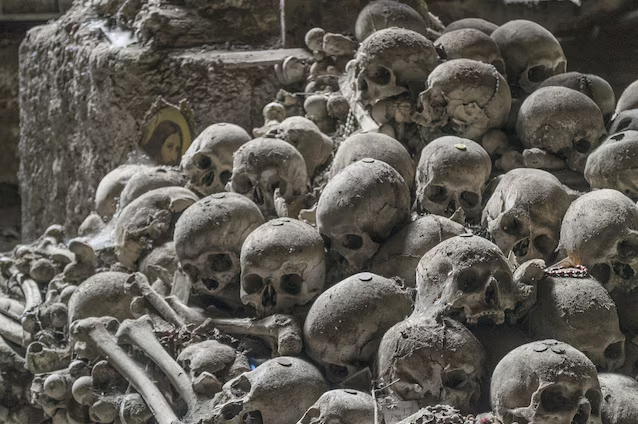
It is estimated that the cemetery contains the remains of around 40,000 deceased, but according to other theories and popular beliefs the number is much higher.
Since 2024, the management of the cemetery has been entrusted to the La Paranza cooperative, the same one that manages the nearby catacombs of San Gennaro.
History of the cemetery
The cemetery has its origins in 1656, when Naples, together with the entire Kingdom of which it was the capital and other Italian locations, was hit by a devastating plague epidemic. According to the most authoritative estimates, the deaths in the city were around 200,000. Numerous places were used to bury the corpses, including the tuff quarries in the Sanità valley, which was still uninhabited at the time. It was mainly poor people who were buried in the quarries, for whom their families could not guarantee a more dignified burial.
After the plague, the cemetery welcomed the remains of other deceased. The bones placed in the churches were brought there after the burials were cleared during the French Decade (1806-1815). It is also said that until the eighteenth century, requests for burial in churches were particularly frequent and that, as there was not room for everyone, the gravediggers used a stratagem: they temporarily deposited the corpses in the churches, leaving the families to believe that the burial had taken place, and then secretly took them to other places, including the Fontanelle cemetery.
The cemetery also welcomed the remains of the deceased during the cholera epidemic that hit Naples in 1835-1837. Legend has it that the remains of Giacomo Leopardi, who died in Naples in 1837, were also brought to the Fontanelle cemetery (in reality, the poet’s body was buried in a church).
The Fontanelle cemetery was opened to the public in 1872. It was no longer used as a burial place, except in exceptional cases, such as to place human remains found during public works. In 1934, for example, the bones found at the Maschio Angioino during the renovation work on Via Acton were brought there.
After a long closure, in 2006 the cemetery was reopened to the public. Closed again in 2019, it will be accessible from 18 April 2026
The rites of popular devotion: pezzentelle and “capuzzelle” souls
In the cemetery, the cult of the “pezzentelle souls” became established, that is, the souls who ask for prayers in suffrage. The word “pezzentelle” derives from the Latin verb peter, which means to ask (it is the same etymology of the adjective “pezzente”, used in a derogatory sense). The souls, belonging to poor families and unable to give them a dignified burial, ask the charity of other people for prayers through which, from purgatory, they can ascend to heaven. The cult is based on the belief that souls placed in purgatory can “accelerate” their ascent to heaven if those left alive pray on their behalf. In exchange for prayers, souls intercede on behalf of the living, performing miracles and graces, including communicating the numbers to play the lottery.
The belief in the souls in purgatory does not only concern the deceased in the Fontanelle cemetery. In the ossuary, however, a more specific rite has established itself, that of the “capuzzelle”. It consists of “adopting” a skull (the “capuzzella”), generally placing it in a small shrine, preserved in the ossuary, keeping it clean and offering prayers to it. Those who have adopted the “capuzzella” receive in exchange thanks and numbers to play the lottery.
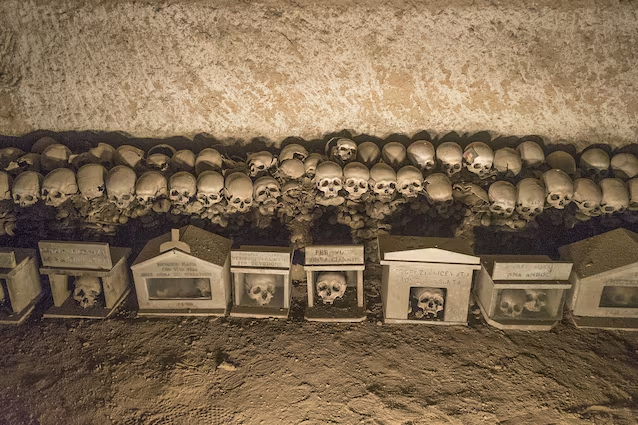
Popular devotion has developed rites and beliefs of various kinds, such as the one according to which the “little caps” can become jealous if a person turns his care to another skull and can take revenge by causing unfortunate events to happen.
The cult of the capuzzelle was prohibited in 1969 by decree of the archbishop of Naples, Corrado Ursi, as it was considered a pagan rite.
Famous “Capuzzelle”: the captain and Donna Concetta
In the cemetery there are some “famous” skulls which are objects of particular veneration.
One of the best known is that of the captain, who has one of his eye sockets blackened, almost as if he had been punched. The skull has given rise to various legends. One of the most popular says that he was venerated by a young woman who, in exchange for his attentions, asked for the grace of finding a husband. The skull would have satisfied her and on the wedding day it would even show up in the church, in the guise of a Spanish soldier. As the bride passed by, the soldier winked at her, arousing the jealousy of her husband, who punched him in the eye.
Another famous “capuzzella” is the one called Donna Concetta, which appears less dusty and shinier than the others, probably because it better attracts the humidity present in the quarries. Legend has it that Donna Concetta sweats and that, through sweat, she communicates whether she has achieved a grace: if, to the touch, the capuzzella feels moist, it means that the grace has arrived.