The victory of former president Rumen Radev in the Bulgarian elections has brought the country back to a pro-Russian position, after Orban’s defeat in Hungary had deprived Moscow of an important ally within the EU. The outgoing Hungarian prime minister also announced that Ukraine has repaired the Druzhba oil pipeline, which could start bringing Russian oil to Europe again in the event of Budapest’s approval of the 90 billion EU loan for Kiev.
Bulgaria is a crucial hub for European gas and above all for the prospect of a return to the purchase of Russian gas by EU countries. An option for which both the Minister of Infrastructure and Transport Matteo Salvini and the leader of the 5 Star Movement Giuseppe Conte are pushing hard.
Will Italy return to Russian gas?
In Italy, voices pushing for a return to Russian gas are multiplying. Since the outbreak of the war in the Middle East, it was the Minister of Infrastructure and Transport Matteo Salvini who was the first to speak about the possibility of returning to purchasing methane and oil from Russia.
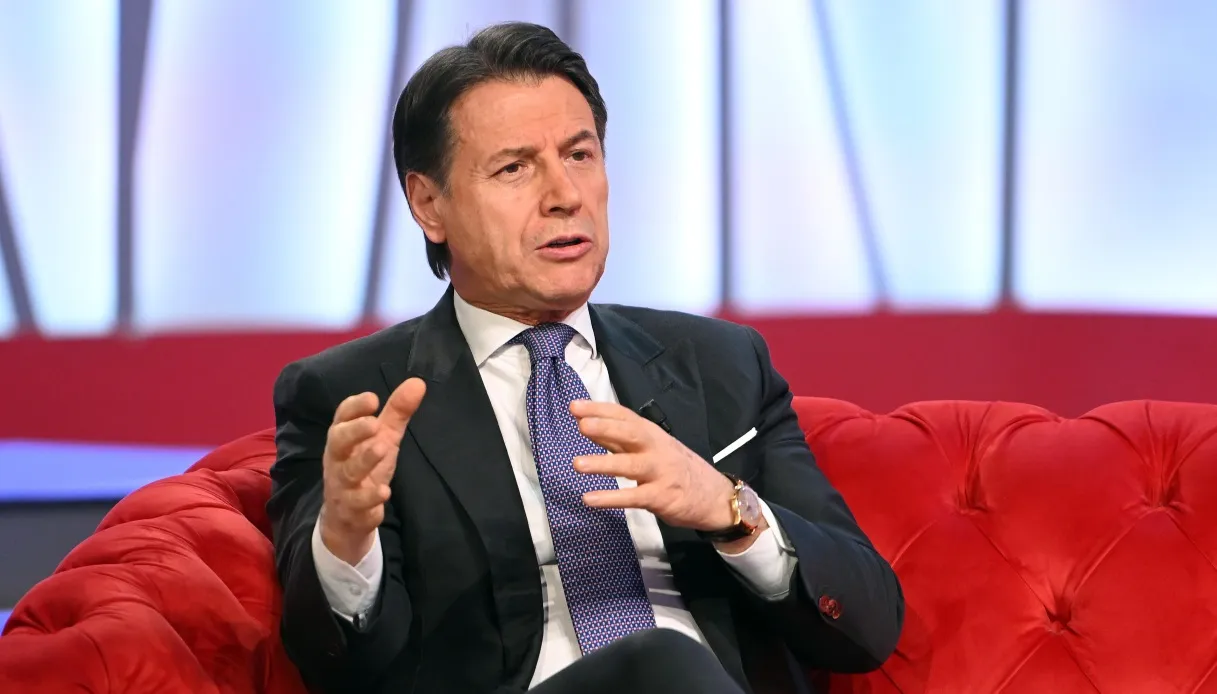
On Sunday 19 April the leader of the 5 Star Movement Giuseppe Conte also resumed the same positions. On the sidelines of the Open space technology training for Nova’s 100 team, Conte declared:
We need to buy Russian gas and it is cheaper for our businesses and our citizens. It is madness to go and buy American gas which costs a lot, to go and buy around the world when there is gas available which costs much less.
However, Environment Minister Gilberto Pichetto-Fratin reiterated that the Government has no intention of putting pressure in the EU in this direction, and declared:
My personal position is that of the Italian government and the Italian government is perfectly aligned with the European Union. If evaluations need to be made, they will be done by the European Union later. To date I exclude it.
Bulgaria is moving closer to Moscow
Former Bulgarian president Rumen Radev won the parliamentary elections, obtaining around 45% of the votes, a result that could allow the country to overcome a long phase of political instability, which saw citizens return to elections eight times in five years. His party’s positions are clearly pro-Russian, opposed to aid to Ukraine and open to closer relations with Moscow.
Bulgaria has a central role in Europe regarding gas supplies. In fact, some branches of several important gas pipelines pass through the country:
- Turkstream, which brings Russian gas to Europe via Turkey;
- The Gregia-Bulgaria interconnector, which connects the TAP and the Tanap to the European network.
Two flows therefore pass through the country: one coming from Russia and almost completely exhausted since the start of the war in Ukraine, and one coming from Azerbaijan, important precisely for differentiating European supplies and therefore reducing the continent’s exposure to international tensions.
A very pro-Russian government would therefore have the practical possibility, through Turkstream, to resume massive imports from Russia, even if this would require a strong clash with the European Union, which has envisaged a total ban on the purchase of gas from Moscow by the end of 2027. It would also have control over the flow of Azerbaijani gas arriving in Central Europe, potentially an important blackmail weapon against the EU.
Hungary will have access to Russian oil
In the meantime, Hungary has also recovered part of its ties, at the energy market level, with Russia. The outgoing president Viktor Orban, pro-Russian and defeated in the last elections by the pro-European Peter Magyar, has in fact announced that Ukraine has finished repairs to the Druzhba oil pipeline, which brings Russian crude oil to Hungary.
Reparations were at the heart of growing tensions between Budapest and Kiev in recent months, exacerbated by Orban’s election campaign. Oil is expected to start arriving again by next week. Subsequently, Hungary should lift the veto on the 90 billion euro loan promised by the EU to Ukraine.









