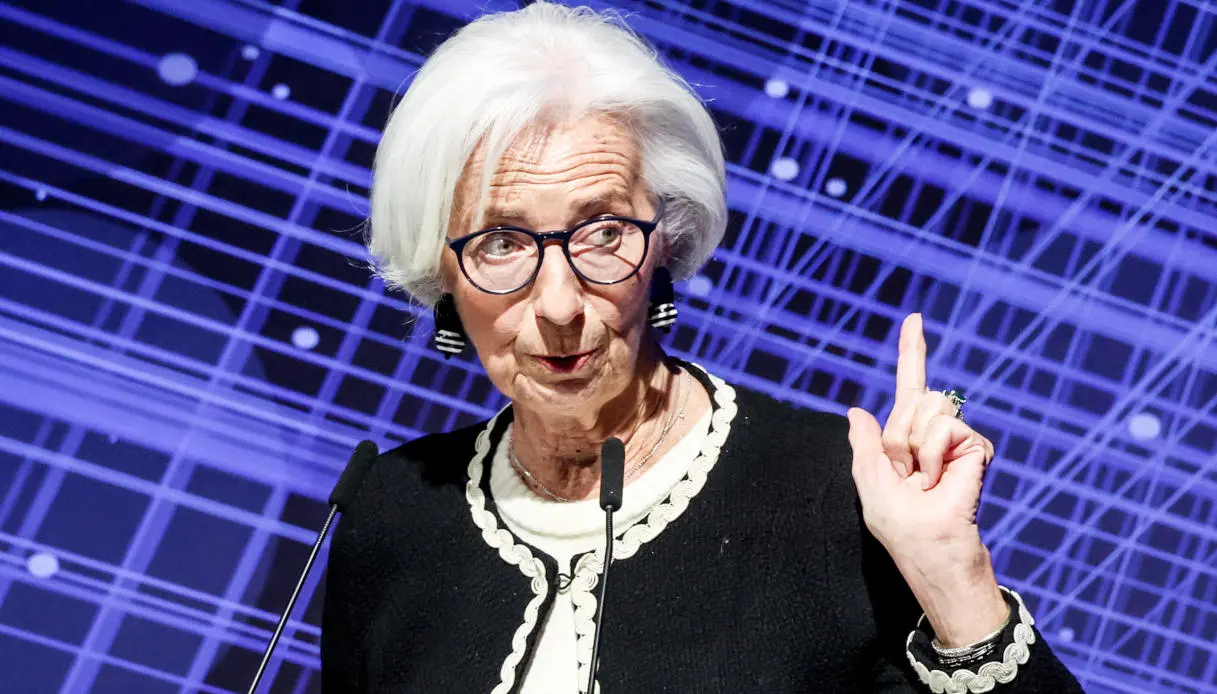
The world faces yet another crisis and rates are being watched special. The president of the European Central Bank, Christine Lagarde, is waiting for the moment: the global energy shock is significant but judged not yet sufficient to change monetary policy.
Lagarde decided to continue to observe the evolution of prices and the duration of the crisis. Only afterwards will the ECB decide to change rates, with cascading effects on the entire economy.
ECB and rates, Lagarde waits
He is always in the dock, the Strait of Hormuz, the fundamental hub for world oil but also for gas, fertilizers and medicines, among a thousand other goods.
According to estimates, the net loss in energy supply reached around 13 million barrels per day.
Yet, Lagarde underlines, the markets are not reacting as one would expect in the worst case scenario: energy prices have risen, but without reaching the peaks of other geopolitical crises. A sign that financial operators continue to bet on a temporary crisis.
This is what Christine Lagarde said when speaking at the annual reception of the Association of German Banks:
The double uncertainty, regarding the duration of the shock and the extent of the (inflationary) repercussions, requires gathering more information before drawing clear monetary policy conclusions.
And again:
If the conflict is resolved quickly, the direct shock to energy prices could prove less severe than expected, and the economic impact would be contained. The outlook, however, remains fragile and worse scenarios are still possible. Every day that the conflict continues, the gap between energy supply and demand widens and the longer normalization becomes. And the longer the outage lasts, the more its effects spread, not only through higher energy costs, but also through the loss of critical inputs.
Summing up, the aforementioned double uncertainty weighs heavily: the duration of the energy shock and the repercussions on inflation. The ECB’s approach will therefore be guided by data, without advance moves.
The ECB’s intentions had already been anticipated a week earlier by Vice President Luis de Guindos. Going into concrete terms, if the intervention on rates does not arrive at the end of April, it could possibly arrive in June.
War and inflation, the scenarios
Lagarde reiterated that the objective remains unchanged: to bring inflation back to 2% in the medium term. If the conflict and tensions over energy were to subside quickly, the impact on prices would remain limited. In this case, Frankfurt could maintain a cautious line without immediate intervention.
However, if the shock were to be prolonged, the knock-on effects of the crisis would be increased costs for businesses and families, more persistent inflationary pressures and a slowdown in growth. In this scenario, the ECB could be forced to intervene, even in the presence of a weaker economy.
The appeal to EU governments
Lagarde then appealed to governments, who are under pressure to contain the impact of energy price increases. But interventions that are too broad and prolonged risk side effects. The message is clear: measures must be temporary and targeted while generalized subsidies can reduce incentives to save energy and put public finances under stress, as well as fuel inflation.