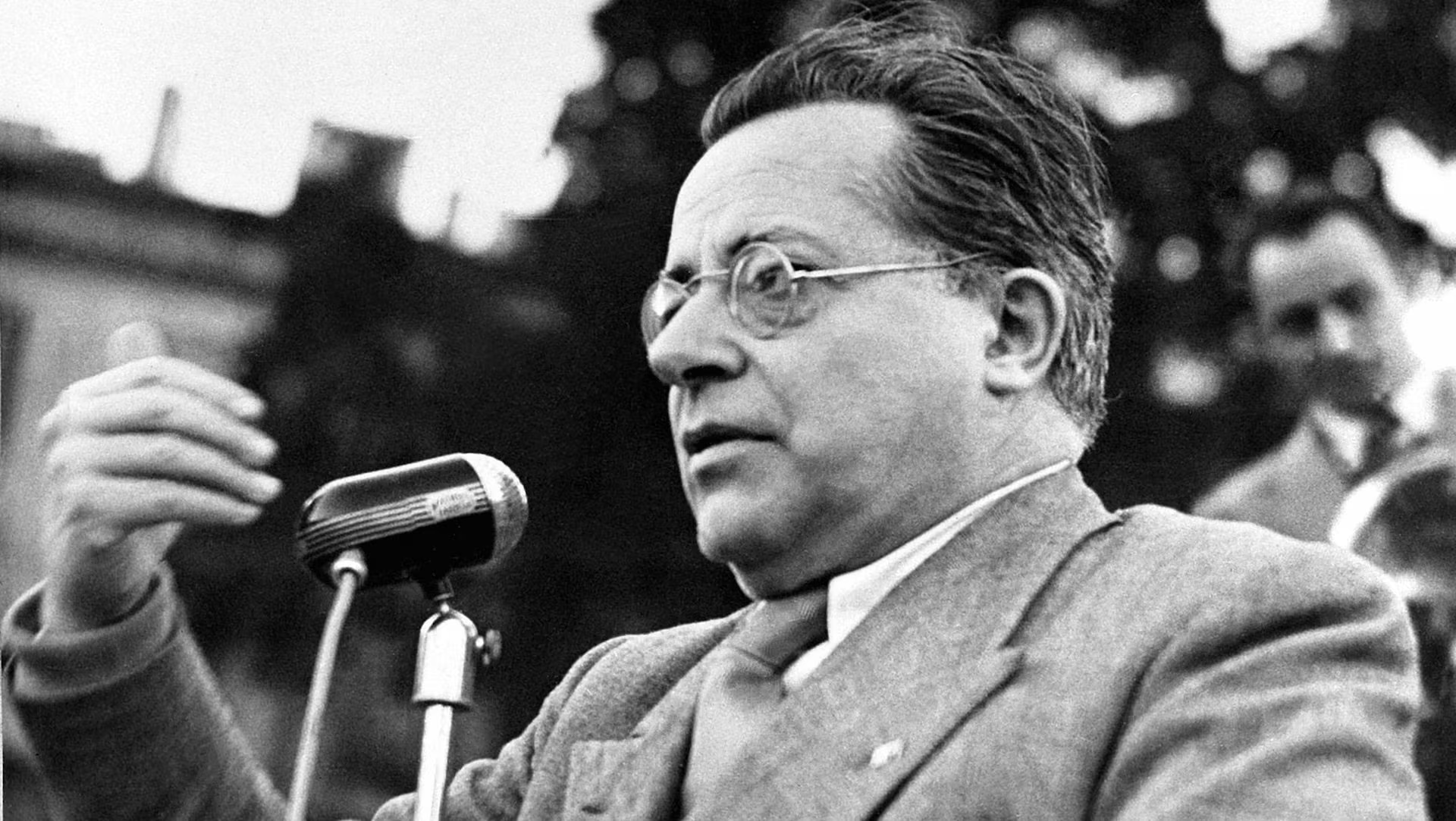
The turning point in Salerno was Palmiro Togliatti’s choice to bring the Italian Communist Party into the government. In 1944 Togliatti, with Stalin’s authorization, agreed to enter a monarchic government together with the other anti-fascist parties, in the name of the common fight against fascism and Nazism, which controlled central-northern Italy. The agreement made by the communist leader provided that, when Italy was liberated, citizens would be able to choose the institutional form of the state, that is, whether to maintain the monarchy or establish a republic. The communists entered the Badoglio II government, formed on 22 April 1944 in Salerno (Rome was still occupied by the Nazis). The PCI, together with the socialists, remained in government until 1947.
What was the Salerno Turning Point and why is it called that
The turning point in Salerno was the decision of the Italian Communist Party to join the Badoglio II government in 1944 to lead the fight against the German occupation and the fascist dictatorship. It is defined as “of Salerno” because the government met in the Campania town, as Rome was still occupied by Nazi-fascists.
It should be remembered that in 1943 Italy was divided: the southern regions, thanks to the Anglo-American landing in Salerno, were freed from German occupation immediately after the armistice, while the Centre-North remained under the control of Germany and the Italian Social Republic, a puppet state led by Mussolini and de facto controlled by the Germans. Progressively the Allies, supported by the Resistance, advanced northwards and in April 1945 liberated the entire national territory.
During the civil war, in some regions of the South, power was held, at least formally, by the Royal House and the Badoglio government. In this context, the communists joined the government: it was an important event because the PCI was a very active party and was making the greatest contribution to the Resistance, but it was difficult to obtain, because generally the communists did not participate in the government under monarchy, even more so in countries where the Royal House, as in Italy, had been close to right-wing dictatorships.
Togliatti’s return from Moscow and the unexpected move
The turning point was promoted by Palmiro Togliatti. The secretary returned to Italy in March 1944, after a long exile in the Soviet Union. Ever since he was away from Italy, Togliatti developed the conviction that it was necessary to collaborate with all the other political forces active against the fascist regime. Before leaving for Italy, he discussed the idea with Stalin. The precise role of the Soviet dictator is not known and, according to some scholars, the initiator of the turning point was him, and not Togliatti. Stalin certainly gave his consent, which was indispensable for any choice concerning the communists.
Upon arrival in Italy, Togliatti settled in Naples and announced the decision to his party comrades. It was necessary, however, to make her accept. The main problem was the presence of the monarchy and the King, Vittorio Emanuele III, who in 1922 had called Mussolini to power and had collaborated with the fascist dictatorship for twenty years. Togliatti convinced the majority of PCI members to accept his decision and also managed to overcome the resistance of other left-wing forces, primarily the Italian Socialist Party of Proletarian Unity. Negotiations were therefore started with the other parties and with the monarchy and, thanks to the mediation of liberal exponents, including Enrico De Nicola and Ivanoe Bonomi, an agreement was reached: the Royal House would not be questioned for the moment, provided that Vittorio Emanuele III handed over power to his son Umberto (which the king did two months later, at the time of the liberation of Rome) and, above all, provided that at the end of the war the Italian citizens would be called upon to decide on the institutional form of the state.
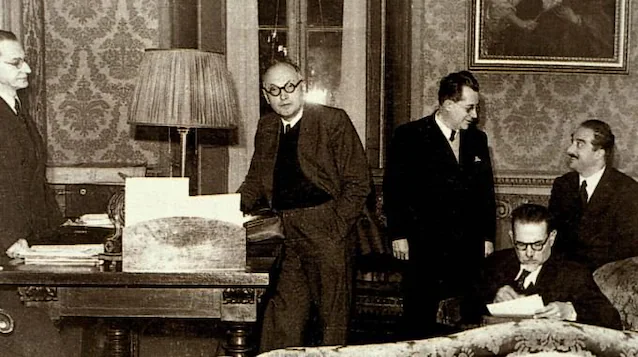
On 22 April the Badoglio II government took office, the first political government of liberated Italy (the Badoglio I government, formed after 25 July 1943, was made up of technicians and soldiers). The six parties of the National Liberation Committee were part of it, including the PCI: Togliatti was minister without portfolio and another member, Fausto Gullo, obtained the position of minister of agriculture and forestry. The Salerno turning point had been implemented.
The consequences: the first government of national unity is born
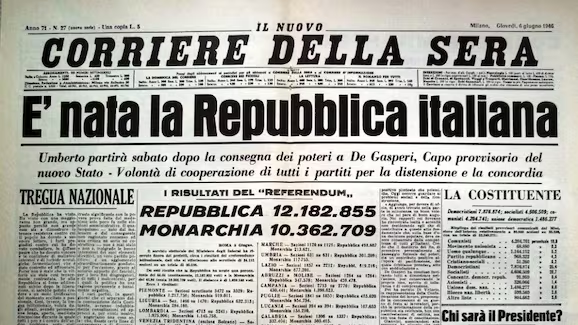
The turning point had far-reaching consequences and facilitated the establishment of republican democracy. First of all, it favored the war of liberation against fascism and Nazi occupation: although there was no shortage of divergences and conflicts, which in one case even caused armed clashes, partisan formations of different political ideologies led the Resistance together. As agreed, on 5 June 1944 Vittorio Emanuele handed over his powers to his son, although without abdicating (Umberto was appointed lieutenant of the Kingdom). The PCI and the PSIUP remained in the government even after the fall of Badoglio and were part of the executives led by Bonomi, Parri and De Gasperi. On 2 June 1946, as foreseen by the agreements, the institutional referendum was held, through which Italian citizens chose to put aside the monarchy in favor of the republic. The communists also collaborated with the other anti-fascist parties in the Constituent Assembly.
The experience of national unity governments ended in 1947. The Cold War was looming in the world and the Christian Democrats, the main government force, at the instigation of the United States decided to oust the left-wing parties from the government team. In May 1947 the De Gasperi IV government was therefore born, the first without the presence of left-wing parties. Since then the PCI would always remain in opposition.