The EU is implementing a new strategy to deal with rising energy prices. Household and business electricity bills may start to fall with an increase in gas taxes. In this way Brussels also intends to accelerate the energy transition.
Lower taxes on electricity to push the transition
The countries of the Union will maintain their own autonomy on tax rates, but with the new guidelines, defined by Acceleration Euwill have to ensure that services running on electricity are not penalized compared to those powered by fossil fuels.
In practice, electricity must be fiscally more convenient than gas. According to Brussels, this change of approach should encourage more sustainable consumption and accelerate the transition to heating, mobility and production systems less dependent on gas.
What are network charges and how much do they weigh on the bill
The new European plan also intends to intervene on one of the heaviest components of the electricity bill, the network charges, i.e. the costs of transporting energy from the production center to the center of use. They currently represent approximately 25% of the total cost to users.
The Commission wants to introduce more flexible criteria, also linked to consumption times, with the dual objective of:
- reduce overall consumer costs;
- encourage more efficient use of the electricity grid, shifting consumption to less congested time slots.
What are smart meters used for?
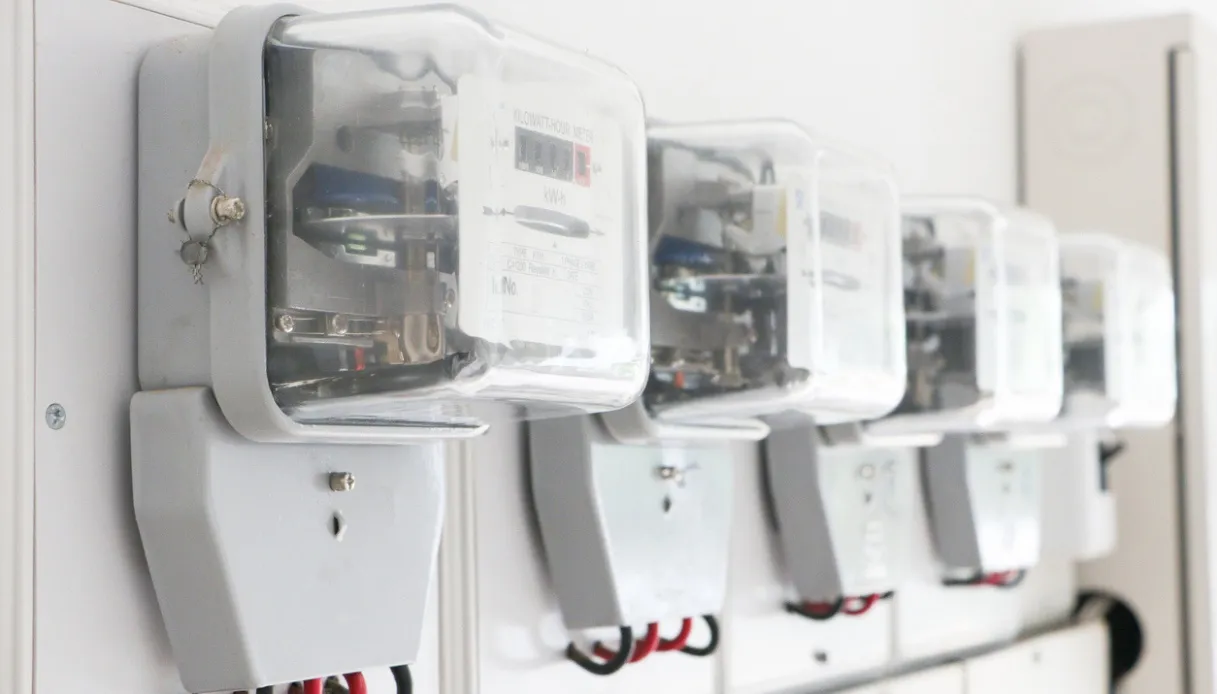
The planned measures also include a strong push towards the digitalisation of the energy system. Brussels aims to increase the share of users equipped with smart meters to at least 50% by 2030, with a further increase in the following three years.
The smart meters they are not just used to monitor consumption in real time. Detecting users’ consumption styles and peaks means having a clear picture of how to integrate electricity produced from renewables, whose supply is more variable than traditional sources, but are a strategic asset for decarbonisation.
What are the other goals besides expensive energy
The political and economic objective is to reduce the burden of bills on families and businesses without giving up climate objectives. The European Commission is aiming to build a system in which electricity becomes more sustainable and accessible. The reduction in gas taxation and the reform of network charges should act directly on the final component of the price paid by consumers.
How individual states will adopt the guidelines
There are no predictions as to how these guidelines will be concretely adopted by individual member states. While respecting national fiscal autonomy, Brussels’ indications will require adaptation interventions which could be uniform in the 27 countries of the Union. But they don’t have to either.
What is certain is that the reform will open up heated political confrontation in countries where energy taxation represents a significant component of tax revenue.
Cheaper bills and decarbonisation
The plan between now and 2033 is to reduce dependence on fossil fuels and increase the weight of electrification in final consumption.
In this context, the revision of bills is not only an economic measure, but an obligatory step in the strategy aimed at decarbonising the European energy system, which also includes the sustainable hydrogen project.