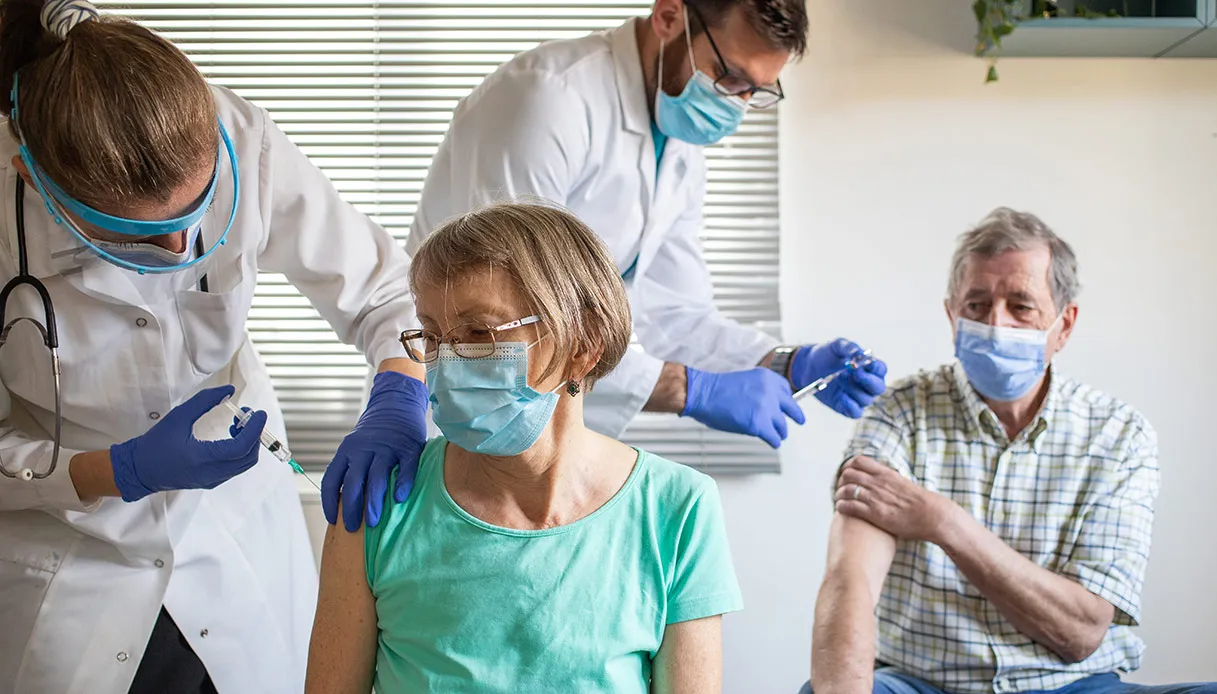
Let’s start with a figure, which derives directly from the estimates of the Office of Health Economics. Every euro invested in vaccination against Herpes zoster, which causes shingles, in elderly people can generate up to 782 euros of benefit for society, according to estimates. For the flu shot the ratio stands at 19 euros, for the antipneumococcal up to 30, for the Respiratory Syncytial Virus (RSV) up to 14.
This was underlined by the experts present in Rome for the National Assembly on the Prevention of Infectious Diseases in the Elderly, organized on the initiative of HappyAgeing – Italian Alliance for Active Aging. Above all, one fact emerges from the experts’ debate: we must not think about how much it costs to prevent, but how much it costs not to do so. All of this, starting from the document “Vaccinations to protect the elderly population in Italy. Epidemiological picture, disease burden, vaccination offer and cost-effectiveness profilesThe text was developed by experts from the Universities of Pisa and Bari under the scientific responsibility of Caterina Rizzo and Silvio Tafuri.
Five vaccines under investigation
In addition to proposing relevant economic data, the HappyAgeing document focuses attention on the prevention of pneumococcal infections, Herpes Zoster, influenza, diphtheria-tetanus-pertussis, RSV and Covid-19, i.e. the vaccinations recommended in the silver age.
The cost-effectiveness data collected in the document confirms that these vaccines are not an expense to be cut, but an investment that pays off and in some cases returns more than it costs. For pneumococcus, updating strategies could achieve better clinical outcomes at a lower cost, with savings for the NHS estimated at between approximately 77 and 457 million euros and more years of healthy life.
Influenza chapter: enhanced vaccines for the elderly cost, per year of life gained (QALY), well less than the threshold of 30,000 euros considered acceptable in Italy. They would avoid tens of thousands of hospitalizations and hundreds of deaths every year, with a net saving for the NHS of tens of millions of euros.
On the Herpes Zoster prevention front, international studies on Herpes Zoster show a good cost-benefit ratio, especially for the chronic pain of post-herpetic neuralgia avoided and the reduction of hospitalizations in the most serious cases.
Indications on the prevention of Respiratory Syncytial Virus or RSV infection are also increasing: the European analyzes in this sense, which are still preliminary, go in the same direction, in particular for older people and for those with other pathologies.
Finally, for Covid-19, in the over 65 population, vaccination is not only effective, but is also economically dominant, i.e. it generates greater benefits at a lower cost than non-vaccination.
Five proposals to improve vaccination compliance
Living longer, in short, is no longer a demographic exception but a new social reality. And to ensure longevity, vaccines are a solution both in terms of quality of life gained and costs avoided for the National Health Service. HappyAgeing’s five operational proposals for the new PNPV (National Vaccine Prevention Plan) are:
- Communication: knowing the diseases to choose prevention. We need continuous campaigns, centered on diseases and their real impact, capable of overcoming the underestimation of the risk that currently holds back vaccinations;
- Expansion of the vaccination network and active call. More subjects authorized to administer in addition to General Practitioners and Vaccination Centres, for example pharmacies, structured vaccination courses in hospitals for fragile patients, but also in all Public Clinics and Community Homes, for an extended and systematic active call;
- Prevention as an investment: a question of financial architecture. Spending on immunization must be recognized as a structural investment, separate from current health spending, with a national system of economic data to support programming choices;
- Update of the National Vaccine Prevention Plan and Vaccination Calendar. The explicit inclusion of Covid-19 and RSV is needed, as well as a certain deadline for the Ministerial Circular on influenza;
- Vaccination appropriateness: enhanced formulations, 60-year threshold, innovation. Uniform transposition of enhanced and adjuvanted vaccines in all Regions, lowering to 60 years of the threshold for the free offer of enhanced vaccines against influenza, and faster Health Technology Assessment paths for innovation.
“The analysis and proposals contained in this document are operational and immediately implementable. They do not require new scientific discoveries or extraordinary resources: they require choices. Choices on how to classify spending on prevention, on who can administer a vaccine, on when to publish a circular, on how to talk to people about diseases that can be avoided. HappyAgeing brings these proposals to the competent institutional bodies with the awareness that every season in which coverage remains below the objectives is a season of complications, hospitalizations and loss of autonomy that could have been prevented. The evidence tells us they are also the tools: what is needed now is the will to translate them into systemic, structural and lasting choices”
is the comment of Michele Conversano, President of the Technical Scientific Committee of HappyAgeing,