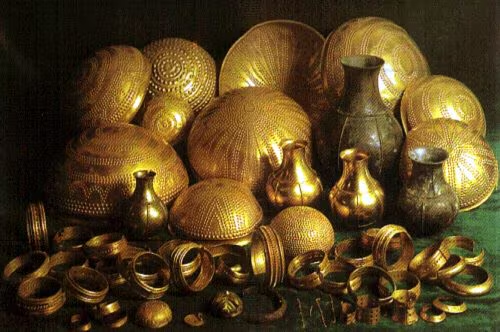
In Spain, in Villena, one of the most important gold treasures from the Bronze Age in Europe and the oldest iron artefact ever found in the country was stolen. On Thursday 27 August, around dawn, a group of thieves using a diversion managed to sneak into the MUVI, the museum in the city of Villena, in the south of the Valencian Community. The criminals had one target in particular: the so-called Treasure of Villena, the second most important deposit of gold jewelery from the European Bronze Age, after the one found inside the Mycenaean royal tombs in Greece, and the most important in the entire Iberian Peninsula. In just four minutes, the thieves stole all the gold pieces and a part of the silver ones (59 pieces in total), along with other archaeological finds from the MUVI. At the moment their fate is unknown, and the population of the town is deeply shocked by the theft of a very important part of their cultural identity. The estimated value of the gold content alone would be around 1.7 million euros.
The Treasure of Villena was discovered in 1963, by chance, during urban planning works in the city. This cache of gold, silver, iron and amber immediately became the object of study by the archaeologist José María Soler. To be precise, it was composed of 59 objects weighing almost ten kilograms, contained inside a ceramic vase, of which over 90% was 23.5 carat gold: 11 bowls and 28 gold bracelets, two gold bottles, three silver containers, an amber and gold button, and several objects, including a meteoric iron bracelet. The latter is the oldest iron object on the Iberian Peninsula.
The purpose of this storage room remains enigmatic. It was probably a votive deposit, associated with some type of ritual. Layers of ash were also found in association with the vase containing the treasure, suggesting some sacrificial offering. Soler was also involved in studying the Treasure of Cabezo Redondo, a similar gold cache found a few months earlier also in the Villena area.
On the basis of the typological comparison between the materials of Cabezo Redondo and those found in Villena, a dating that is still widely accepted today was proposed, namely that of the Final Bronze Age, around 1000 BC. C.