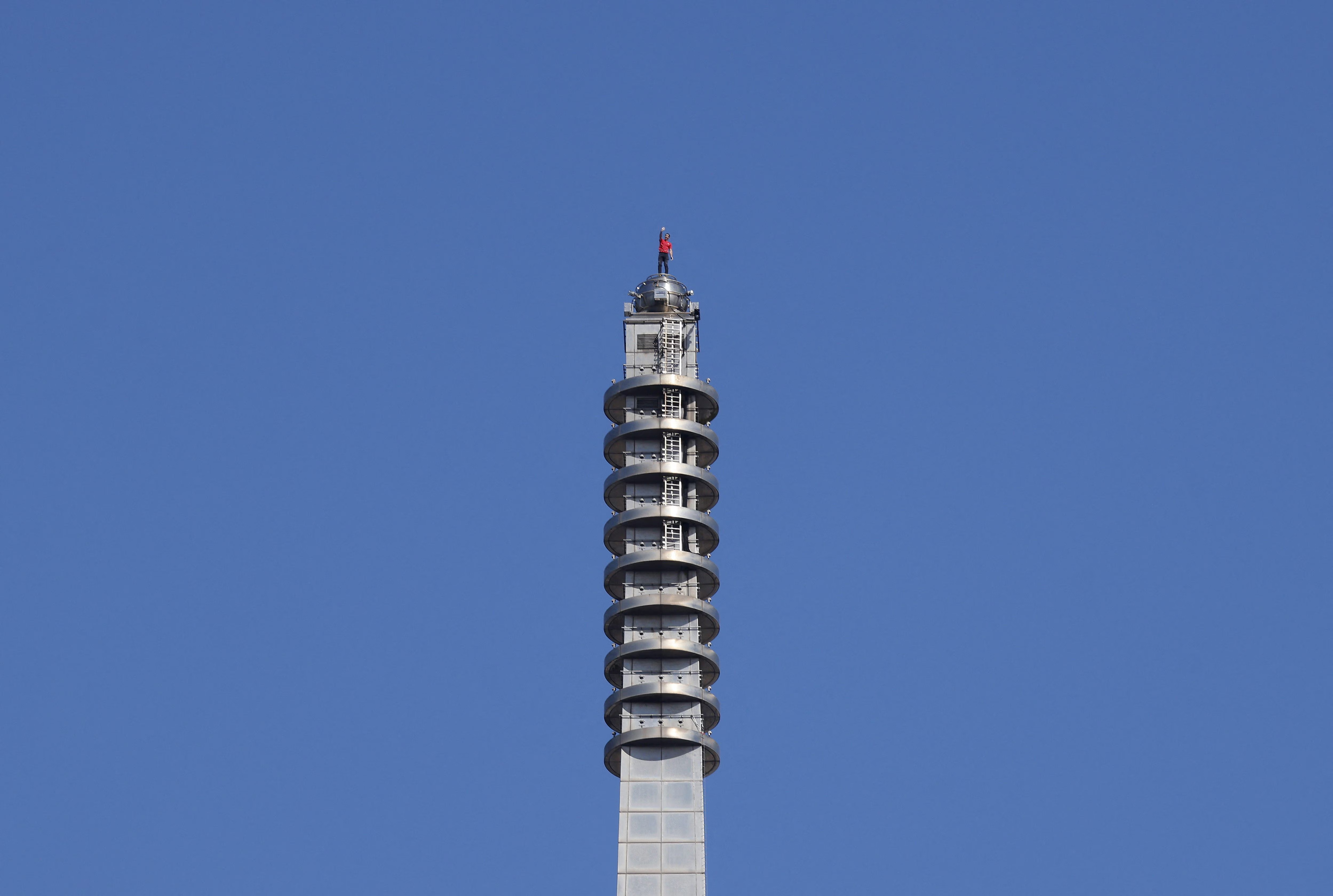
Climb 508 meters with bare hands, without ropes or harnesses, equipped only with climbing shoes and a chalk bag. It seems like something out of this world but it was the feat accomplished tonight in live streaming by Alex Honnold, an American professional climber, on Taipei 101, the eleventh tallest skyscraper in the world with its 101 floors and one of the symbols of Taiwan. The climb up the steel and glass building, which began today January 25, 2026 at 9:00 local time (2:00 in Italy), lasted 1 hour and 31 minutesleaving both the crowd gathered under the building and spectators from all over the world speechless.
Honnold has spent his life undertaking these challenges in “free solo” – this is the name of the climbing discipline – against himself, nature and death. The story that made him famous more than others is the climb of El Capitan, thanks to which he also won an Oscar with the documentary “Free Solo”.
Alex Honnold climbing the Taipei 101 skyscraper
The ascent of Taipei 101 rightfully enters history. For Honnold, the skyscraper’s “bamboo box” structure, with balconies every eight floors, turned the climb into a rhythmic sequence, offering precious resting spots. Unlike the rock, here the unpredictability of nature was not present and the building had been studied in every detail by the climber.
The choice to broadcast tonight’s event live attracted numerous criticisms, including from the community climber. Free soloing remains a controversial practice due to the very high risk and numerous fatal accidents that have occurred over the years, sometimes live on social media. To protect themselves, the streaming was broadcast with a 10-second delay, the margin necessary to interrupt the broadcast in case something went wrong. Fortunately, however, there was no need: Alex reached the summit, where the building’s famous anti-seismic steel sphere is located. According to rumors, Alex would have received a six-figure fee for this event.
The feat had already been attempted by the Frenchman Alain Robert, who was however forced to use a safety rope due to bad weather which would have made the surface slippery.
Honnold, a Californian from Sacramento born in 1985, is a husband and father of two daughters under the age of four. A factor that weighs when he has to face his challenges even if, as he declared to the Guardian, «Death is part of life». Behind this coldness there is meticulous preparation: the climber is followed by sports psychologists who train him in stress management through visualization and internal dialogue. And the thought of the end? It’s a topic that Alex tries not to discuss with his wife, except jokingly, to play down the inevitable risk of his profession. Even the climb of Taipei 101, however controversial, is a story with a happy ending.
The American he is no stranger to feats that defy logic and fear. His consecration came in 2017 with the climb of El Capitan in Yosemite park – a vertical granite wall of almost 1000 meters – tackled in 3 hours and 56 minutes. Obviously without strings. A feat immortalized in the Oscar-winning documentary “Free Solo”, which revealed to the world not only his superhuman technique, but also an uncommon mental control of fear.
Free soloing is the closest thing to perfection… and it’s nice to feel perfect, at least for a moment (Alex Honnold)
What is Free Solo
To understand Honnold’s madness (and preparation), we must distinguish between “free climbing” and “free solo”, two terms that are similar but hide a profound difference. In the’free climbing (free climbing), the most widespread discipline, the athlete uses his hands and feet to climb, but is secured by a rope which protects him in the event of a fall but which does not help him in the climb.
The free alonehowever, eliminates any security system. The climber goes up without ropes, without harness and without companions. He only has his shoes and chalk bag with him to wipe the sweat from his hands. In this sport, mistakes are not contemplated, a slip almost certainly means the most tragic end. Those who practice it consider it the purest and freest form of this sport but those who see it from the outside consider it pure madness and recklessness. This last vision might seem the most apt definition given the numerous deaths linked to this practice including those of Brad Gobright and Austin Howell who died at the ages of 31 and 32 while climbing rock faces. Or the case of Balin Miller, a young climber from Alaska who died in 2024 at the age of 23 while climbing El Capitan live streaming on TikTok.
Free soloing has several variations. There are the deep water soloing which is practiced on cliffs overlooking the sea and the basic soloing in which the athlete has a parachute to open in the event of a fall, the two versions we can say are “safer” however extreme. Then there is theurban soloing in which buildings and skyscrapers are climbed as in the case of Alex Hollond. Before the American, however, another pioneer made these crazy challenges famous, the Frenchman Alain Robert. Known as “Spiderman” – a costume he actually wore during some ascents – in the 1990s he conquered global icons such as the Empire State Building, the Eiffel Tower, the Petronas Towers in Kuala Lumpur and the Sydney Opera House.
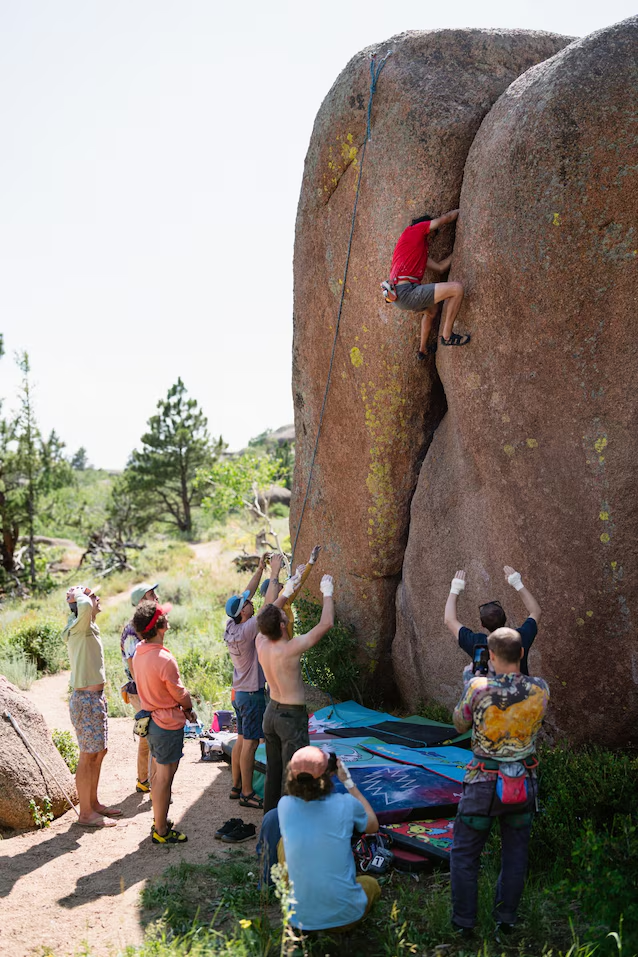
Finally, the bouldering. Also in this case no ropes are used, but the context is different because you climb on boulders up to 15 meters high and mattresses (crash pads) are used at the base to cushion falls. This practice, very widespread among climbers, combines strength and explosiveness in short and intense routes.