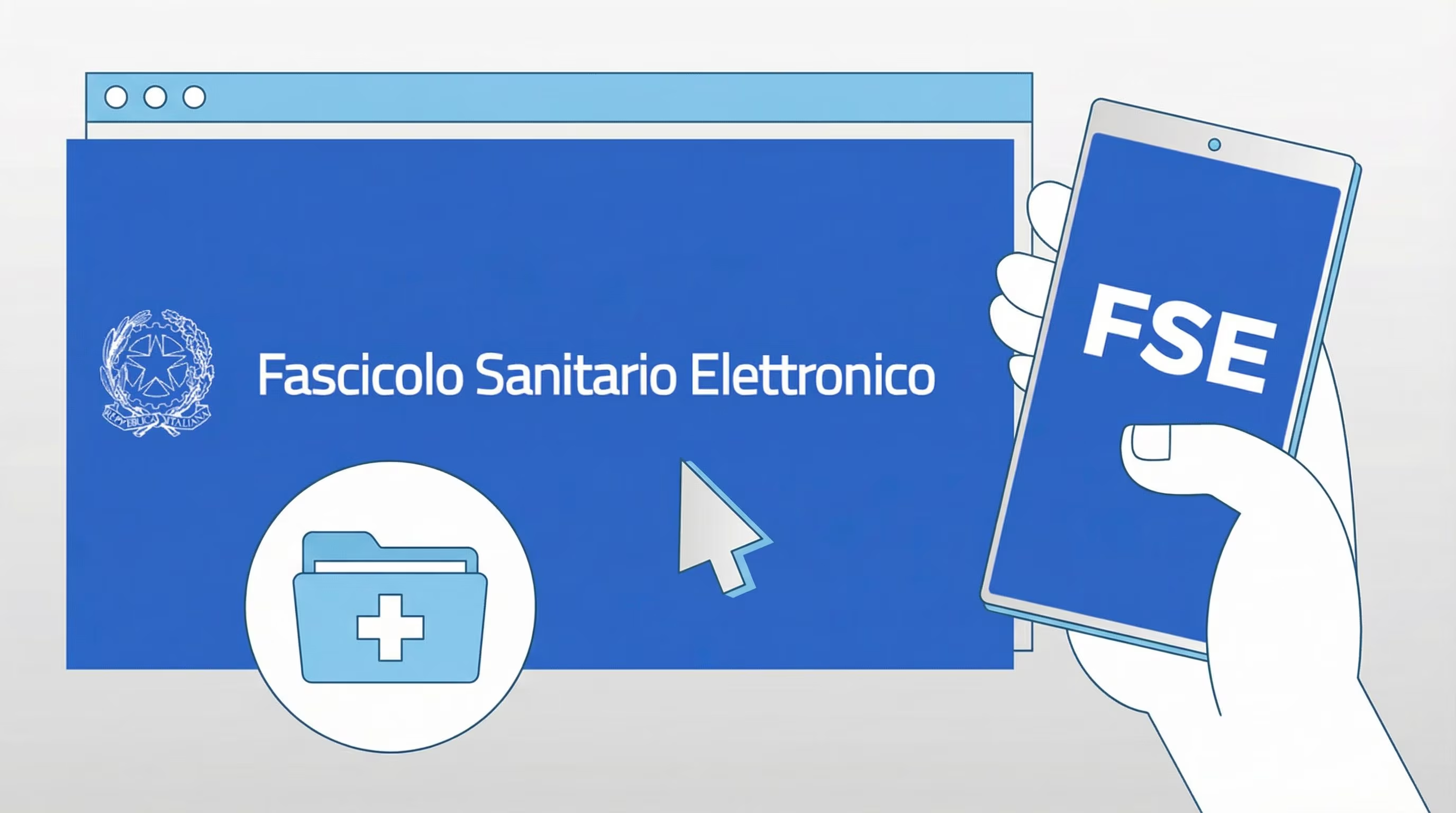
On March 31, 2026, the Electronic Health Record or EHR will enter its most advanced phase with the aim of becoming fully operational by June. This digital tool collects clinical data and health documents from each citizen over time, building a real “health memory” accessible online. Its use still remains limited: less than half of Italians have authorized doctors to consult it and only a minority of these actively use it. With the new rules, however, the system changes profoundly: all healthcare facilities, including private ones, must adopt common standards for producing and transmitting documents, which must be uploaded within a few days of the services. The “synthetic health profile” is also introduced, an essential summary of the state of health compiled by the general practitioner, easy to consult and useful especially in emergency situations.
What changes for the ESF: the changes in force from 31 March 2026
The last phase of implementation of the Electronic Health Record is about to officially begin, a digital archive that collects and organizes data and documents relating to the health of every citizen, allowing centralized and secure access to one’s medical history.
In this step, the private healthcare sector is also required to make patients’ clinical information available in real time. If in the past this constraint only concerned structures accredited with the National Health Service, the new model extends it to all entities that provide healthcare services, including independent professionals and private operators without agreements, who must therefore comply with the new requirements. In concrete terms, the clinical documents must be uploaded within five days of the service, they must be produced according to a single shared standard – generally consultable by the patient in PDF format – authenticated via digital signature and then sent to the regional Electronic Health Record system. This adaptation process, to be completed by 31 March 2026, involves a vast range of structures: from polyclinics to private medical centres, including those with direct payment, up to dental and physiotherapy practices, clinics and even analysis laboratories.
Another interesting innovation concerns the so-called “synthetic health profile”, also known as Patient Summary. It is a summary sheet that contains essential information such as chronic pathologies, allergies, ongoing therapies and similar. It is the general practitioner who compiles and updates this summary. Its function becomes crucial during any emergencies: even in the absence of explicit consent, in fact, emergency room staff can consult this summary to immediately have a clinical picture of the patient. In this way, the probability of making errors when administering any therapies is lowered, offering the possibility of more timely and, therefore, potentially more effective interventions.
Advantages and limits for citizens and doctors with the Electronic Health Record
For citizens, the ESF can be very useful, as it acts as a constantly updated digital archive. We can consult reports, discharge letters, prescriptions and many other documents without having to keep paper copies, with the risk of these being lost over time. Furthermore, we can independently upload health documentation obtained outside the public system or abroad, helping to build a more complete and precise clinical history.
An often little-known element is the “personal notebook”, a private section in which we can write down parameters such as blood pressure or blood sugar, but also information on lifestyle or symptoms encountered occasionally. This data, if shared with your doctor, can support more accurate diagnoses. We can also integrate information from wearable devices, the so-called wearables, such as smartwatches and smart rings, which monitor vital parameters such as sleep quality, heart rate variability, blood oxygenation, etc. Access to the File is simplified by the adoption of systems such as SPID and CIE, which make data consultation safe, with the possibility of delegating its management to up to five trusted people.
For doctors, the main benefit is access to patients’ complete and up-to-date medical history. This translates into quicker diagnoses, less need for repeated tests and greater effectiveness in treatment, especially in cases involving medical emergencies.
From the point of view of limitations, the system still shows some “holes”. In this case, there are strong differences between Regions in the availability of services and documents, and combined with this there is still little significant adoption by citizens and healthcare professionals.









